My Coworker Booked the Office Dinner at My Second Job and Demanded I Wait on Them. Then She Called Me ‘Poor’.
We all understand that a certain level of separation between our work life and our personal life is not just healthy, but necessary. It’s a boundary built on mutual respect.
However, one young woman recently shared a story online that shows what happens when a colleague seems determined to cross that line, turning a workplace celebration into a source of deep discomfort. It’s a tale of workplace dynamics, questionable friendships, and a complete lack of consideration.
The Incident
A hardworking 20-year-old woman, who we’ll call OP, balances a full-time office job with a part-time waitressing job on weekends and holidays. She works in the same office as “Kamila,” a 23-year-old colleague who acts as the boss’s assistant and is responsible for planning monthly team dinners.
The trouble began when the OP realized the annual kick-off dinner was scheduled at the very restaurant where she waits tables. When she mentioned this to Kamila, she was told the reservations were already made and couldn’t be changed. The evening was just as awkward as she feared. Her coworkers gave her “weird looks” of what she suspected was pity and kept asking her to sit and join them, all while she was on the clock. While they left a generous tip, the entire experience left her feeling embarrassed and annoyed.
When the next month’s dinner was once again scheduled at her restaurant, she knew it wasn’t a coincidence. She pleaded with Kamila, who brushed her off, saying the boss just “really liked the place.” Trying to avoid another mortifying evening, the OP arranged to work in the back, away from the dining room.
But her plan was foiled. Her manager informed her that her coworkers had specifically “asked for me,” and she was forced to wait on their table. Kamila even greeted her with a joke about “hiding from them.”
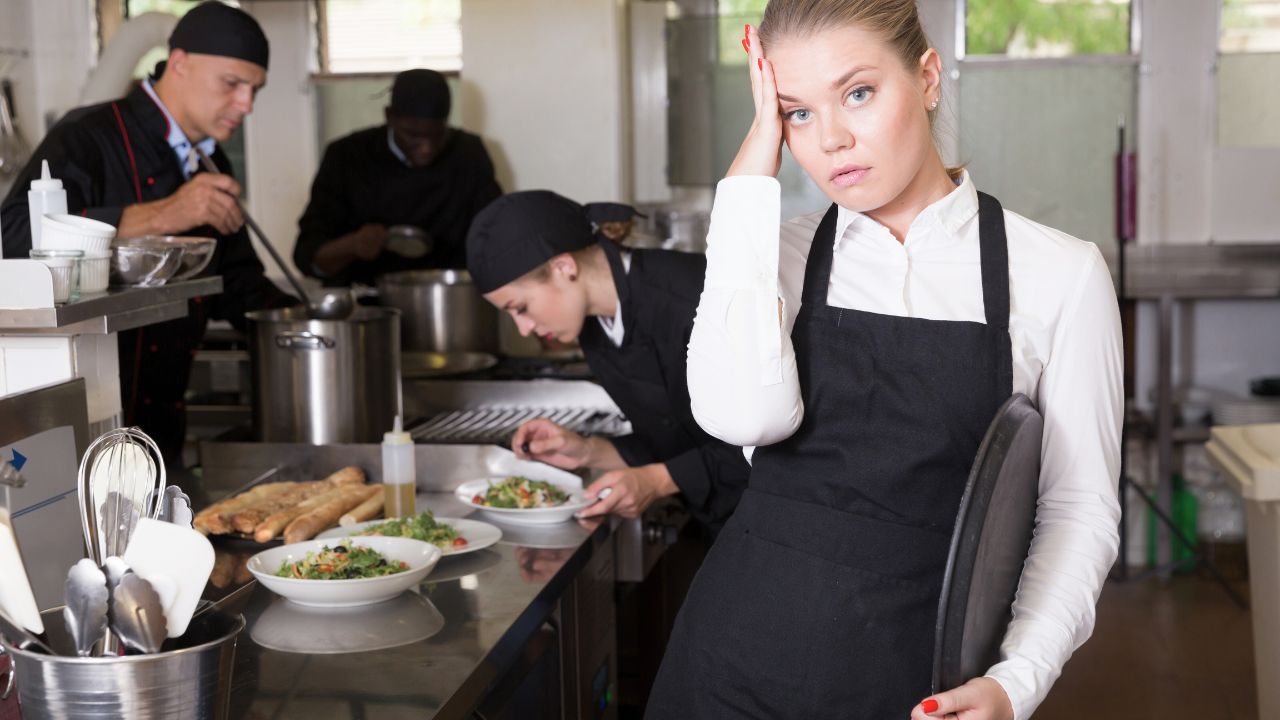
Fed up, the OP texted Kamila, begging her to stop. The response was shockingly cruel. Kamila told her, “I should just quit one of the jobs if I was so embarrassed.” To add insult to injury, she even “called me poor,” though she later offered a flimsy apology.
The Internet Reacts
The online community was overwhelmingly on the young woman’s side, and commentators quickly sorted themselves into a few distinct camps.
The “Absolutely Not” crowd was furious on the OP’s behalf, convinced the colleague’s actions were deliberate and malicious. One person stated it plainly: “She’s doing this on purpose and she’s not your friend… This woman thinks you are beneath her and she wants everyone to see you that way.”
Another pointed out the cruelty of the “poor” comment, noting, “It doesn’t matter if she apologized.” These readers saw Kamila’s behavior not as a simple mistake, but as a calculated power move designed to humiliate.
Then there was the “Devil’s Advocate” group, though they weren’t defending the main culprit. Instead, they wondered if the rest of the office was simply clueless, not cruel. One commenter gently suggested, “is it possible that your co-workers think that by visiting your restaurant and leaving a large tip, they are actually supporting you?” This perspective suggests the boss and other team members might be acting out of misguided kindness, completely unaware of the awkwardness they are causing.

Finally, the “Practical Advice” crowd offered clear, actionable steps. They saw this as a problem that needed to be solved by going over the so-called friend’s head. The top suggestion was to speak directly to the boss. As one person wisely put it, “go talk to the boss directly… And maybe you’ll find out he doesn’t give a flying fig about where dinner is and just lets Kamila pick.” Another agreed, advising her to explain to her boss that it’s unfair “to be put in a position to work an event that you should be attending.”
The Etiquette Verdict
Let’s be perfectly clear: Kamila’s behavior is an egregious breach of both professional and personal etiquette. A workplace should foster respect, and a friend should offer support. Kamila did neither. To repeatedly and intentionally place a colleague in a position where the power dynamics are so uncomfortably skewed is simply out of line.
It crosses the boundary from thoughtless to malicious. The golden rule of the workplace is to treat your colleagues with the respect and dignity you expect in return. Using personal knowledge about someone’s financial situation or second job to create an awkward spectacle is the very definition of poor form.

Your Thoughts
What do you think is motivating the colleague? Is she being deliberately cruel, or is she just shockingly inconsiderate?