Our Server Was a Busy Bartender Juggling Extra Tables. I finally snapped and called out my MIL for barking orders at her.
We’re all familiar with the unspoken law of eating out: treat the people serving your food with respect. It’s a reliable indicator of someone’s true character, a quiet test of courtesy and composure that reveals a great deal. Being rude to restaurant workers reflects terribly on a person, and most of us wouldn’t even consider behaving that way.
Yet, one woman recently went online to recount an experience that shows not everybody abides by these informal social codes. She wound up stuck in the middle of a deeply awkward dinner, compelled to call out her own mother-in-law’s dreadful conduct right there in front of everyone.
An Evening Ruined by Rudeness
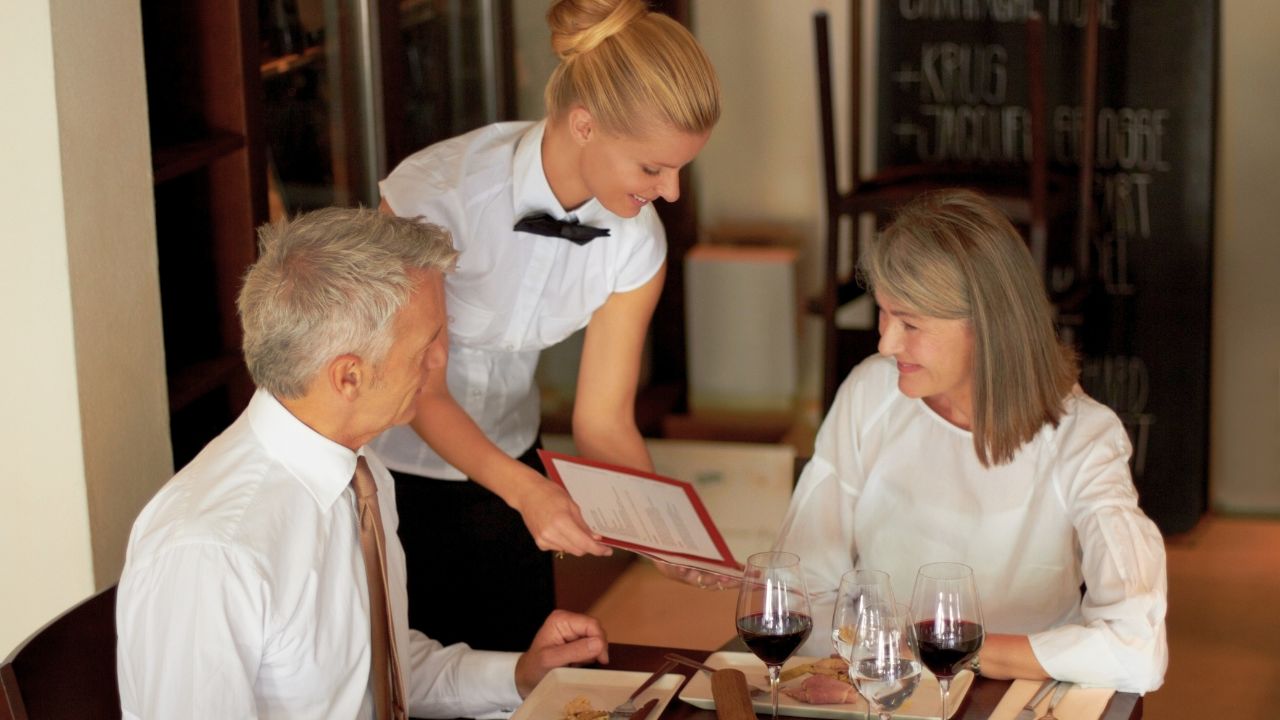
It’s a scenario most of us can easily imagine. A packed restaurant, the steady murmur of diners chatting, and a visibly overwhelmed crew doing their best to keep up. The woman, along with her husband and mother-in-law, had been sitting for quite a while without placing their order. As she noted, their server was “actually the bartender covering an additional section,” a real trooper juggling two roles at once.
When the harried server eventually arrived at their table, she opened with a courteous, “I apologize for the wait,” but was cut short before she could say another word. The mother-in-law interrupted loudly, barking, “CAN WE ORDER!?”
The startled waitress was visibly shaken. She curtly explained how swamped and understaffed they were, then promptly walked off, no doubt needing a moment to collect herself. That outburst was the breaking point for the daughter-in-law. She had witnessed this kind of behavior on multiple occasions and resolved that it was time to put an end to it.

She went on to “loudly and sternly” confront her mother-in-law, telling her this was a recurring problem. “Every time we go to a restaurant with her,” she later recounted, “she lights up the staff and it affects everyone else’s time.” Predictably, the mother-in-law was “greatly offended,” which left the daughter-in-law questioning whether she had overstepped.
The Internet Reacts
After she posted her account online, people rushed to share their thoughts, and the wave of support in her favor was massive. The responses generally fell into a handful of categories, though every single one concurred that the mother-in-law’s actions were completely unacceptable.
The “Absolutely Not” Crowd
This camp was outraged on behalf of both the daughter-in-law and the server. They viewed the mother-in-law’s sense of entitlement as absolutely indefensible. One commenter captured the sentiment perfectly: “People who are unkind to waitstaff are insufferable.”
A fellow commenter echoed the frustration, noting, “I’m so sick of these entitled people shouting at customer service workers. The poor woman was doing the best she could pulling double duty.” The verdict was unmistakable: no circumstance justifies that level of disrespect. One user wrapped it up neatly: “There’s nothing lower than berating waitstaff.”
The “Actions Have Consequences” Crowd
A significant number of readers zeroed in on one key fact: this wasn’t an isolated occurrence. They contended that the mother-in-law persisted with this behavior precisely because no one ever held her accountable. Their recommendation was straightforward and unified: don’t take her to restaurants anymore.
“You said your MIL does this every time you go out together. So, why do you continue to do it?” one person challenged directly. “STOP going out with her.” Someone else concurred, adding, “Actions need consequences. Just stop inviting her and tell her why.” This group was convinced that the sole way to get through to the mother-in-law was to revoke the privilege of eating out together as a family until she changed her ways.
The “Creative Solutions” Crowd

And then came the folks who proposed more inventive—and honestly, deeply gratifying—approaches for how they would have handled things in the moment. Their ideas were sharp and crafted to drive the lesson home as effectively as possible.
One commenter proclaimed, “I would have handled this instance differently. I would have moved to another table and left the rude woman sitting there alone.” Another brought up an extremely valid, and somewhat unsettling, observation: “Who has the absence of mind to mistreat a person who will be handling their food?” It’s the kind of thought that ought to make anyone think twice before snapping at their server.
The Etiquette Verdict
Let there be no ambiguity: the daughter-in-law was entirely justified in speaking up. Though public confrontations are undeniably uncomfortable, her mother-in-law’s behavior was already causing a scene and embarrassing everyone seated with her. Proper etiquette isn’t merely about knowing which fork goes where; it’s fundamentally about treating people with dignity and kindness, particularly those working in service positions.
When a member of your group is mistreating staff, it casts a shadow over the entire table. Remaining quiet effectively makes you an accomplice. The mother-in-law needed to hear, in no uncertain terms, that her behavior was not acceptable. A moment of patience and a generous word don’t cost a thing, yet they make an enormous difference.
What Would You Have Done?
This scenario shines a light on a delicate family predicament. Did the daughter-in-law do the right thing by correcting her mother-in-law publicly, or is it better to keep family disputes strictly private, handled away from prying eyes?