My Future MIL Refused to Be My ‘Short-Order Cook’ for the Holidays. I Showed Up Anyway, Saw No Special Meal, and Left.
We all know that when you are a guest in someone’s home, especially for a holiday, you graciously accept what is served. It’s a simple rule of good manners that shows respect for your host’s efforts. If you have a specific dietary need, the polite thing to do is either eat beforehand or quietly bring something for yourself.
However, one woman recently took to the internet to share a story that proves not everyone plays by these common-sense rules, leaving her future family absolutely stunned.
The Incident
The story begins with an invitation. A young woman was invited to her very first Christmas dinner with her fiancé’s family. A lovely gesture, right? Well, instead of simply accepting, she decided to lay down some ground rules.
Citing a lifelong history of being a “picky eater,” she informed her future mother-in-law that she wouldn’t be eating the traditional holiday fare. It gets worse. She then “showed her a variety of dishes to choose from to accommodate me.” Can you imagine the audacity?
The mother-in-law, quite reasonably, refused to act as a short-order cook and suggested the woman bring her own dish. This was met with an ultimatum. “If I had to bring my own dish when I’m a guest then I better stay at home then,” she retorted. She insisted she wouldn’t come unless a special meal was made for her.
Despite this tense exchange, and her fiancé siding with his mother, the woman decided to attend the dinner anyway—empty-handed. When she arrived and saw that, just as she’d been told, no special meal was waiting for her, she promptly got up, gathered her things, and walked out.
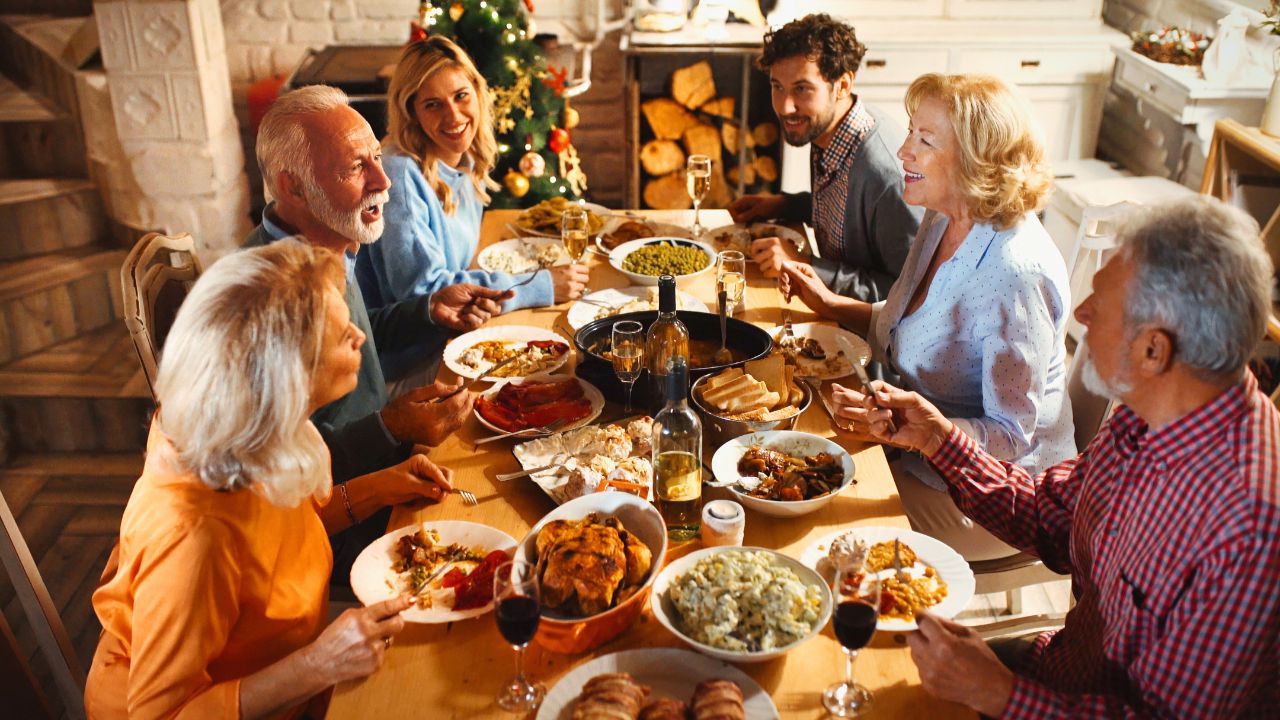
Her fiancé later called her “selfish and spoiled,” but she remained defiant, asking, “How is it my responsibility to feed myself when I’m a guest?” The whole situation, she felt, made no sense.
The Internet Reacts
When she shared her story online, hoping for validation, she was met with a tidal wave of disbelief. The public was overwhelmingly on the side of the mother-in-law, with commenters sorting themselves into a few distinct camps.
First was the “Absolutely Not” crowd, who were floored by her sense of entitlement. One person perfectly summed up the situation: “Allowing OP to bring her own food WAS the accommodation. But she didn’t want to be accommodated, she wanted to be catered to.”
Another put it more bluntly: “Fact is your FMIL is NOT a hired chef taking personal orders.” Many felt her behavior was less about food and more about something else entirely. “Her issue isn’t about being picky,” one commenter analyzed, “it’s about control.”
Next came the “Fellow Sufferers,” a group of self-described picky eaters and people with serious dietary restrictions who were appalled by her behavior. They explained how a considerate person handles these situations. “YTA from one picky eater to another,” one wrote. “I went to a Christmas dinner with my mom’s family. There was nothing I wanted, so I just socialized and ate when I got home.”
Someone with Celiac disease chimed in, “I don’t expect anyone to accommodate me and make sure I bring something safe to eat.” These comments showed that managing one’s own needs without burdening others is the standard, polite approach.
Finally, there was the “What I Would Have Done” crowd. These commenters offered simple, gracious solutions that the woman could have easily adopted. “I’m a picky eater,” one shared. “If we are doing something like that I’d just eat before, bring a dish and if anyone asks just be like ‘ya know I’m just not feeling very hungry today’.”
Another person shared a clever trick for dealing with unappetizing food: “eat some and say you’re full. Then after you leave find an open store or cafe. Everyone is happy and tummies are full.”
The Etiquette Verdict
Let’s be perfectly clear: being a guest in someone’s home is not the same as being a customer at a restaurant. A host, especially one cooking a large holiday meal, is already under immense pressure. To present them with a menu of demands is the height of poor manners.
The mother-in-law’s offer to let her bring her own food was the accommodation—a generous one, at that. The Golden Rule here is simple: your dietary preferences are your responsibility. A gracious guest never makes their problem the host’s problem. This young woman’s behavior was not just rude; it was a spectacular failure of a first impression.

Your Thoughts
What do you think? Was the mother-in-law being inflexible, or was the guest completely out of line?