My Family Expected A Free Restaurant Meal, But I Only Paid My Own $250 Share
There are fundamental, unwritten social norms that most of us pick up over time. Among the most elementary is the understanding that when someone extends a dinner invitation, you are attending as their guest. While offering to chip in is always a courteous move, the widely accepted convention is that the person who initiates the invitation is the one who covers the cost. It’s a straightforward expression of generosity and consideration.
Yet, one woman recently turned to the internet to recount an experience that demonstrates how some people completely disregard these time-honored customs, transforming an act of kindness into a brazen expectation.
The Incident
A 31-year-old woman explained that she and her 16-year-old stepson had been invited to a family dinner organized by her relatives. Her husband couldn’t make it because of his work schedule. She openly acknowledges that she earns a comfortable income and has frequently picked up the tab for family members in the past as a thoughtful, no-strings-attached gesture.
On this particular occasion, though, she had already scheduled a special mother-son date for later that month and wanted to keep a closer eye on her spending. She chose to cover only her own order and her stepson’s. Even so, their share of the bill reached a jaw-dropping $250, suggesting the entire group’s tab must have been astronomical.
The real drama unfolded once the meal was over. Her sister-in-law approached her—not with appreciation for years of generosity, but with fury. The woman was blamed for spoiling her stepson and, most painfully of all, told that her actions “showed I care more about my step-son than my own flesh and blood.”

Things spiraled downward from that point. Several family members, who had evidently shown up without any intention or ability to pay, were forced to borrow cash from others to settle their portions. They had simply taken it for granted that their dinner would be on someone else’s dime. The family now stands split, with some backing her decision and others arguing she should have just paid to prevent conflict.
The Internet Reacts
Once this account made its way online, commenters rallied overwhelmingly behind the woman, responding with a blend of shock and righteous anger. Their reactions generally fell into a few clear categories.
To start, there was the “Absolutely Not” Crowd. These readers were livid on the woman’s behalf, viewing the family’s conduct as completely unacceptable. One commenter described the family’s behavior as “absolutely vile,” questioning why anyone should be expected to “just drop what $1000 for dinner??”
Another captured the sheer audacity perfectly, writing, “My gosh, some epic audacity by those folks. They made asses of themselves for assuming too much and then taking their mistake out on you.”
Then there was the “How Did This Happen?” Crowd. These commenters attempted to unpack the mentality driving such entitlement. One astute observation read, “You’ve run into the law of entitlement: When you do a nice thing too many times, it becomes an expectation.”
Several others suspected there was something more deliberate going on, speculating that the family may have ordered lavishly precisely because they believed she’d be paying. As one reader shrewdly observed, “Funny how when they have to pay their own way they say they don’t have the money and wouldn’t have paid.”
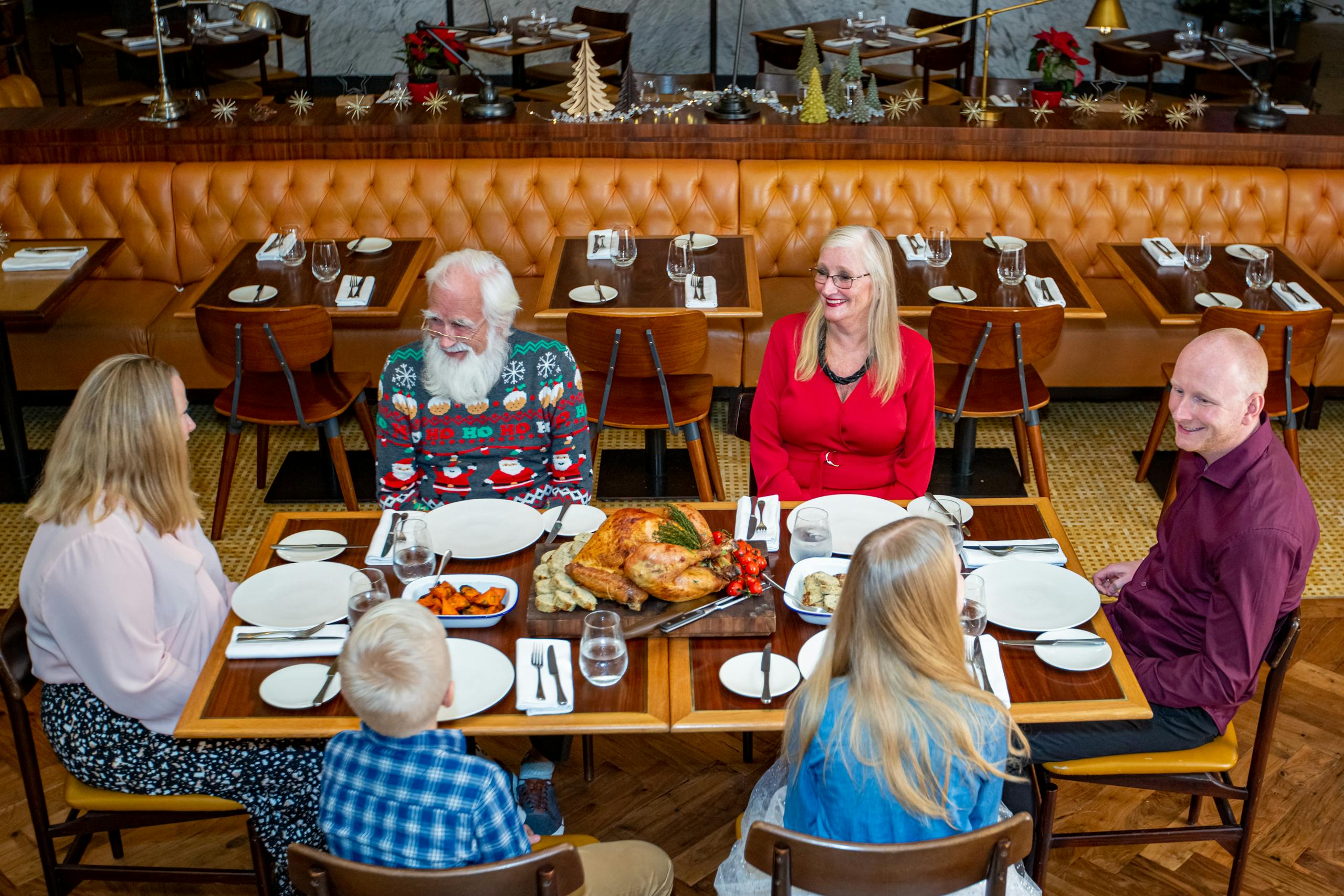
Lastly, there was the “Cut Them Off” Crowd, dispensing no-nonsense guidance for moving forward. They interpreted this not as a mere miscommunication, but as a window into the family’s genuine nature. Their advice was direct and unfiltered: “Sounds like you should skip family dinners for a while. And never pick up the check for other people again.” Perhaps the most devastating remark came from a reader who posed the question, “Did they invite you or did they invite your wallet?” It’s a line that really strikes a nerve.
The Etiquette Verdict
Let’s make one thing absolutely clear: A dinner invitation is not a bill of sale. This woman’s history of generosity was always a gift freely given, and the instant her family started treating it as something owed, they were the ones committing a grievous breach of etiquette. Expecting a guest to foot the bill for a dinner to which they were invited is nothing short of disgraceful behavior.
To then lash out at her for putting her own son first—stepson or otherwise—crosses every line of decency. Family is forged through love and deliberate choice, not merely through “flesh and blood,” a reality her sister-in-law chose to conveniently overlook.

The Final Word
This episode serves as a powerful reminder that generosity should never be treated as something people are entitled to. But it also raises a thorny question about navigating these confrontations as they unfold.
Was this woman justified in holding firm right there at the restaurant, or would it have been wiser to cover the bill to sidestep a public confrontation and then address the issue in private afterward?