My Cousin Wanted Cheddarwurst At My Cookout After I Grilled For 25 Guests, So I Handed Him The Grill
There are unwritten social norms that most of us pick up about how to behave when visiting someone’s home. You show up punctually, you bring a thoughtful token for the host, and you eat what’s been prepared without complaint. It’s a basic social agreement built on mutual courtesy and respect. We naturally make exceptions for genuine allergies or medically necessary dietary needs, but the underlying expectation is that you don’t walk into a friend’s house and treat it like a dine-in restaurant where you can order off a menu.
Yet, one man recently turned to the internet to recount an experience from a family event that demonstrates how some people clearly missed the lesson on fundamental guest behavior. What began as a delightful wedding shower combined with a pool party devolved into a heated discussion about exactly how far a host’s obligations to their guests should extend.
The Incident
Picture an ideal summer afternoon: a family celebration with roughly 25 guests splashing around at a pool party. The host, clearly someone who takes pride in bringing people together, got his grill going and prepared quintessential American cookout staples: hamburgers, cheeseburgers, hot dogs, and bratwurst. He even sent his daughter around to collect everyone’s preferences—a delightful personal touch for a backyard gathering.
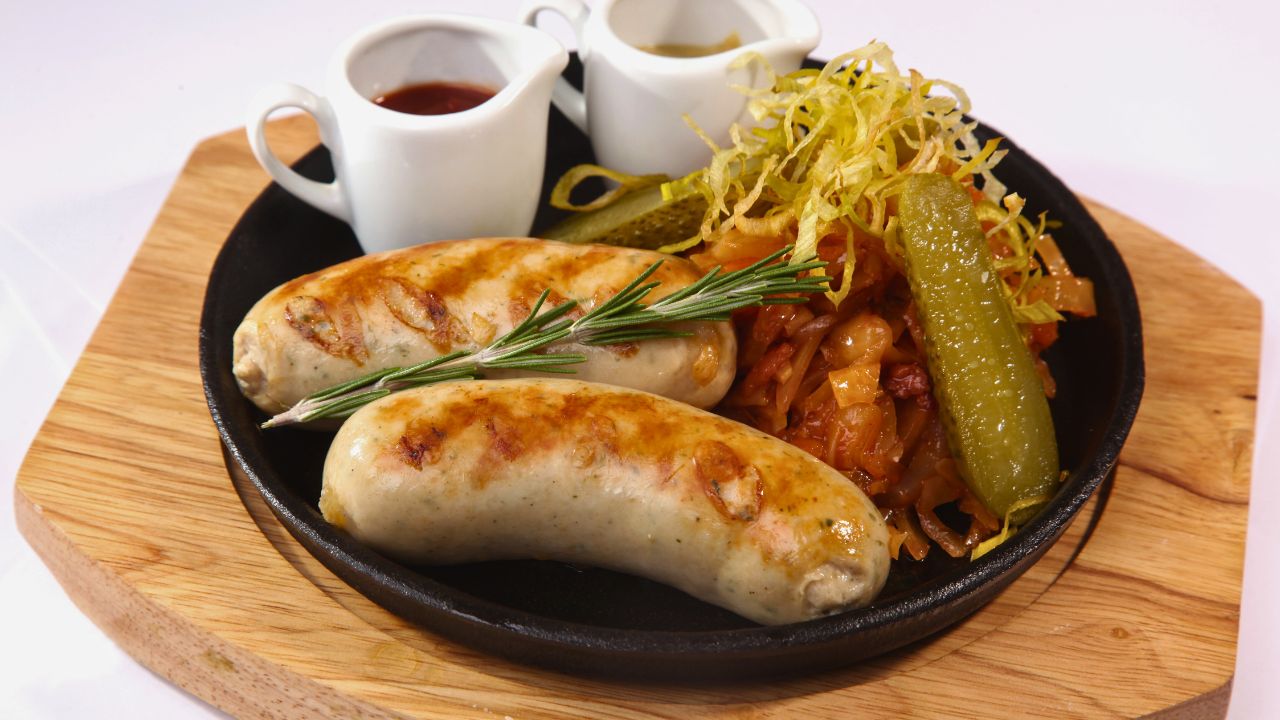
That’s precisely where things went sideways. His cousin, characterized as a “loudmouth,” inquired whether cheddarwurst—a sausage stuffed with cheese—could be added to the lineup. The host shrugged it off, assuming it was said in jest. But roughly 35 minutes later, as he stood drenched in sweat over the scorching grill, nearly done preparing food for over two dozen guests, the cousin’s wife showed up beside him.
She presented him with a package of cheddarwurst, explaining that her husband had sent her on a 10-minute round trip back to their house to grab them, and he now fully expected the host to throw them on the grill for him.

Having spent years accommodating comparable “specialty” demands at his gatherings (including one occasion when a guest showed up with an enormous ribeye steak at a hot dog cookout), the host had finally hit his breaking point. In his own words, “My patience was thin… I was tired, hungry and just ready to get inside to finally eat for myself.” So he finished grilling the remaining burgers, walked over to his cousin, and informed him the grill was “all his.”
The Internet Reacts
After the host shared his account online, questioning whether he’d been impolite, the internet rallied behind him with an overwhelmingly supportive response. The online community was outraged on his behalf, and people’s reactions generally fell into a few clearly defined categories of indignation.
First up was the “A Home is Not a Restaurant” faction. This group was stunned by the cousin’s audacity. Their argument was straightforward: a guest’s role is to show appreciation, not make demands. One commenter put it in no uncertain terms, “Tell your cousin this isn’t a restaurant, if he doesn’t want what’s offered, he can either not eat or go home.”
Another person declared simply, “Don’t like the menu? Don’t eat it.” This view was widely shared among those who believed the host’s response was more than reasonable.
Next came the “The Timing Was the Real Insult” contingent. These readers zeroed in on how tardy the request actually was. The cousin didn’t merely show up with his own food—he delivered it long after the cooking was well underway, at a point when the host was already worn out. One commenter highlighted, “They brought them in late when the chef was already tired.”
Someone else captured the sentiment perfectly by invoking what they described as the “‘chuckwagon cook’ rules apply. If you don’t like what the cook is cooking, you can cook your own dinner.”

Lastly, there was a group that was particularly appalled by the fact that the cousin dispatched his wife to do his bidding. These commenters viewed it as yet another dimension of his entitled attitude. One person observed, “he made his wife go to their house and brought it to op’s house. then he or his wife can spend some minutes grilling the damm thing…” This particular detail seemed to cement the cousin’s reputation as someone who expects everyone around him to serve his desires, without the slightest regard for anyone else.
The Etiquette Verdict
Let’s refill our coffee and state this without ambiguity: the host was absolutely not rude. The cousin’s conduct was genuinely outrageous. When you’re a guest in another person’s home, you operate on their schedule and under their hospitality. A host is neither a personal chef nor a short-order cook at a diner. Making a polite request is one thing; sending your wife on an errand to retrieve a specialty product and then expecting your already exhausted host to prepare it for you represents an entirely different tier of entitlement.
The fundamental rule of being a guest comes down to gratitude. The host’s response wasn’t merely acceptable—it was remarkably generous. He didn’t refuse outright; he simply gave the cousin the means to satisfy his own finicky preference. That is the very essence of a gracious middle ground.
Your Thoughts
So, where do you stand on this? Was the host justified in finally drawing a line and telling his cousin to grill his own food, or should a gracious host always be prepared to go above and beyond to satisfy a guest’s desires?