I Left a 15% Tip After My Server Handed Back a $20 Instead of Small Bills and My Partner Called Me Cheap
It’s no secret that tipping is a cornerstone of the American dining experience. There’s an understood social contract: you express gratitude for attentive service by leaving a gratuity, and these days, 20% is widely considered the benchmark. But what do you do when the server essentially sabotages your ability to leave that customary amount?
A woman recently went online to recount an all-too-relatable scenario that raises a pointed question about who’s really to blame when the change comes back in the worst possible way.
The Incident
The woman and her partner were having a relaxed afternoon at a neighborhood microbrewery they regularly visit. A new waitress was handling their table, and the service was perfectly adequate. When the check came to $57, the woman fully intended to leave a solid 20% tip. The catch? She was only carrying large denomination bills.
She gave the server four $20 bills — $80 in total — and courteously requested change back. You’d think any reasonable server, seeing an $80 payment on a $57 tab, would recognize the customer needs smaller denominations to calculate a proper tip. That should be basic common sense, right?
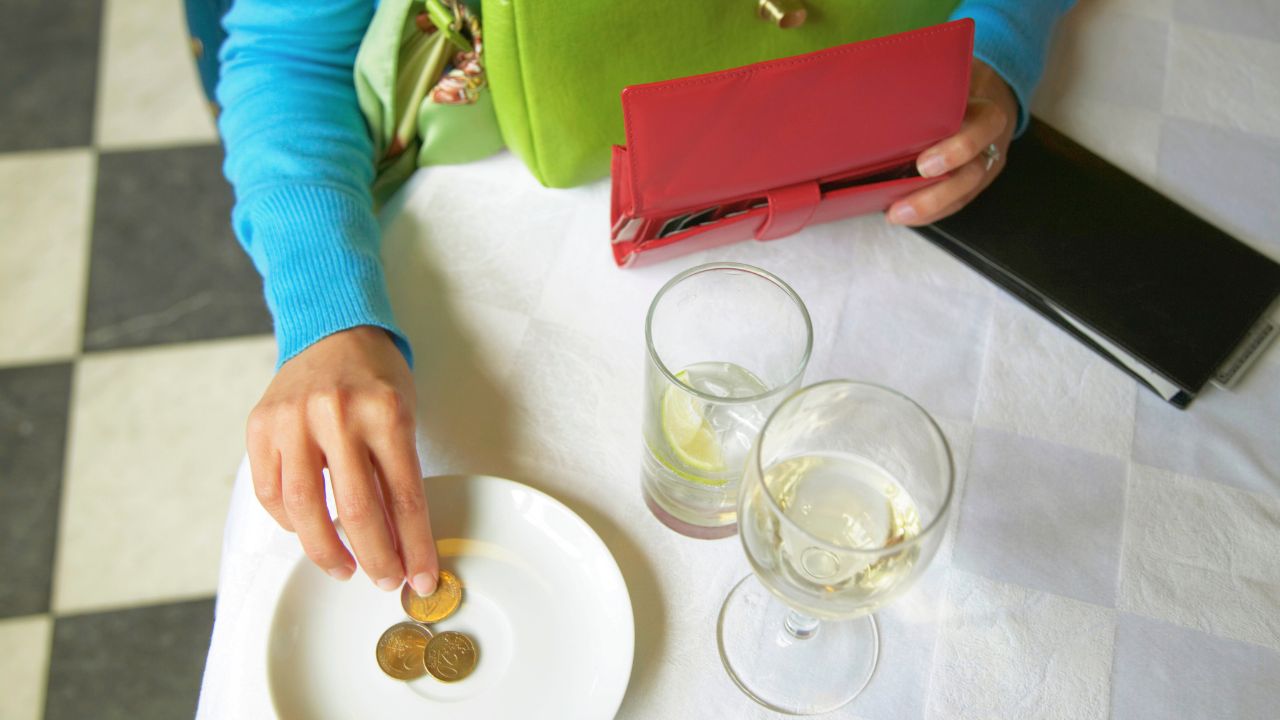
What came back instead was one $20 bill, two $1 bills, and a handful of coins. The couple sat there looking at their change, completely unable to leave the $11-$12 tip they’d planned without surrendering the whole $20. They lingered at the table, hoping the waitress would swing by again, but she never reappeared.
Pressed for time with somewhere else to be, the woman scraped together what she could: the two dollar bills from the change plus seven dollars she dug out of her pocket, totaling a 15% tip.
That’s when things got tense. Her partner accused her of being “cheap,” arguing that since they both had backgrounds in the service industry, she should never tip below 20%. But the woman held firm, maintaining, “if she wanted 20% she should have given me smaller bills or came back when we continued to sit there awhile.”
The Internet Reacts
The online response was swift and sharply divided, with commenters sorting themselves into several distinct factions over this tipping dilemma.
On one side stood the “Absolutely Not” crowd, rallying behind the woman without hesitation. In their view, the server was either clueless or deliberately scheming. One commenter laid it out bluntly: “A good server would have broken the twenty.”
Someone else labeled the server’s tactic “tip roulette,” elaborating, “Server brought back one large bill in the hope you would leave it. Risky move and it didn’t pay off.” This faction placed the burden of responsibility entirely on the waitress, with one person emphasizing, “You shouldn’t have to ask them to go back and make change for your change.”
On the other end emerged the “Devil’s Advocate” camp, who believed the woman bore partial responsibility for what happened. These commenters argued that better communication could have prevented the whole mess. One reader suggested that perhaps the server “has had a day that has run her out of small bills.”
Another was considerably blunter, criticizing the woman for “refusing to communicate.” That person wrote, “I don’t know why you made everyone’s life harder – yours and hers – by not using your words.” According to this camp, simply saying “Could you break this twenty for me?” would have resolved the entire situation.

Lastly, a third group viewed the 15% gratuity not as stinginess, but as a perfectly proportional consequence of the server’s own choices. They weren’t advocating for petty payback — they simply saw the lower tip as the logical result. The server gambled and it backfired.
As one particularly incisive commenter summed it up, “If servers take care of servers, this server did not take care of you.” In their eyes, the woman’s final tip was the ideal answer to a server who dropped the ball on the last critical step of her responsibilities.
The Etiquette Verdict
Let’s get this straight: while being explicit with your requests is always helpful, a server’s responsibilities include managing the entire payment exchange smoothly. Returning a large bill in a scenario like this is, in the most generous interpretation, careless — and in the least generous, a calculated move to pressure a larger tip. Quality service doesn’t conclude when the plates hit the table; it wraps up when the full transaction is finished.
The woman wasn’t being stingy. She was placed in an uncomfortable spot and left a completely reasonable 15% for service she characterized as merely “fine.” A tip is meant to reward good service, not something to be coerced through deliberately inconvenient change. The server botched the final step of the interaction, and the gratuity reflected exactly that.
Your Thoughts
So, what’s your take on this situation? Was the waitress deliberately angling for a bigger tip by returning awkward change, or was the customer at fault for not spelling out exactly how she wanted her bills broken?