I Fed My Autistic Niece a Special Meal, So My Ex-Husband Intervened and Demanded All the Kids Get the Same Food
Most of us grew up with an unspoken law of the family dinner table: whatever is served is what you eat. It was a fundamental lesson about appreciation and manners that was drilled into us from a young age. Turning your nose up at a home-cooked dish or requesting something entirely different simply wasn’t tolerated back then.
Yet one woman recently encountered a scenario that challenges this straightforward principle in unexpected ways—and it isn’t the kids who are stirring up the most drama. She went online to ask whether she was in the wrong for enforcing a separate mealtime standard for her niece compared to her own children, and what she described is a textbook example of the messy realities of blended family life.
The Incident
The tale comes from a woman managing an incredibly full and deeply complicated household. Following a recent divorce, she and her three young kids moved into the home of her widowed sister, who also has three children of her own.
The living situation works for both of them: her sister, who works as a physician, receives help with looking after the kids, while the storyteller gets a stable, affordable home as she returns to her education. It’s essentially two families—six children total—figuring out how to coexist under a single roof after both women endured profound personal upheaval.
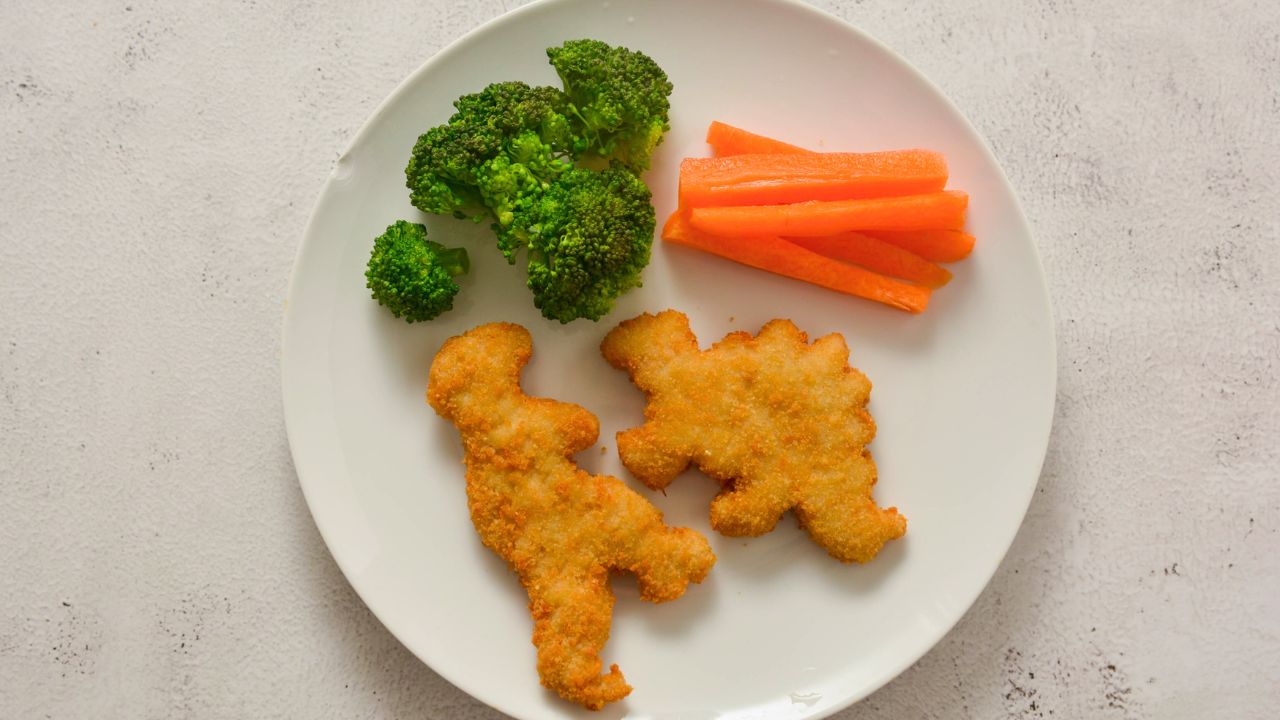
The friction reaches its peak around mealtime. The woman’s 12-year-old niece is autistic and has been diagnosed with ARFID (avoidant restrictive food intake disorder). The upheaval of having her aunt and cousins move into the house triggered a setback, and for roughly the past month, the only way she’s able to consume a meal is if dinosaur-shaped chicken nuggets are included on her plate.
This isn’t about being picky; it’s a genuine medical requirement that enables her to manage her anxiety and actually get proper nourishment. She’s been gradually improving, but the nuggets are absolutely essential for the time being.
Predictably, the remaining five children—all of whom are younger—watch their cousin receive this different treatment and want the same thing. They’ve started demanding dino nuggets at every single meal as well. Their mother has stood her ground, insisting that they eat whatever she has prepared.

The genuine conflict erupted when the children took their grievances to the grandparents and her ex-husband. These outside voices chose to intervene, siding with the idea that “the rule should be that everyone eats whatever I make or dino nuggets should be available to everyone.” Just like that, this mother’s thoughtful approach to a sensitive issue was being challenged by relatives who weren’t even part of the household.
The Internet Reacts
After she posted her story, the online community had no shortage of opinions. The reactions were heated, with the vast majority of commenters rallying behind her and pushing back against the interfering family members.
The “Absolutely Not” Crowd
A large number of readers were outraged on the mother’s behalf, especially regarding the nerve of the grandparents and the ex-husband getting involved. They recognized the situation for exactly what it was: an essential medical accommodation rather than one child receiving a fun bonus. One commenter summed it up brilliantly: “I get so irritated when people who don’t live in your house think they get to referendum vote on this kind of thing.”
Someone else zeroed in on the heart of the matter: “Your niece’s dino nuggets aren’t a ‘special treat,’ they’re literally part of managing her ARFID and autism. You’re not playing favorites; you’re meeting her needs.” Those in this camp believed the mother was handling everything correctly and that the outsiders should back off entirely.
The “Devil’s Advocate”
A smaller contingent attempted to consider the viewpoint of the younger children, who are likewise navigating an enormous life transition. They acknowledged that while the mother’s reasoning was perfectly logical, the world looks very different through the eyes of a three- or four-year-old. As one commenter observed, “it’s basically like 1 kid getting McDonald’s every day while the others have to eat the regular stuff.”
A different user provided a more measured perspective: “Fair treatment does not mean everyone gets the same. It means everyone gets what they need… However, your kids and hers are going through a lot of upheaval right now. Would it hurt for them to get a couple of dino chicken nuggets on their plate, if you’re preparing them anyway?” This group championed showing compassion toward every child in the house.

The “Compromise Crew”
This faction concentrated on workable solutions that could maintain household harmony. They supported the mother’s position but recommended minor concessions to help minimize jealousy. The most widely endorsed suggestion was straightforward: “They all get 1 nugget on their plates with the regular meal a couple of times a week.”
Another commenter proposed turning it into an occasional event: “Is there a reason why you can’t accommodate them with Dino nuggets once a week like maybe on Friday? As a treat?” The most thoughtful contribution came from a feeding therapist, who outlined a way to explain it to the kids: “All bodies are different. Some bodies need glasses to help their eyes… Some bodies need help learning to eat.” This professional guidance was about transforming a source of conflict into a meaningful opportunity to teach empathy and an appreciation for individual differences.
The Etiquette Verdict
Let’s state this unequivocally: this mother is navigating an extraordinarily tough situation and doing so with remarkable composure. The genuine breach of etiquette here isn’t happening at her dinner table—it’s coming from the family members lobbing unsolicited and counterproductive opinions from the outside. Raising children is demanding enough without being undermined by people who don’t have to deal with the everyday logistics.
The fundamental principle of contemporary good manners is that fairness does not always mean identical treatment. Making adjustments for a child’s well-documented medical and psychological condition is not “showing favoritism.” It is conscientious, responsible caregiving. The other grown-ups in this family ought to be providing encouragement and assistance, not adding fuel to the fire and making an already exhausting job even more overwhelming.
Your Thoughts
This is a complicated scenario with numerous factors at play. What’s your take on the best course of action? Should the mother remain firm in her stance, or would finding a middle ground be the most equitable path forward for all of the children involved