Easy Vegan Pesto Pasta
Try this recipe for vegan pesto pasta, made with homemade basil pesto. It can be ready in just 15 minutes, even if you prepare all the ingredients from scratch. Serve it with cherry tomatoes and garnish it with vegan parmesan or nutritional yeast for extra flavor.

We have many delicious vegan pasta sauce recipes you can browse through or try our creamy harissa tahini pasta sauce, vegan mac and cheese sauce, or hidden veggie pasta sauce. Even more inspiration awaits in our list of 30+ easy vegan pasta recipes.
What to expect from this recipe?
The original Italian pesto (also called “pesto alla Genovese“) is made of pine nuts, basil leaves, Parmesan or Pecorino cheese, and a bit of salt. Traditionally, all ingredients are crushed in a mortar and mixed with olive oil. This is the base of all pesto variations. Is pesto vegan? Sadly not.
When you taste our vegan pesto pasta, you can expect a combination of fresh, savory, and slightly nutty flavors. The pesto, made from basil, garlic, olive oil, and nutritional yeast, provides a rich and fragrant sauce that coats the pasta.
Nutritional yeast gives it a cheesy taste, and sunflower seeds provide the nutty flavor instead of pine nuts since we know they can be quite expensive and hard to come by. Overall, this pesto pasta should be a light yet flavorful and satisfying meal.
Ingredients
Here are all the ingredients you will need to make this vegan pesto pasta:
- Pasta – You can choose any vegan pasta, like spaghetti or penne. If you want something unique, try our vegan sweet potato gnocchi. Have you thought about trying zucchini noodles?
- Pasta water – Reserve some before you drain your cooked pasta.
- Fresh basil leaves → You need fresh herbs. You cannot make pesto with dried herbs.
- Fresh garlic clove → Using fresh ingredients in pesto will give you a stronger flavor and better texture than dried alternatives, like garlic powder or granules.
- Nutritional yeast → instead of Parmesan cheese
- Sunflower seeds → instead of pine nuts
- Extra virgin olive oil
- Salt
? You can find detailed measurements for all ingredients in the printable version of the recipe card at the bottom of this post.
Instructions
Making homemade pesto
- Wash the basil leaves. Dry it with a paper towel or kitchen cloth.
- Peel garlic clove.
- Measure all other ingredients.
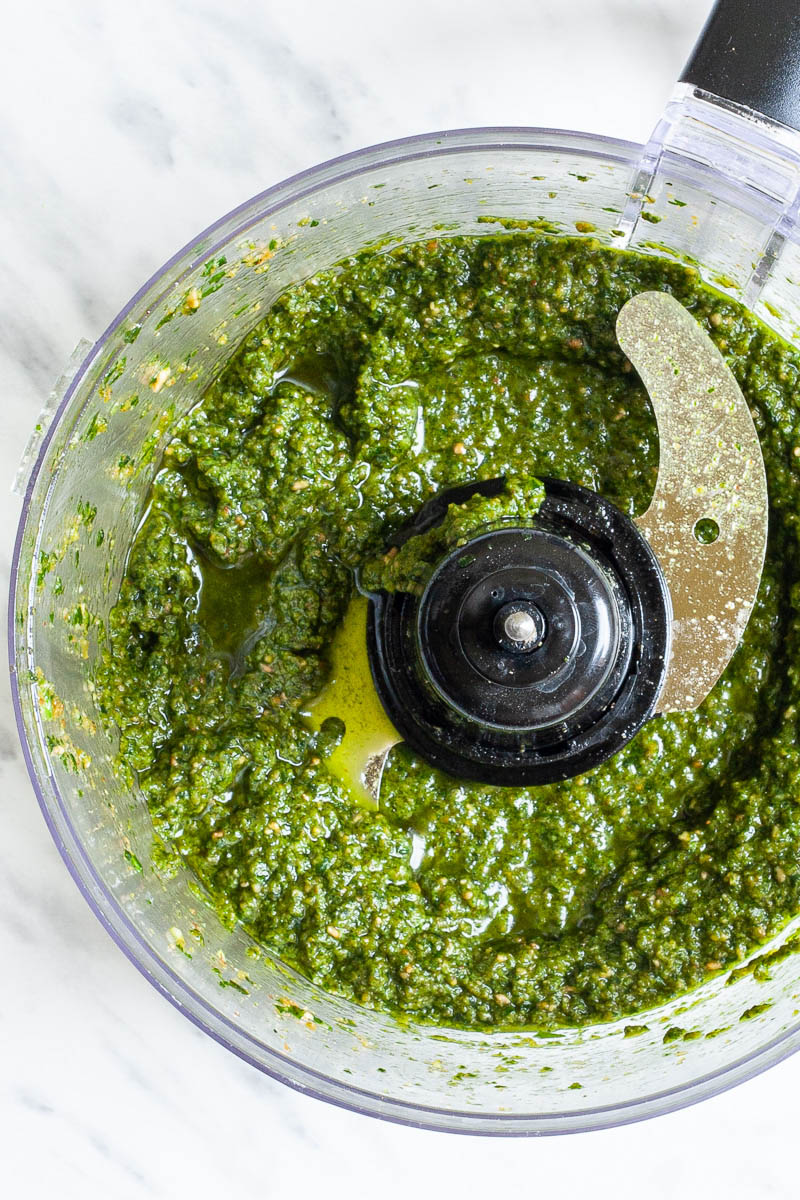
- Add all ingredients (basil, extra virgin olive oil, sunflower seeds, garlic, and nutritional yeast) to your food processor (to make a smaller serving size, use an immersion blender) and blend. Stop and scrape the sides of the container from time to time. The final consistency should resemble a thick, stiff paste with some chunks rather than being as smooth as oil-free hummus.
Making vegan pesto pasta
- Boil water. Cook pasta in a large pot of boiling water according to package instructions.
- While cooking pasta, prepare the pesto.
- Once the pasta is cooked, save a bit of cooking water, then drain it.
- Heat a skillet or frying pan over low/medium heat.
- Add 1 serving of cooked pasta and 2 tablespoons of pesto, and a small amount of reserved pasta water.
- Use tongs or a spatula to toss and mix the pasta and pesto over low-medium heat. The pasta water will help the pesto to coat the pasta evenly, making it look glossy and delicious.

Cooking tip
- Frying vs tossing. Frying pasta with pesto is not mandatory. It is usually served by just tossing hot, cooked, and drained pasta with the pesto. However, frying has benefits, such as providing an even coating on the pasta and making the pesto a bit creamier, milder, and less harsh.
Variations
- Use our homemade vegan spinach pesto instead of the simple basil pesto.
- How about some red pesto tofu pasta? Use our vegan sun-dried tomato pesto. You will love it, I am sure.
- If you want more unique combinations, try this parsley walnut pesto, this almond pepitas pesto, or this exciting mix of spinach garlic scape pesto.
Toppings
You can never go wrong with some vegetables for any vegan pesto pasta recipe. Our favorite ones are the following:
- Lightly roasted cherry tomatoes or sun-dried tomatoes (It is always nice to add a bit of color.)
- Sauteed mushrooms
- Pan-fried oyster mushrooms
- Roasted asparagus and mushrooms
- Sauteed broccoli or even better broccolini
- Green peas
- Sweet corn
- Olives (kalamata or green)
- Legumes (beans, lentils) like white beans, red kidney beans, chickpeas (roasted or cooked)
- Nuts and seeds (almond slices, pepitas, pistachios, walnuts, or any leftovers from making the pesto)
- More vegan parmesan, or nutritional yeast
- Vegan feta cheese crumbles or vegan mozzarella
- Vegan bacon bits
Let us know in the comments what is your favorite topping!

Equipment
- Food processor vs immersion blender. It depends on how many batches you plan to make. We have had good results using our Bosch immersion blender to make pesto for 2 servings (4 Tablespoons), even with tough ingredients like seeds.
- Cast-iron skillet or frying pan. Both can be a good choice. We use pasta water and low heat to ensure they don’t stick to either type.
Storing tips
- Fridge: We don’t recommend storing pesto sauce and pasta together. As time passes, the pasta can get soggy and dry since it will absorb more from the sauce. You can keep any homemade pesto in the fridge for 3-4 days without a problem and cook pasta when ready to eat the whole dish.
- Freezer: Pesto and cooked plain pasta can be stored in the freezer for up to 6 months. For best results, they should be frozen separately. We recommend freezing pesto in ice cubes, so you have the option to thaw only 1-2 servings at the same time.
- Reheating: Thaw the pesto and pasta in the refrigerator. Boil water in a kettle. Reheat the pasta in a pot of water for 1-2 minutes. Then follow the instructions to mix pesto and pasta in a frying pan or skillet.
FAQ
What if you added too much pasta water?
At first, it may seem that the pesto is too thin because of the cooking water, but as the dissolved starch in the cooking water is activated, it coats the pasta nicely and evenly. If you still think you added too much, add a bit more pesto and cook it longer on low heat to vaporize the excess water.
What if I forgot to add the pasta water?
If you don’t add the cooking water, you will start to cook the pesto, essentially. It can result in the fresh green leaves of basil turning brownish. Just add some fresh water, like one Tablespoon, to avoid that.

More vegan pasta recipes
We have a collection of more than 30 easy and delicious vegan pasta recipes, and lots of vegan pasta sauce recipes.

Easy Vegan Pesto Pasta in 15 mins!
Equipment
- Food processor
- Immersion hand blender with 20 fl oz container
Ingredients
Homemade vegan pesto (it yields 4 Tbsp – exactly how much you need for 2 servings)
- 2 cup Fresh basil leaves
- 1,5 cloves Garlic
- ⅛ cup Nutritional yeast
- ¼ cup Sunflower seed (raw, unsalted) or toasted/roasted
- ¼ cup Olive oil
- ¼ tsp Salt
Pesto pasta
- 4 oz Pasta
- 4 Tbsp Pesto
- ⅓ cup Reserved cooking water
Instructions
Making homemade pesto
- Wash basil leaves. Peel garlic. Measure the other ingredients.
- Take a food processor and add all ingredients. Stop and scrape the sides from time to time. Blend until you get a thick, stiff paste-like consistency with a little chunkiness.
- If you want to make it for 2 servings (approx. 4 Tbsp pesto), we recommend using the immersion blender with a narrow but tall container.
Making pesto pasta
- Take a skillet or frying pan and heat it on low/medium heat.
- Add the cooked and drained pasta.
- Add the pesto on top with a bit of pasta cooking water. Mix while you warm them up on medium heat.
- At first, it may seem that the pesto is too thin because of the cooking water, but as the dissolved starch in the cooking water is activated, it coats the pasta nicely and evenly. If you don't add the cooking water, you will start to cook the pesto, essentially.
UPDATED: This recipe was originally posted in May 2021. It has been updated with more info, tips, serving suggestions, and related recipes and republished in Jan 2023.