My Mother-in-Law Said She Wasn’t Hungry Then Blamed Me for Not Saving Her a Chicken Sandwich
We’re frequently reminded that honest, straightforward communication forms the foundation of every healthy relationship. It’s a basic principle of courtesy and mutual respect: express yourself clearly, and stand behind your words. This holds particularly true when you’re a guest in someone else’s home. You accept offerings graciously, and if you turn something down, you don’t later blame your host for honoring that choice.
Yet, one woman recently posted an experience online that demonstrates how not everyone follows these unwritten rules. She ended up trapped in a bewildering and genuinely draining conflict with her mother-in-law, all triggered by a late-night chicken sandwich that somehow escalated into a full-blown family meltdown.
The Incident: A Craving Turns into Chaos
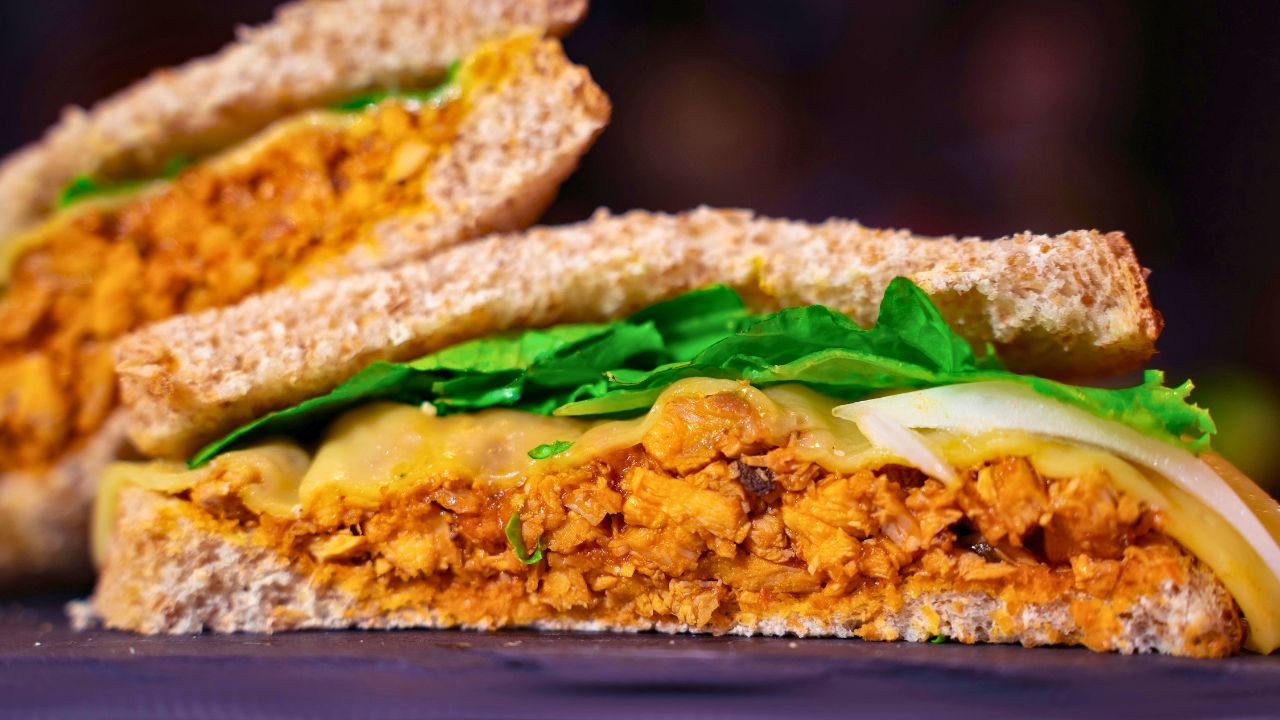
The tale starts innocuously enough. A young woman, who typically follows an intermittent fasting routine, found herself craving a chicken sandwich topped with chili late one evening. Being a thoughtful host, she checked with her mother-in-law, who was staying at their home, to see if she wanted one too. The mother-in-law gave a definitive and straightforward “no.”
With that answer, the woman prepared a single sandwich and, in her own words, “quickly gobbled it up.” When her mother-in-law wandered back into the kitchen and spotted the empty plate, her demeanor changed completely. “You’re done that fast?!” she exclaimed, before reprimanding her daughter-in-law: “and you didn’t think to at least offer people staying in the house with you a bite?”
The stunned woman pointed out that her mother-in-law had literally just said she wasn’t hungry. But the expectations shifted once more. “You didn’t think to store some in the fridge in case I DO get hungry?!” her mother-in-law insisted. Overcome with guilt, the woman immediately sprang into action to remedy the situation. She volunteered to prepare a fresh sandwich and even drove to multiple convenience stores close to midnight, hunting for the exact brand of chili her mother-in-law had caught a whiff of.
Upon returning with a takeout sandwich as an alternative, her mother-in-law turned it down flatly, declaring, “I don’t eat takeout.” Not wanting to let perfectly good food go to waste, the woman ended up eating the second sandwich herself. The following morning, she woke up to discover that her mother-in-law had departed, leaving behind a theatrical text message saying she would “never be putting her foot in our house ever again for the amount of disrespect” she had endured.

As it turned out, the mother-in-law had gotten hungry later that night, gone searching for the very takeout sandwich she had rejected, and was livid when she discovered it was gone. Making the entire ordeal even worse, the woman’s husband took his mother’s side completely, labeling his wife’s behavior as her “fault.”
The Internet Reacts: A Chorus of Disbelief
Once the woman shared her account online, the internet responded with near-total agreement in its judgment. Readers were horrified by the mother-in-law’s conduct and arguably even more outraged by the husband’s failure to stand behind his wife. The responses generally clustered into a few recognizable groups.
Camp 1: The “Absolutely Not” Crowd
The overwhelming majority of commenters were incensed on the woman’s behalf, viewing the mother-in-law’s behavior as manipulative and deeply unfair. The highest-rated comment captured the sentiment perfectly: “If someone tells you they don’t want any, they don’t get any. Words mean things.”
Someone else chimed in, “You literally can’t win with people like that.” Numerous respondents emphasized that the real issue wasn’t the daughter-in-law at all—it was her husband. “Forget MIL… You’ve got a husband problem,” one commenter declared. “I can’t believe he was okay with you running around at midnight for his mom.”
Camp 2: The “It’s a Power Play” Observers
This contingent didn’t condone the behavior but attempted to unpack the psychology driving it. They interpreted the mother-in-law’s actions not as a mere miscommunication, but as a calculated effort to manufacture conflict and exert dominance. “This was a power play by your MIL,” one individual asserted.
Another concurred, writing that the mother-in-law “is just looking for something to be ticked off about and a reason to be the victim.” One particularly insightful commenter observed that this kind of passive-aggressive communication pattern is, regrettably, quite widespread. “She’ll just passive-aggressively expect you to read her mind,” they wrote, describing a dynamic many people have encountered firsthand.
Camp 3: The “Good Riddance” Crowd
Lastly, a number of commenters managed to spot an upside in the mother-in-law’s theatrical departure, though they remained doubtful it would stick. Responding to her vow never to return, one person joked, “OP can hope, but this is probably another chicken sandwich situation.” Others extracted dark comedy from the no-win scenario, suggesting that the only possible way to satisfy the mother-in-law would be to set out “teething biscuits” or a “lunchable in the fridge for her to snack on when she gets fussy.”
The Etiquette Verdict
Let’s cut right to it: this mother-in-law’s behavior was entirely unacceptable. In civilized society, nobody is expected to possess psychic abilities. The daughter-in-law exceeded every reasonable expectation a host could be held to—first by extending an offer, and then by racing across town near midnight to resolve a problem she had no part in creating.
Declining an offer and then lashing out when that decline is honored is a textbook form of manipulation, pure and simple. The fundamental rule of being a gracious guest is to state your needs openly and politely. If you tell someone you’re not hungry, your host has every right to take you at your word. Engineering a scenario where the other person is guaranteed to fail isn’t just impolite—it’s cruel.

What Do You Think?
This entire debacle raises persistent questions about family power dynamics and fundamental respect. It’s a complicated mess that extends well beyond a mere sandwich. Was this mother-in-law deliberately playing manipulative games, or was her daughter-in-law genuinely being inconsiderate?