My Project Lead Had A $70 Meal Allowance, But Still Tipped $5 On Every Work Dinner
There are unspoken expectations most of us naturally pick up on, particularly when we’re acting as representatives of our employer. We understand the importance of courtesy, appropriate attire, and maintaining a professional demeanor, even outside of office hours. It’s about showing respect, not only for ourselves, but for the organization we’re associated with.
Yet, a woman recently posted a story online that demonstrates not everyone shares this mindset, particularly when meals are being covered by the company. Her account of a penny-pinching coworker has ignited an intense discussion about tipping, etiquette, and our obligations to those who serve us.
The Incident
The woman shared that she had been traveling for work alongside her project lead. Their employer offers a fairly generous meal allowance, permitting up to $70 per day in food expenses. According to company protocol, the senior team member, in this case her lead, was tasked with using the corporate card and managing the expense reports for them both.
After several days together, she began to pick up on a disturbing trend. At dinner, regardless of whether the bill came to $60 or $100, he would leave a flat $5 tip every single time. She was absolutely horrified. On one particular evening, his cheapness embarrassed her so much that she quietly slipped back inside the restaurant to hand the server additional cash as compensation.
The breaking point arrived when, following yet another dinner with a $60 tab, he once again left just $5. She recalled, “The server gave us a dirty look as we pulled away in the car.” Making the situation even worse, her colleague happened to be wearing a company-branded shirt, effectively advertising his terrible behavior to everyone around. “That’s a representation of me and our company,” she expressed with frustration.
Unable to hold back any longer, she decided to address it directly while they were in the car. “You gotta start tipping more,” she said. “We get $70 a day and these servers don’t make barely anything and probably have families to feed.”
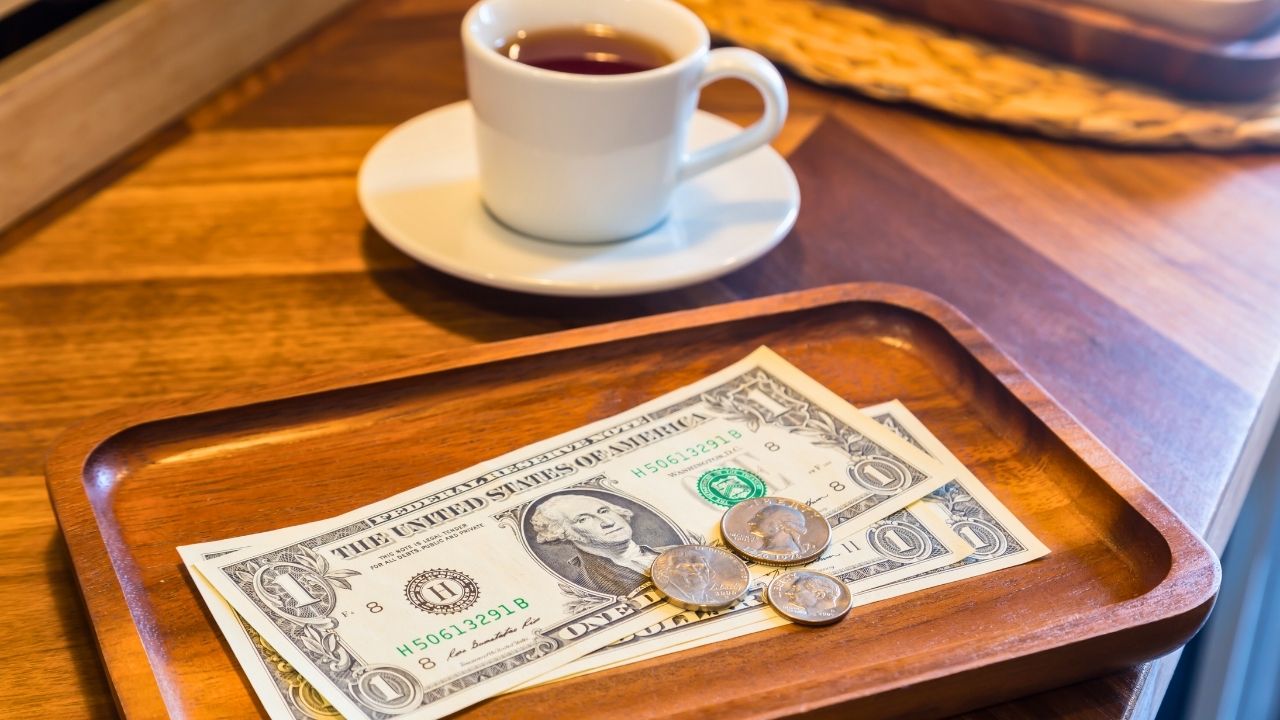
Her colleague reacted poorly to the criticism. He grew visibly upset, grumbling about being the one burdened with tracking all the expenses. He then attempted to defend himself by claiming servers probably earned at least $7 an hour, as they do in his home state, entirely overlooking the fact that it wasn’t even his own money he was spending.
The Internet Reacts
Predictably, the internet was buzzing with opinions about this workplace conflict, and people were deeply divided. Commenters rapidly split into distinct groups based on whether the woman was justified in speaking up or had crossed a line.
Camp 1: The “Absolutely Not” Crowd
A large number of readers were outraged on the woman’s behalf, insisting that her colleague’s conduct was completely unacceptable. They emphasized that in America, tipping isn’t merely a nice gesture; it’s an understood social obligation. One commenter summed it up bluntly: “No one is legally bound to tip… but that doesn’t mean that they wouldn’t be a grade A a..hole. If you’re not going to tip then don’t eat out.”
Another person held nothing back, labeling the man an “elitist and a control freak who thinks it’s his place to determine the hourly wage of the waitstaff.” They went on to add, “I bet he’s also picky about the service he receives, am I right? Tightwads usually are.”
Camp 2: The “Devil’s Advocate”
Naturally, not everyone was on the same page. Some believed the woman had been wrong to reprimand someone above her in the chain of command. Several commenters from outside the U.S. expressed genuine confusion about the whole ordeal, underscoring how tipping norms vary dramatically across cultures. “Is this an America Issue I’m too European to understand?” one individual asked, pointing out that where they live, a 10% tip is viewed as quite generous.
Others maintained that tipping is inherently voluntary. “Tipping is a choice, not an obligation,” one commenter declared without hesitation. Another person aimed their criticism not at the colleague, but at the broader system: “You really feel bad for these servers? Direct your anger towards the system, not the people who refuse to play ball.”
Camp 3: The Problem Solvers

A third contingent was less interested in assigning blame and more focused on finding workable solutions. They believed the woman’s intentions were good, but her approach could have been more tactful. “I might have approached it differently by first asking him why he only tipped the amounts that he did rather than starting with the accusations,” one person recommended.
Perhaps the most pragmatic advice came from someone who pointed toward official guidelines. “Might want to check company policy,” they wrote. “My company actually tells us to tip 20% on meals.” This straightforward step could have resolved the entire matter without any awkward confrontation.
The Etiquette Verdict
Let’s set the record straight. Although the broader conversation around tipping culture has merit, it’s beside the point here. This man wasn’t spending his own hard-earned cash; he was utilizing company funds allocated specifically for this purpose. Being stingy with money that isn’t yours, particularly when it directly affects the income of a service worker, is simply bad behavior.
Beyond that, when you’re traveling on behalf of your employer, you serve as a representative of that organization. His actions cast a negative light on both his company and his colleague. The fundamental principle of business expenses is to act reasonably and with respect. This man’s conduct failed on both counts. Being a decent human being doesn’t cost a thing, and in this particular scenario, that was quite literally the case.

What’s Your Take?
This is a delicate situation sitting at the intersection of workplace dynamics and social norms. So we need to ask: Was the woman justified in calling out her boss over his lousy tipping habits, or should she have kept quiet and let the matter slide?