Nephew Ordered a $190 Tomahawk Steak on My Tab. I Made BIL Pay When He Couldn’t Finish It.
There are certain unwritten rules of etiquette we all learn growing up. When someone invites you to their home, you bring a small gift. When you are a guest at dinner, you don’t criticize the food. And when someone generously offers to treat you to a meal, you certainly do not order the most expensive item on the menu. It is a simple sign of respect.
However, one woman recently took to the internet to share a story about a family dinner that proves not everyone follows these basic rules of civility, forcing her to draw a very expensive line in the sand.
The Incident
The story begins with a kind gesture. A woman, who is currently child-free, wanted to treat her sister’s family to a nice dinner during a rare visit. The party of eight, which included her sister, brother-in-law, his mother, and three children, went to a steakhouse the woman had always wanted to try. She happily announced that the meal was her treat.
Things took a turn when her 15-year-old nephew spotted a tomahawk steak on the menu. The aunt gently pointed out that it was a massive three-pound cut of meat with three full sides, suggesting he might want to pick something smaller. But her brother-in-law jumped in, insisting his son could eat it all. He then had the audacity to accuse her of “trying to cheap out” when she hesitated at the $190 price tag.
Backed into a corner, the woman made a deal. “I said fine,” she explained, “but if he doesn’t eat it all then you have to pay for it.” Her brother-in-law agreed. Even after the waiter confirmed the steak was usually shared among several people, the father doubled down, smiling at his son and saying it was “no problem.”
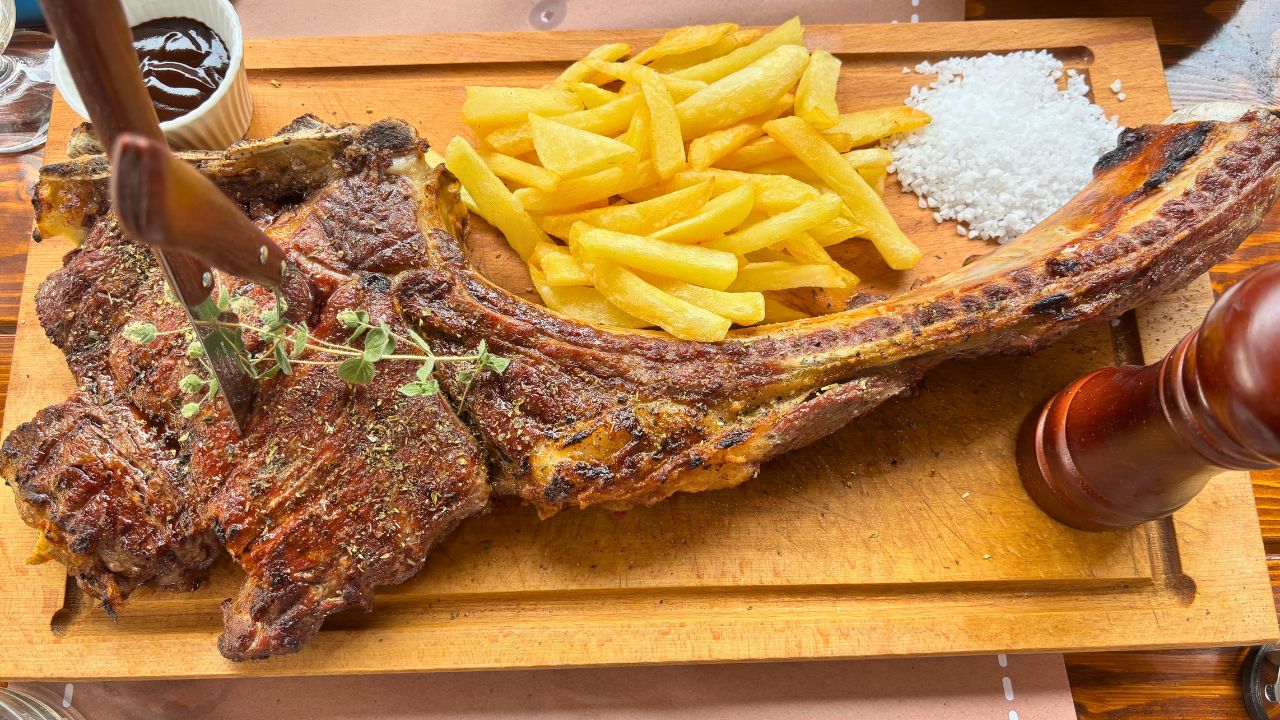
Of course, the teenager barely made a dent, finishing less than a quarter of the steak. When the bill arrived, the aunt paid for seven meals, all the drinks, and the entire tip, but asked for the $190 steak to be put on a separate bill for her brother-in-law. He paid “with ill grace,” and her sister later tried to guilt her, revealing that the money came from their budget to take the family to see the new Spider-Man movie.
The Internet Reacts
The online community was overwhelmingly on the aunt’s side, with thousands of people expressing shock at the family’s entitled behavior. The reactions quickly sorted into a few distinct camps.
First, there was the “Absolutely Not” Crowd, who were furious on the woman’s behalf. They felt the brother-in-law and nephew had completely abused her generosity. One commenter put it perfectly: “‘My treat’ does not mean abuse my generosity.”
Another was stunned by the father’s nerve, writing, “The audacity of the BIL to accuse OP of ‘trying to cheap out’ when his son picked a $190 dish. Who says that!?” Many agreed that ordering such an item was simply rude, regardless of who was paying.
Then came the Parenting Police, who were less focused on the money and more on the terrible lesson being taught. These readers were baffled that neither the mother nor the father stepped in to guide their son toward a more appropriate choice. “What on earth was anyone thinking agreeing to let that kid order that steak?” one person asked. “I don’t care who’s paying, my kid isn’t going to order a $190 meal.”
Another pointed out the hypocrisy, saying it was “disgusting” for a father who has to budget for a movie night to allow his son to be so wasteful with someone else’s money.
Finally, there was the “Never Again” Crowd, offering advice for the future. Many felt this incident should be the family’s last free meal. “I think this would be my last ‘my treat’ meal,” a reader advised. “Especially since they tried to take advantage of you.”
Another user shared a clever tip for avoiding this situation altogether: “If you want to treat everyone to a meal, don’t say anything til the end! Announce it when the check comes!” That way, everyone orders what they can afford, and the treat remains a wonderful surprise.
The Etiquette Verdict
Let’s be perfectly clear: generosity is a gift, not an entitlement. When someone offers to pay, it is a kindness that should be met with gratitude and respect, not greed. The golden rule of being a guest at a restaurant is to order a mid-priced item—something you would comfortably order if you were paying yourself. To deliberately choose the most lavish dish is a major social blunder that signals a lack of appreciation for your host.
The brother-in-law was completely out of line, first for encouraging his son’s poor choice and second for insulting his sister-in-law. The woman was not “cheaping out”; she was being sensible. She was right to stand her ground. A deal is a deal, and the consequences of this little stunt fell exactly where they belonged.
What Would You Do?
This situation puts a spotlight on a tough family dynamic. Was the aunt right to enforce the deal and teach her brother-in-law a lesson, or should she have just paid the bill to keep the peace?
Ready for the next level of insight? Discover more in my latest article here.