Creamy Harissa Tahini Pasta
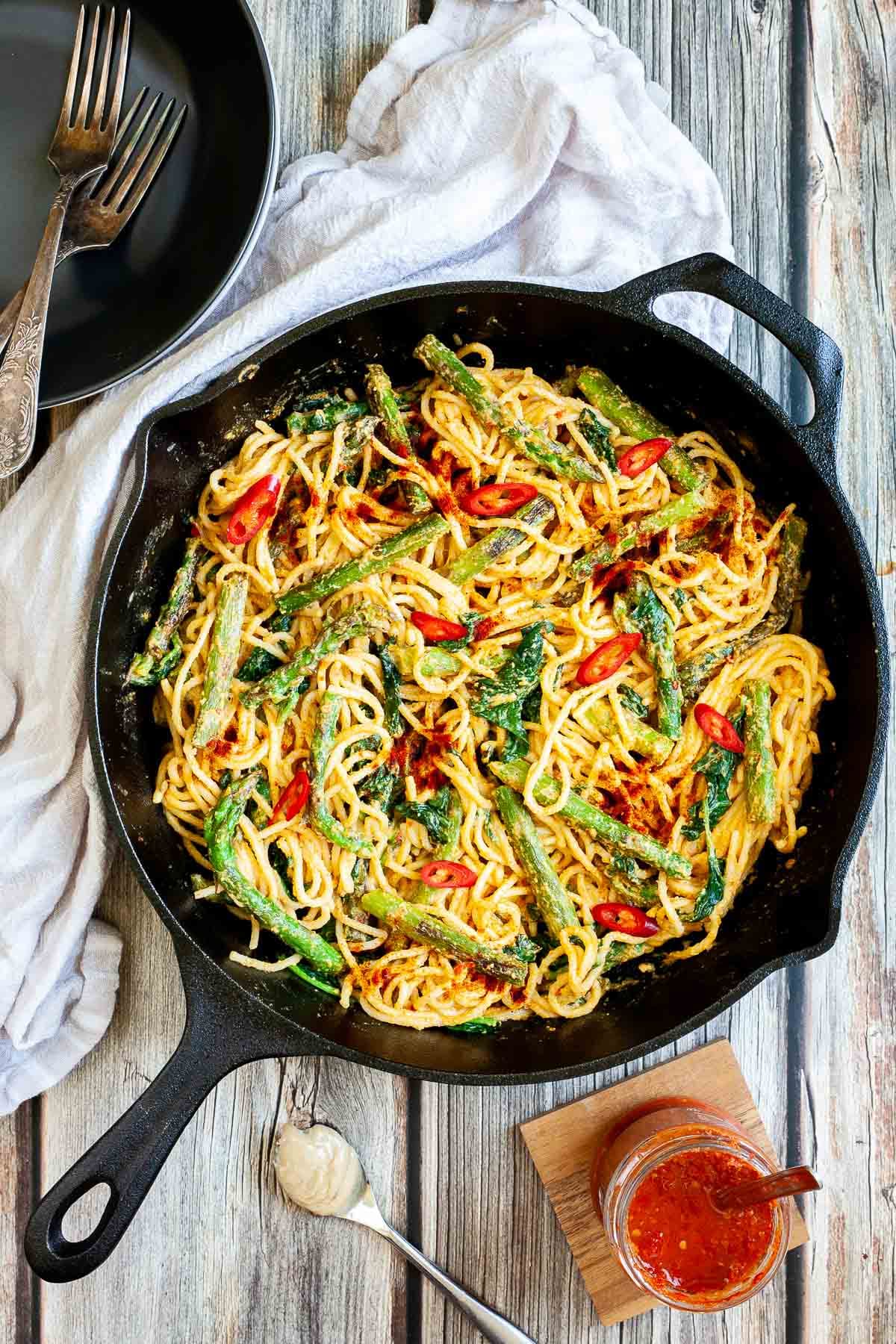
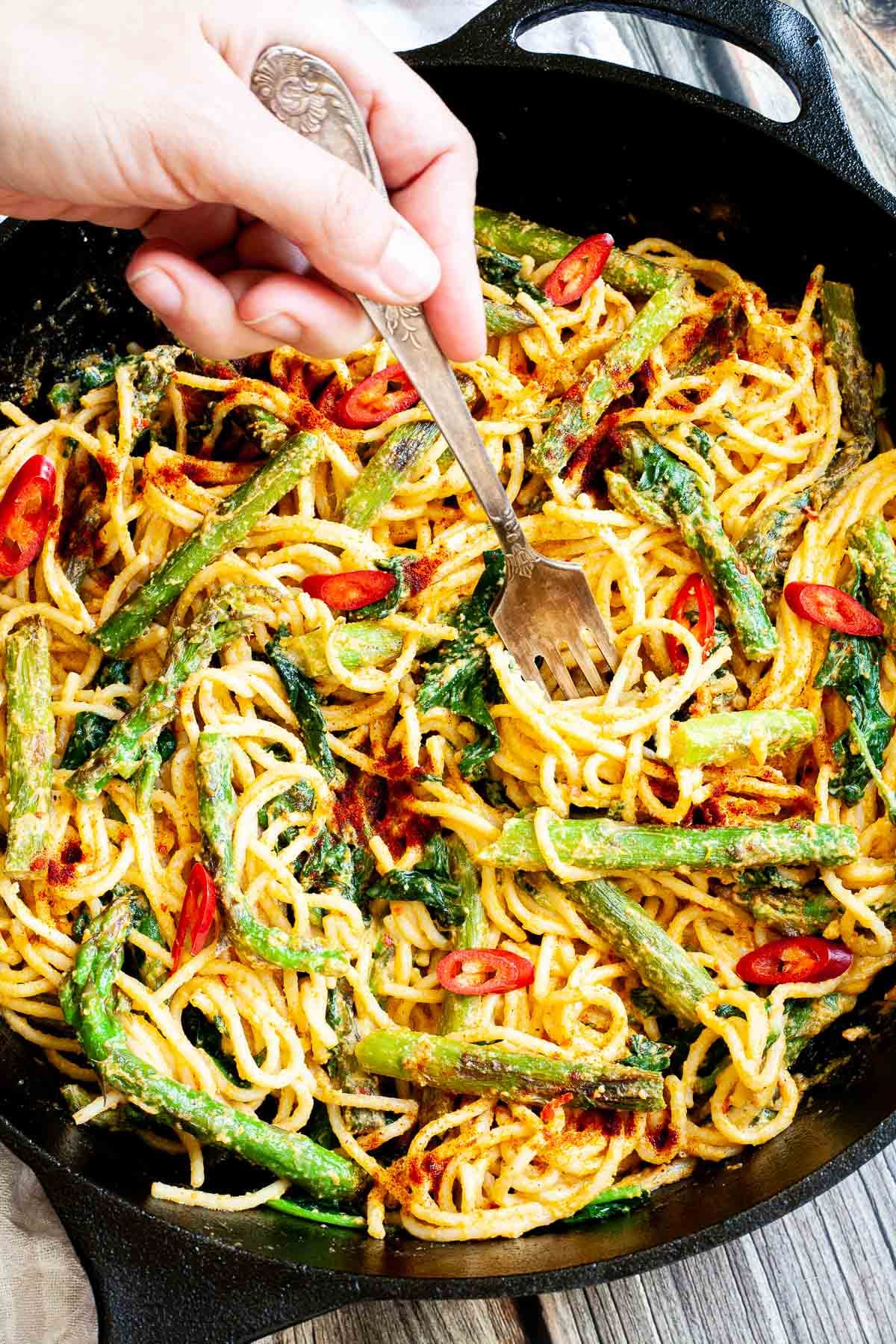
This harissa tahini pasta takes only 20 minutes to make, requires minimal ingredients, and is packed with flavors. The tahini creates a rich and creamy sauce, while the harissa adds a spicy kick. Serve it with some roasted asparagus and sauté spinach for a quick and delicious meal.
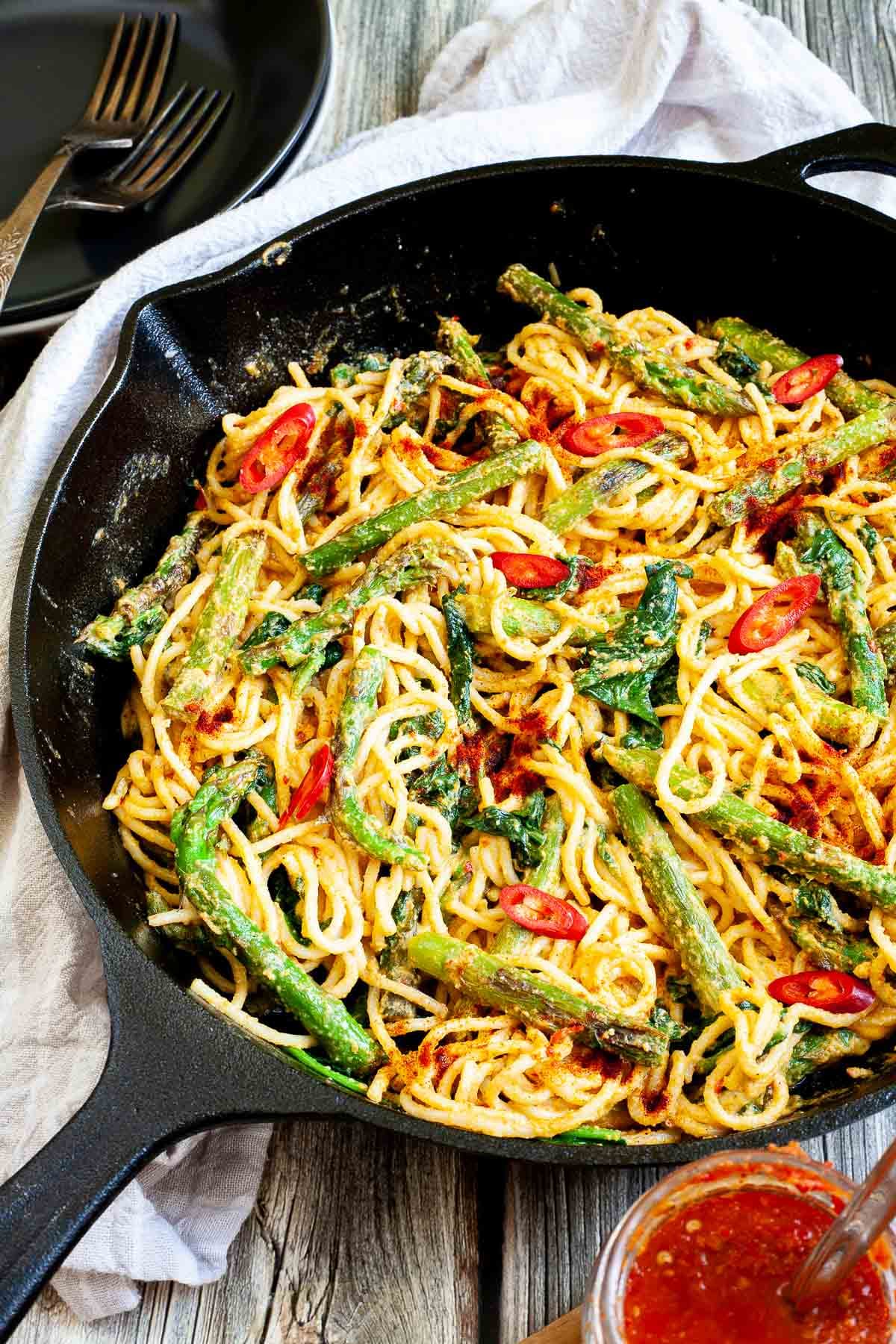
It is not always easy to find delicious vegan pasta recipes that are unique. This recipe is easy, delicious, and great for busy weeknights when you want something tasty and different for the family.
If you love vegan pasta recipes, you should check out this 15-minute creamy spinach pasta sauce, or this caramelized carrot pasta sauce! They are both delicious and versatile.
❤️ Why you’ll love it
I absolutely love how this harissa tahini pasta is both creamy and rich, thanks to the tahini and harissa paste. The combination of these two ingredients not only creates a lusciously smooth sauce but also adds a mildly spicy and incredibly flavorful element to the dish.
What makes this recipe even better is that it is quick and easy to make. The simple process of boiling the pasta while preparing the sauce and sautéeing the vegetables makes it a perfect option for a busy weeknight.
The best part is that the result is a restaurant-quality dish that is not only delicious but also completely vegan. The flavors are truly irresistible.
? Key ingredients
This harissa tahini pasta is a fusion of flavors, and the ingredients are easy to find at your local grocery store. You may even have some of them in your pantry already.
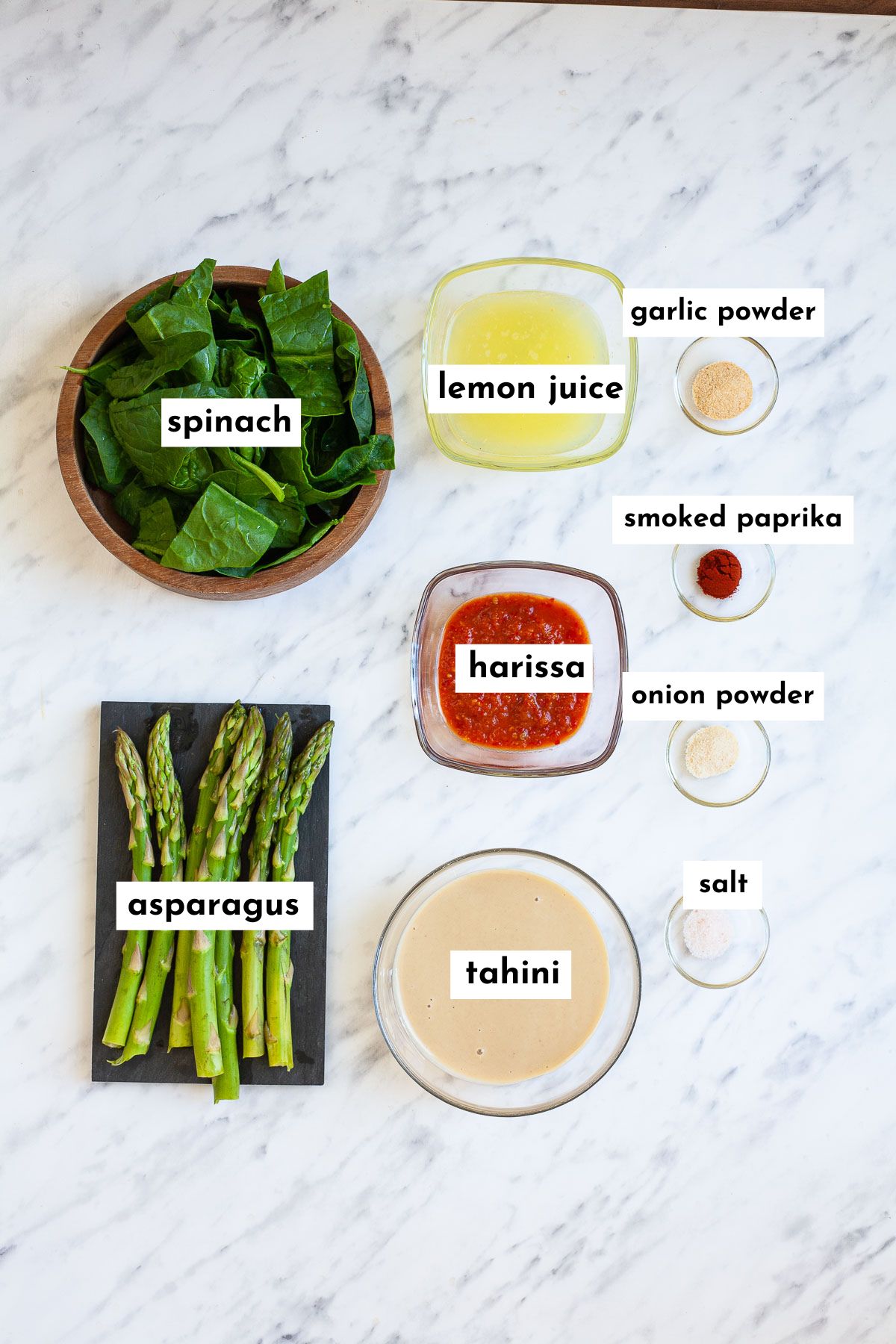
Harissa is a key ingredient in this recipe. It adds a spicy, smoky flavor that is characteristic of North African cuisine. When combined with the creamy tahini, it creates a rich and flavorful sauce.
Fresh lemon juice and zest are important in this recipe. They add a bright, citrusy flavor that balances the richness of the sauce. The zest is optional, but I highly recommend it for an extra pop of flavor.
Asparagus and spinach add a pop of color and a fresh, crisp texture that complements the creamy pasta.
? You can find detailed measurements for all ingredients in the printable version of the recipe card at the bottom of this post.
? Equipment
To make this harissa tahini pasta, the most important piece of equipment you will need is a good quality cast-iron skillet. Its ability to distribute heat evenly ensures that the vegetables are perfectly cooked and that the pasta is well coated with the delicious harissa tahini sauce.
?? Instructions
Preparing the ingredients
STEP 1
Fill a large pot with water and bring it to a boil. Add the pasta and cook it according to the instructions on the packet. Reserve some of the pasta water for later use.
STEP 2
While the pasta is cooking, wash the spinach leaves. If you are using baby spinach leaves, they do not need to be chopped. However, if you are using larger spinach leaves, chop them into smaller pieces.
STEP 3
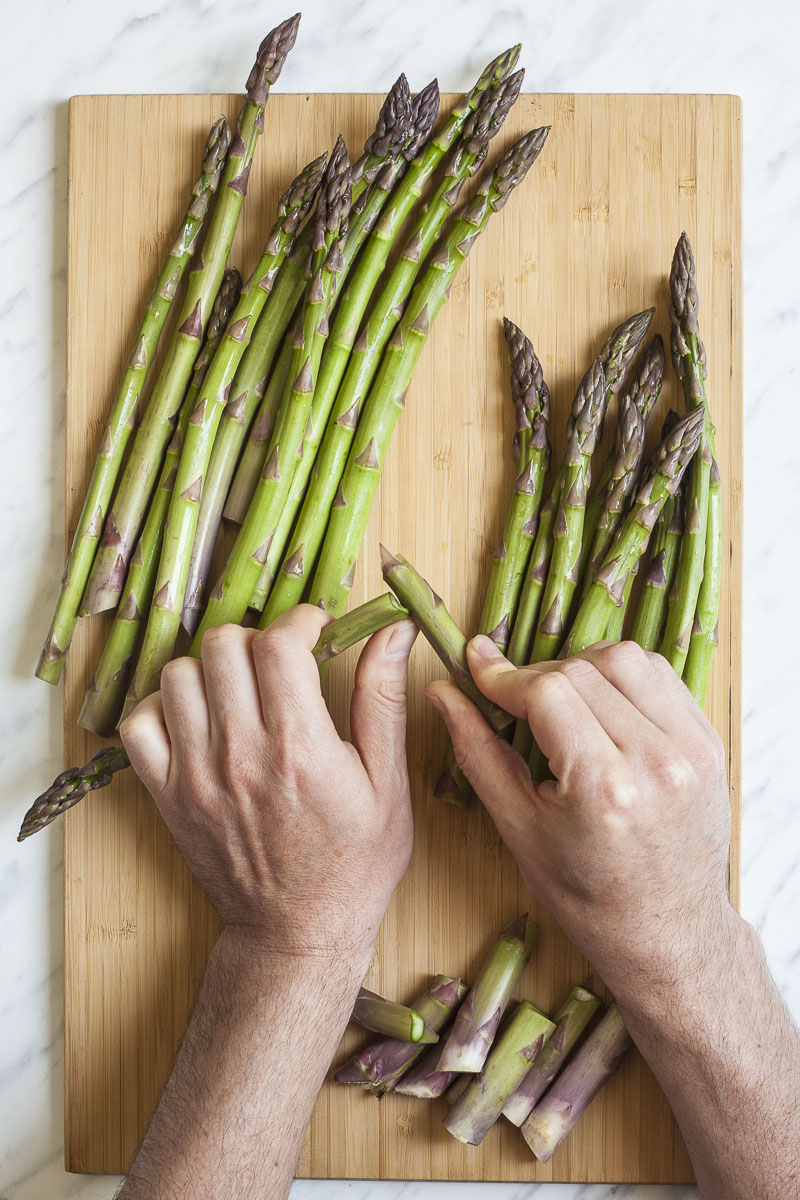
Rinse the asparagus and snap off the tough, woody ends. If the ends still feel too thick after snapping, peel the bottom inch or two with a vegetable peeler. Cut the asparagus into pieces that are about two inches long.
STEP 4
In a medium-sized mixing bowl, combine the spicy harissa paste, tahini, lemon juice, salt, onion powder, and garlic powder to make the harissa tahini sauce. If the sauce is too thick, add a little water to reach the desired consistency. It should be more like a sauce and not a paste.
Making the harissa tahini pasta
STEP 1
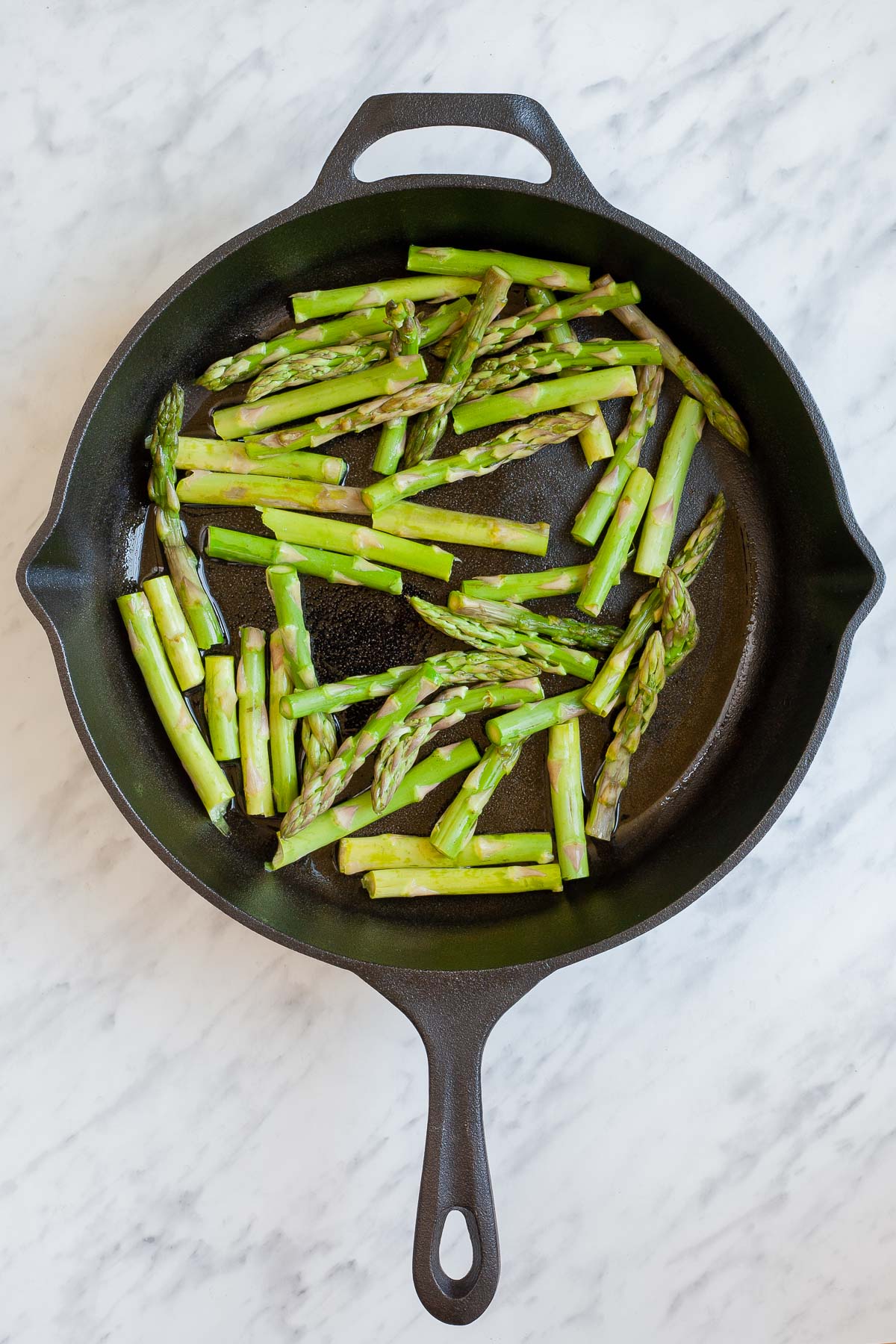
Heat a cast-iron skillet on the stove to medium heat and add some oil. Add the asparagus pieces to the skillet, sprinkle them with a bit of salt and black pepper, and cook them for about ten minutes.
STEP 2
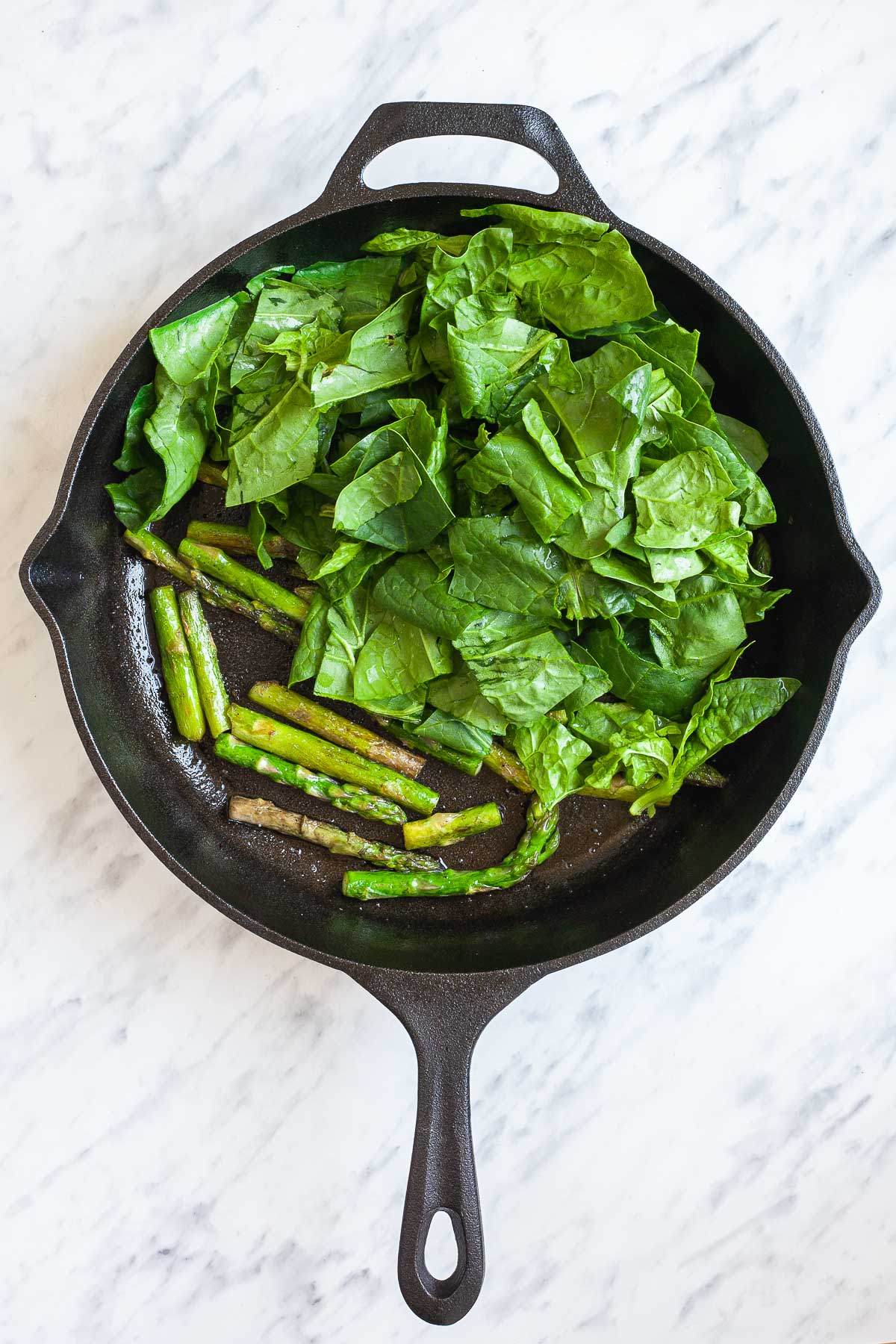
Lower the heat and add the spinach to the skillet. Stir well to combine the spinach with the asparagus and cook for an additional one to two minutes, or until the spinach leaves have wilt.
STEP 3
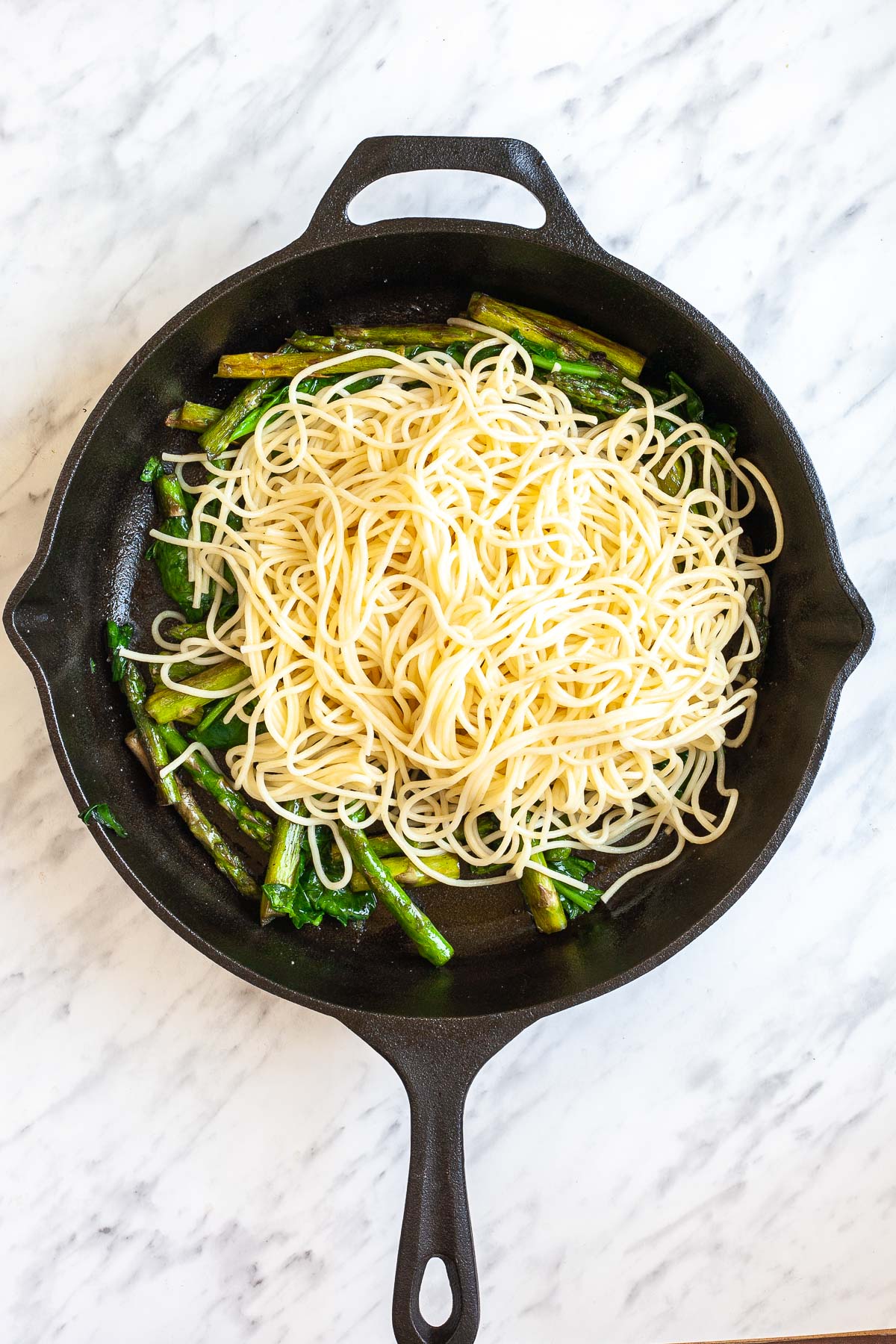
Remove the skillet from the heat and add the cooked pasta to the vegetables. Stir well to combine.
STEP 4
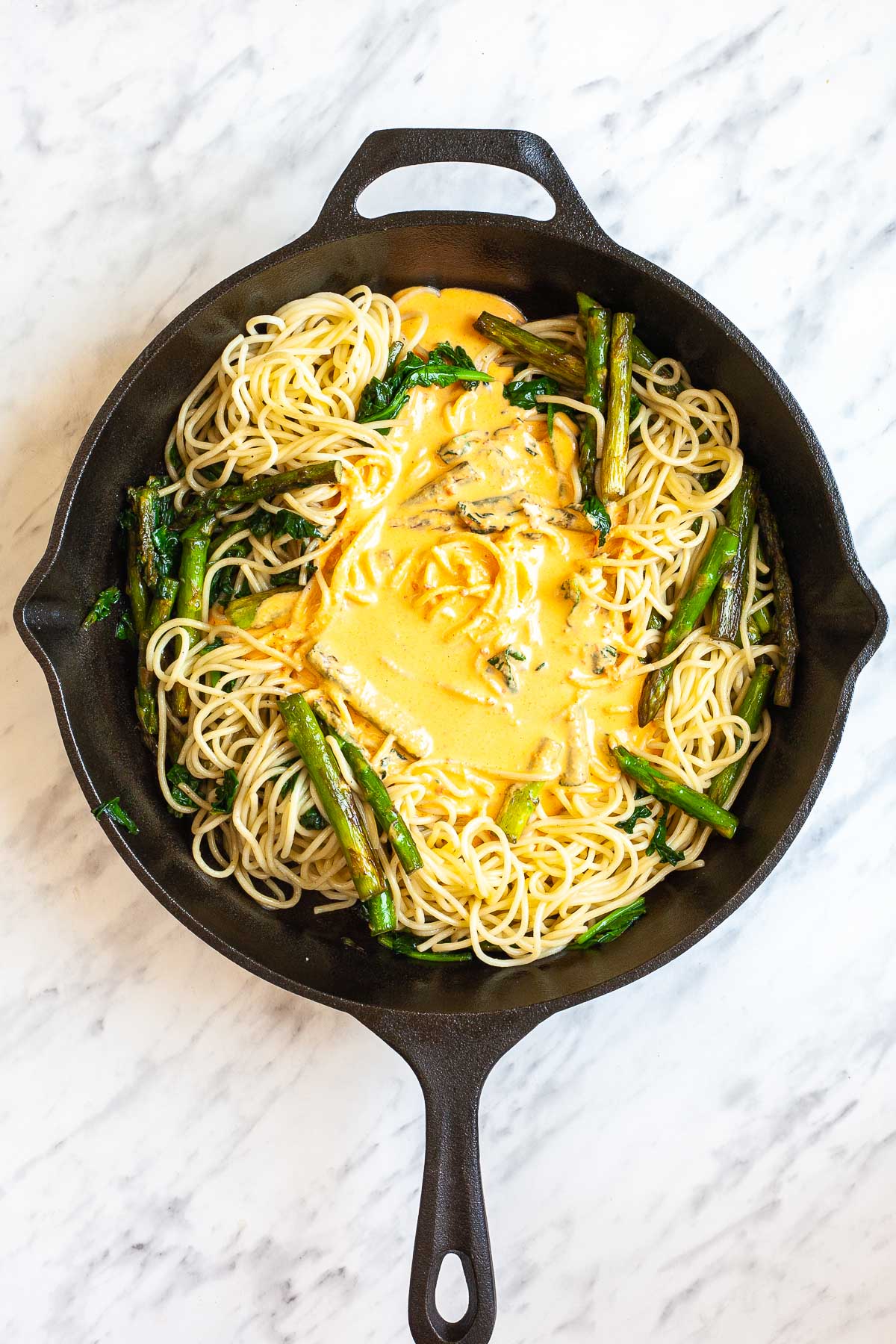
Now add the harissa tahini sauce to the skillet and mix it well with the pasta and vegetables. If the sauce is too thick, you can loosen it with a couple of tablespoons of the reserved pasta water. Your harissa tahini pasta is now ready to enjoy.
? Expert tip
For the best flavors, make sure not to overcook the sauce. Before adding the sauce to the pasta and the fried veggies, remove the skillet from the heat. Tahini as well as other types of nut butter tend to thicken when they are heated.
? Variations
For a protein-packed pasta, consider adding chickpeas or edamame to the dish. They will not only provide a good source of plant-based protein but also add a nice texture and flavor contrast to the pasta.
If you are a fan of heat, why not spice things up even more? You can add a teaspoon of chili flakes to the harissa tahini sauce. This will give your dish an extra kick without overpowering the other flavors.
You can also add other veggies such as broccoli, bell peppers, or any other vegetable you prefer. Just adjust the cooking time accordingly to make sure they are cooked to your liking.
? Serving ideas
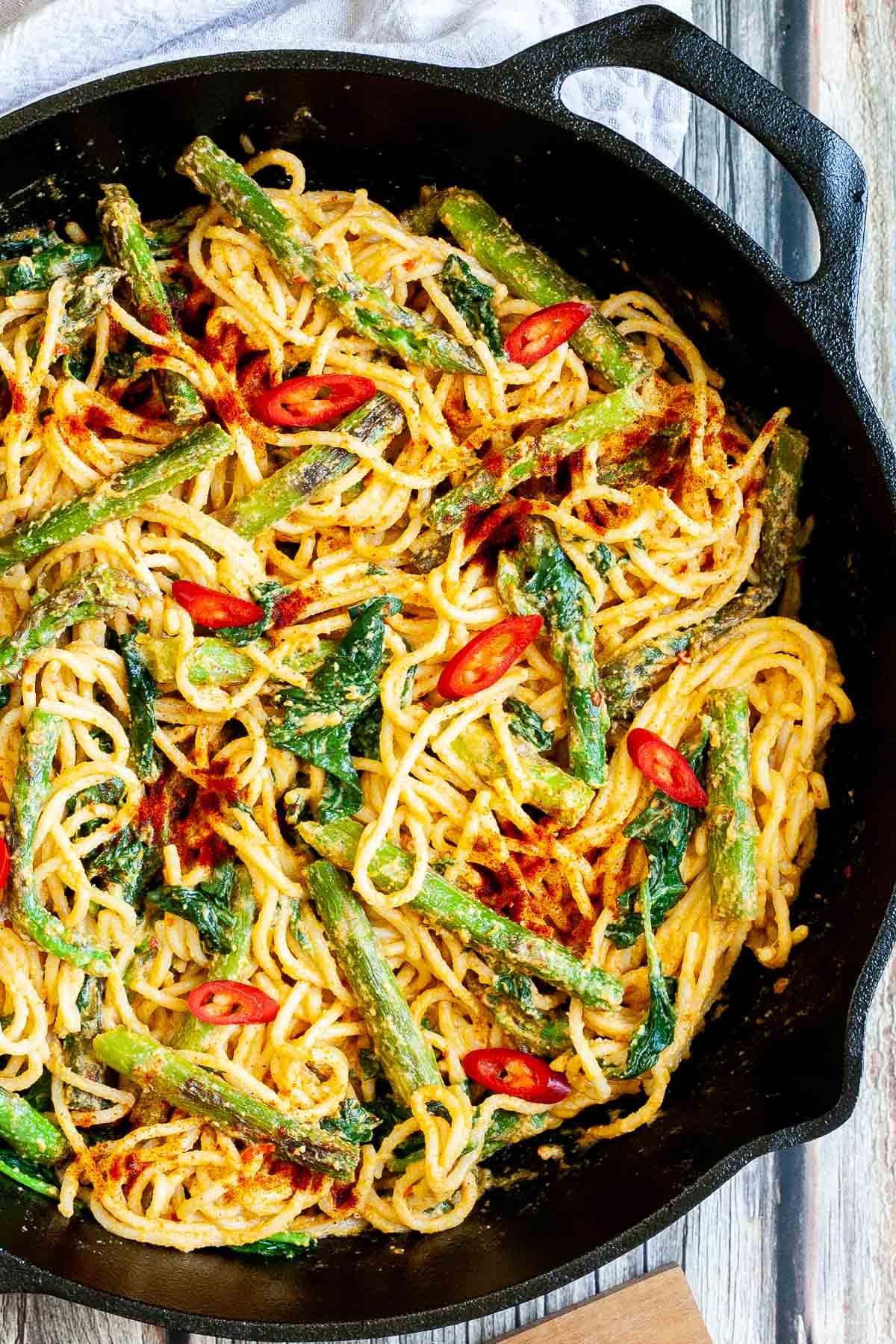
This harissa tahini pasta is a versatile and delicious dish that can be enjoyed in a variety of ways. It is a perfect main course for a family dinner or a casual lunch with friends.
You can also serve it as a side dish alongside your favorite main course. It goes particularly well with grilled vegetables, tofu, or tempeh.
It is also a great option for a potluck or picnic. It can be served cold or at room temperature, making it a convenient and delicious option for outdoor dining.
You can also customize this dish with your favorite toppings. Lightly roasted cherry tomatoes, red peppers, sautéed mushrooms, or even vegan bacon bites are all excellent options.
❄️ Storing tips
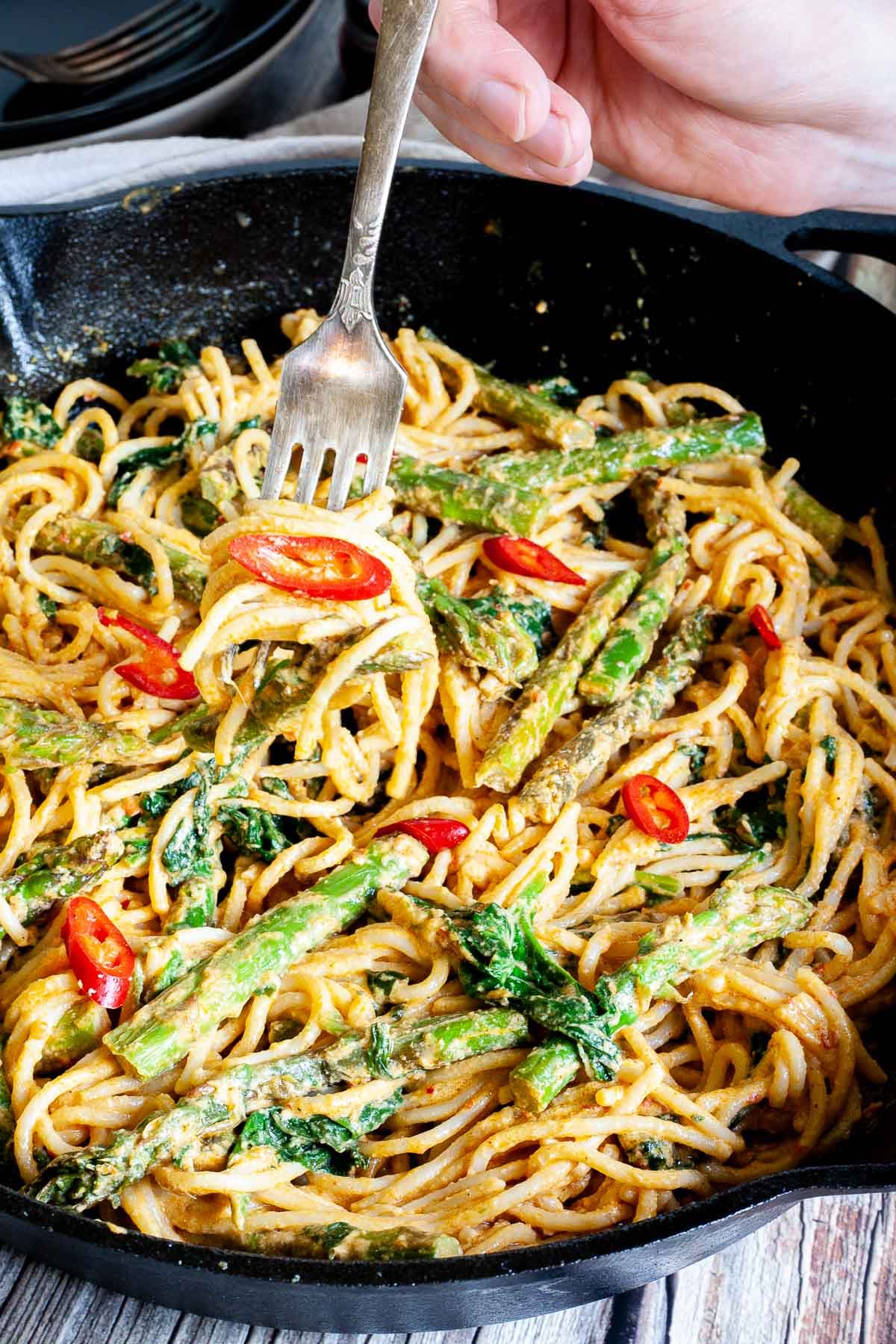
Storing and reheating this harissa tahini pasta is a simple process that can help maintain its delicious flavors.
To store, allow the pasta to cool completely. Once cooled, transfer it to an airtight container and place it in the refrigerator. It should stay fresh for about 1-2 days. Keep in mind that the pasta will continue to absorb the sauce as it sits, which will make it drier by day 2.
I do not recommend freezing this dish. The creamy nature of the tahini-based sauce may not hold up well to freezing and thawing, resulting in a less-than-desirable texture upon reheating.
You can reheat pasta on the stovetop. Add a splash of water or plant-based milk to the pan to help reconstitute, and then gently heat the pasta, stirring regularly, until it is heated through.
? FAQs
Can I add roasted veggies to this dish?
Absolutely, you can add roasted veggies to this harissa tahini pasta. If you have pre-cooked or roasted veggies on hand, such as asparagus or button mushrooms, you can add them to the pasta right before serving.
What type of pasta is best for this recipe?
You can use any type of pasta you like or have at home. I used spaghetti for this recipe, but tagliatelle, pappardelle, fusilli, or fettucini would also work well. I have also tried this harissa tahini sauce with rice noodles, and it was delicious.
Is there a substitute for tahini?
If you do not have tahini or do not like its flavor, you can use sunflower butter or other types of nut butter as a substitute. I have a whole post about tahini substitutes that you can check out for more options.
What can I do if the sauce is too thick?
If you find that the harissa tahini sauce is too thick, you can loosen it by adding a couple of tablespoons of the reserved pasta water. This will help to thin out the sauce and make it easier to mix with the pasta and veggies.
More vegan pasta recipes
You can browse through our vegan sauce recipes that can be used on any type of pasta or try one of these recipes below:
Creamy Harissa Tahini Pasta
Equipment
- Non-stick frying pan (10.5 inch / 26 cm)
- our Cast-iron Skillet by UnoCasa
Ingredients
Harissa tahini pasta sauce
- 2 Tbsp Harissa paste it is more like a sauce and not like tomato paste consistency
- ½ cup Tahini
- ¼ cup Lemon juice (freshly squeezed) 1 large lemon
- ¼ tsp Sweet smoked paprika powder
- ½ tsp Garlic powder
- ¼ tsp Onion powder
- ⅛ tsp Black pepper
- ¼ tsp Salt
Other ingredients
- 2 servings Pasta we used spaghetti, but you can choose any other pasta
- 1 Tbsp Sunflower oil
- 1 bundle Asparagus
- 3 cup Fresh spinach leaves
- ¼ cup Reserved cooking water or none depending on your desired consistency
Instructions
Prepare the ingredients
- Boil pasta in a large pot of water as per packet instructions. Don’t drain them in the sink, but reserve some pasta water.
- Wash spinach leaves. If you have baby spinach leaves, you don’t need to chop them. We used spinach leaves we grew in our garden, which tend to be much larger, so we needed to chop them.
- Prepare asparagus. First, rinse them, then snap them. Where they break, they break. You can’t snap them at the wrong place. They break where the asparagus gets woody and hard. Discard the bottom or use them in veggie stock. If the end of the asparagus still feels too thick after snapping, you can peel the bottom inch or two with a vegetable peeler. Cut them into pieces about 2 inches long (2-3 cm).
Making the pasta sauce
- Add sauce ingredients in a medium-sized mixing bowl (spicy harissa paste, tahini, lemon juice, salt, onion, and garlic powder). Mix well with a spoon or spatula. No need to blend them since they are easy to combine.
- Add a bit of water if needed until you reach the desired consistency. It should be more like a sauce and not a paste at the end.
Mixing everything together
- Preheat a cast-iron skillet to medium heat on the stove and add oil. Add asparagus and sprinkle a bit of salt and black pepper. Cook them for approx. 10 minutes.
- Lower the temperature and add spinach. Stir them well and wilt them for approx. 1-2 minutes until the leaves reduce their size.
- Remove the skillet from the heat and add cooked pasta. Mix them well.
- Finally, add the harissa tahini sauce and mix them well. If you feel the sauce is too thick, loosen it with a couple of tablespoons of pasta water you previously reserved. And you are ready! Enjoy!
Notes
- Don’t overcook the sauce – Remove the skillet from the heat before adding the sauce to the pasta and the fried veggies. Tahini, as well as other types of nut butter, have a tendency to thicken when they are heated.
- Choose your tahini wisely – If you end up with a bitter pasta sauce, the most probable reason for that is the tahini brand you used. Our favorite is this brand since it has no bitter after-taste.