The Waitress Brought Back Terrible Change, So I Left a 15% Tip. My Partner Called Me Cheap.
We all know that tipping is a fundamental part of dining out in America. It’s the unspoken agreement that we show our appreciation for good service with a gratuity, and 20% has become the standard we all aim for. But what happens when the server makes it nearly impossible to leave that standard tip?
One woman took to the internet to share a frustratingly common story that asks who is truly at fault when the change comes back all wrong.
The Incident
This woman and her partner were enjoying a pleasant afternoon at a local microbrewery they frequent. The service from a new waitress was perfectly fine, and when the bill for $57 arrived, the woman was ready to leave a generous 20% tip. The only problem? She only had large bills.
She handed the server four $20 bills, a total of $80, and politely asked for change. One would assume that a server, seeing an $80 payment on a $57 bill, would understand that the customer needs smaller bills to leave a tip. It’s just common sense, isn’t it?
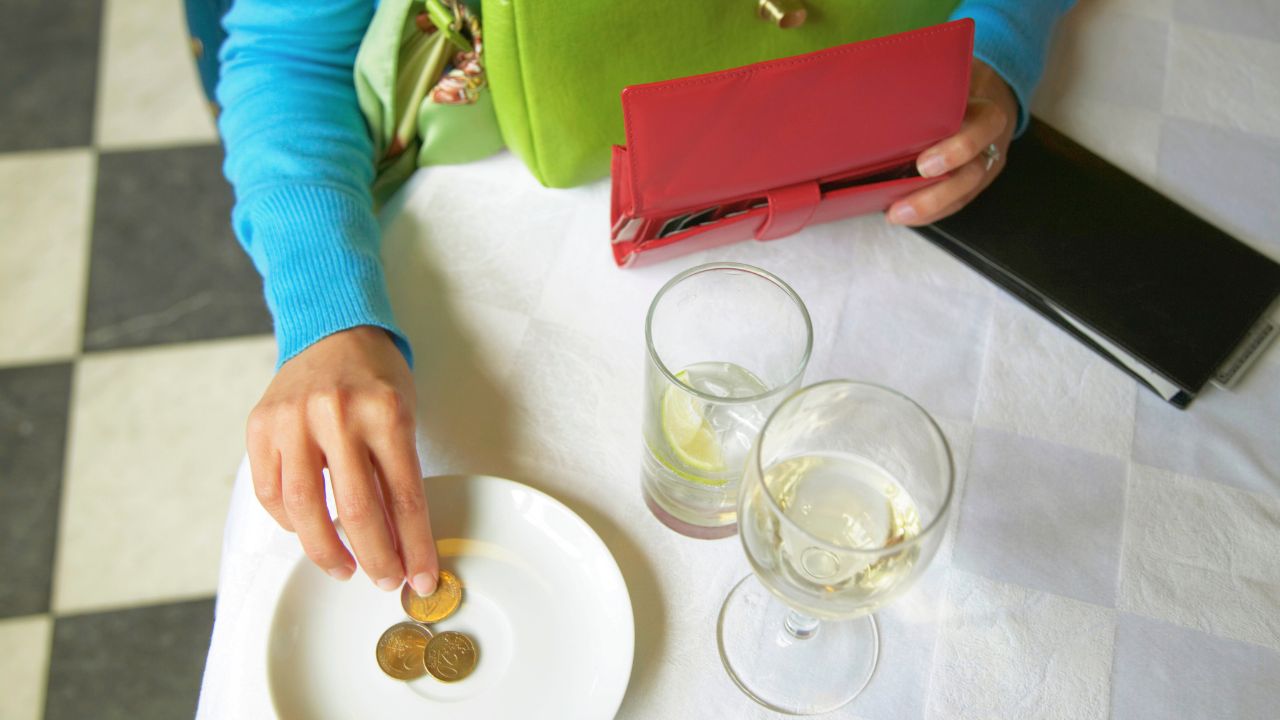
Instead, the server returned with one of the $20 bills, two single dollar bills, and some coins. The couple was left staring at their change, unable to leave the $11-$12 tip they had intended without leaving the entire $20. They waited, hoping the server would circle back, but she never did.
With another engagement to get to, the woman cobbled together what she could: the two dollars from the change and seven dollars she found in her pocket, making a 15% tip.

This is where the trouble started. Her partner called her “cheap,” insisting that since they both came from the service industry, she should never leave less than 20%. But she stood her ground, arguing, “if she wanted 20% she should have given me smaller bills or came back when we continued to sit there awhile.”
The Internet Reacts
The online community was immediately divided, with people falling into a few distinct camps over this tipping puzzle.
First, there was the “Absolutely Not” crowd, who were firmly on the woman’s side. They felt the server was either incompetent or playing a sneaky game. One commenter stated it plainly: “A good server would have broken the twenty.”
Another called the server’s move “tip roulette,” explaining, “Server brought back one large bill in the hope you would leave it. Risky move and it didn’t pay off.” This group believed the responsibility fell squarely on the server, with one person noting, “You shouldn’t have to ask them to go back and make change for your change.”
Then came the “Devil’s Advocate” camp, who felt the woman shared some of the blame. These readers suggested the situation could have been avoided with clearer communication. One user pointed out that perhaps the server “has had a day that has run her out of small bills.”
Another was more direct, chiding the woman for “refusing to communicate.” That commenter asked, “I don’t know why you made everyone’s life harder – yours and hers – by not using your words.” For this group, a simple “Could you break this twenty for me?” would have solved everything.
Finally, there was the group that saw the 15% tip not as cheap, but as the just and fair outcome of the server’s actions. They didn’t suggest overt revenge, but rather saw the reduced tip as a natural consequence. The server played a game and lost. As one sharp commenter put it, “If servers take care of servers, this server did not take care of you.” They saw the woman’s final tip as the perfect response to a server who failed to complete the final, crucial step of her job.
The Etiquette Verdict
Let’s be clear: while it’s always helpful to be specific, a server’s job includes facilitating the entire payment process. Handing back a large bill in a situation like this is, at best, thoughtless and, at worst, a manipulative tactic to angle for a bigger tip. Good service doesn’t end when the food hits the table; it ends when the transaction is complete.
The woman was not being cheap. She was put in an awkward position and left a perfectly respectable 15% for service she described as just “fine.” A tip is a reward for service, not an obligation to be extracted through inconvenient change-making. The server fumbled the final play, and the tip reflected that.
Your Thoughts
So, where do you stand on this? Was the server playing games to get a bigger tip, or was the customer being difficult by not being more specific with her request for change?
Ready for the next level of insight? Discover more in my latest article here.