I Faked a Food Allergy to Avoid Explaining My Chronic Illness to Nosy Strangers. Now I’m Being Called a Liar.
It’s one of the first lessons in manners we learn: you don’t question what’s on someone else’s plate. A simple “no, thank you” should be enough to end any discussion about food. It’s a matter of basic respect for personal choices and privacy.
However, one woman recently took to the internet to share a frustrating story that proves some people simply never learned this fundamental rule, forcing her into a rather tricky social corner.
The Incident
A woman suffering from a host of severe gastrointestinal disorders found herself in a constant battle, not with her health, but with nosy acquaintances. She explained that she has several conditions, including Celiac disease and gastroparesis, which cause her to become “violently ill” if she eats certain foods like beef or even lettuce. These aren’t technically allergies, but the physical reaction is just as severe.
The trouble begins when she politely declines a food that she knows will make her sick. Instead of accepting her refusal, people pry. She wrote that they “automatically think they are entitled to me explaining myself which leads me into being forced to explain my very complicated disease.”
Worse still are the people who try to coax her into eating something harmful, dismissing her concerns with comments like, “well just eat a little bit it can’t be THAT bad.” As you can imagine, this is incredibly frustrating and invalidating.
To avoid a long, invasive medical lecture with strangers, she adopted a simple shorthand: she just says she’s allergic. It’s a word everyone understands means “do not feed this to her.”
Recently, however, someone told her she was wrong for this “lying,” claiming it could make people disbelieve those with true life-threatening allergies. The criticism stung, especially, as she later revealed, because it came from someone who suffers from the very same disease and should have understood completely.
The Internet Reacts
When she asked the internet for its opinion, the response was a resounding chorus of support. People were appalled that she was being policed for finding a simple way to protect her health and privacy.
The vast majority of commenters, the “Absolutely Not” Crowd, were furious on the woman’s behalf, arguing that her health comes first. One person, a professional chef, chimed in with the ultimate seal of approval: “Chef here. Call it an allergy. If it hurts you, call it an allergy. A little extra work on our side to keep you safe is literally our job.”
Another commenter perfectly summarized the situation, calling it “convenient language so that other people understand that we’re communicating a serious medical need.” Many pointed out that the real problem wasn’t her “white lie,” but the pushy people who felt entitled to her private medical history. As one person put it, the rude ones are “the people who demand to know strangers’ medical histories!”
Interestingly, even among the “Devil’s Advocate” crowd, almost no one took the side of her critic. The woman who posted the story was her own best devil’s advocate, expressing her initial guilt and concern that she might be diminishing the seriousness of true allergies.
However, the online community quickly reassured her that her severe physical reaction was more than enough justification. Her critic was seen as someone who was simply, and bizarrely, in the wrong.
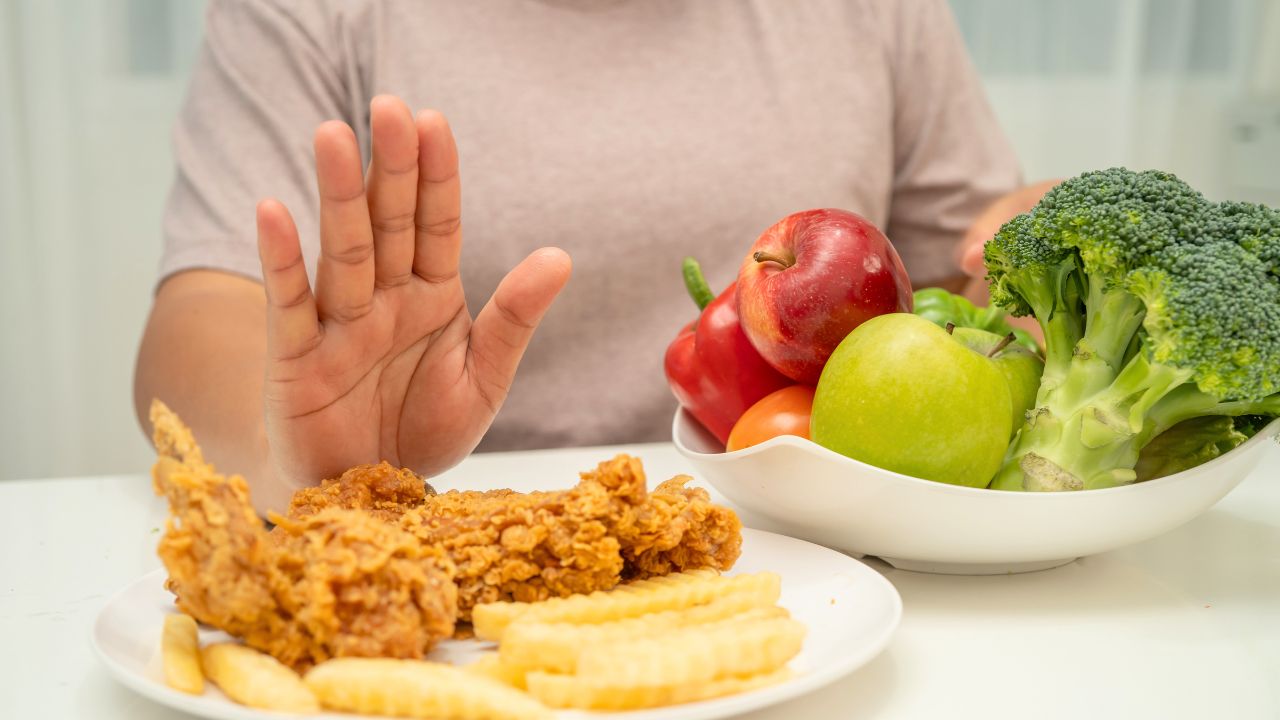
Of course, some people in the “Petty Revenge” Crowd offered more colorful advice for dealing with nosy eaters. One commenter suggested that if someone refuses to accept the polite explanation, she should give them exactly what they’re asking for—in excruciating detail. The suggestion was to describe the graphic, unpleasant consequences of eating the food in question.
One person shared their own clever, but firm, script: “I have a lot of weird food intolerances. While this probably won’t kill me, I’ll be violently ill for several days if I eat it. It’s a risk my doctor doesn’t want me to take.” This was seen as a wonderful way to be truthful while immediately shutting down any further questions.
The Etiquette Verdict
Let’s be perfectly clear: no one is ever owed an explanation about your dietary choices. “No, thank you” is a complete and perfectly polite sentence. To push, pry, or question someone beyond that is the height of bad manners. This woman’s health is her business, and she is not obligated to perform a medical presentation for every curious stranger.
Using the word “allergy” as a shorthand for “this will make me gravely ill” is a practical solution to an unnecessary problem created by rude people. Her health and well-being are far more important than a stranger’s satisfaction.

Your Thoughts
What do you think of this situation? Was this a harmless white lie to protect her privacy, or should she have found a more honest way to explain her condition?