I Carefully Budgeted My Dinner and Drank Only Water, But My Friend Demanded We Split Her Three-Course Meal Evenly
We all understand that certain unspoken guidelines govern how money works within friendships. At the top of the list is the basic concept of fairness: everyone covers their own share. It’s about mutual respect and basic courtesy—something the vast majority of us figured out a long time ago.
Yet, a young woman recently went online to recount a dinner experience that makes it abundantly clear not everyone has internalized this lesson, leaving her—and thousands of readers—utterly stunned by a friend’s brazenness.
The Incident
The setting is one we’ve all experienced: a group of friends gathering for a casual dinner to celebrate finishing midterms. The woman sharing the account, conscious of her spending limits, went with a modest selection. She chose a basic pasta dish that happened to be on special and drank only water. Several of her other friends followed suit, keeping their orders light and inexpensive.
One friend, though, had entirely different ambitions for the evening. She went all out with a full three-course spread—an appetizer, a generous main course, a dessert, and a separate beverage. Nobody raised an eyebrow at her choices—everyone’s free to enjoy themselves, after all—but the real problem surfaced once the check came.
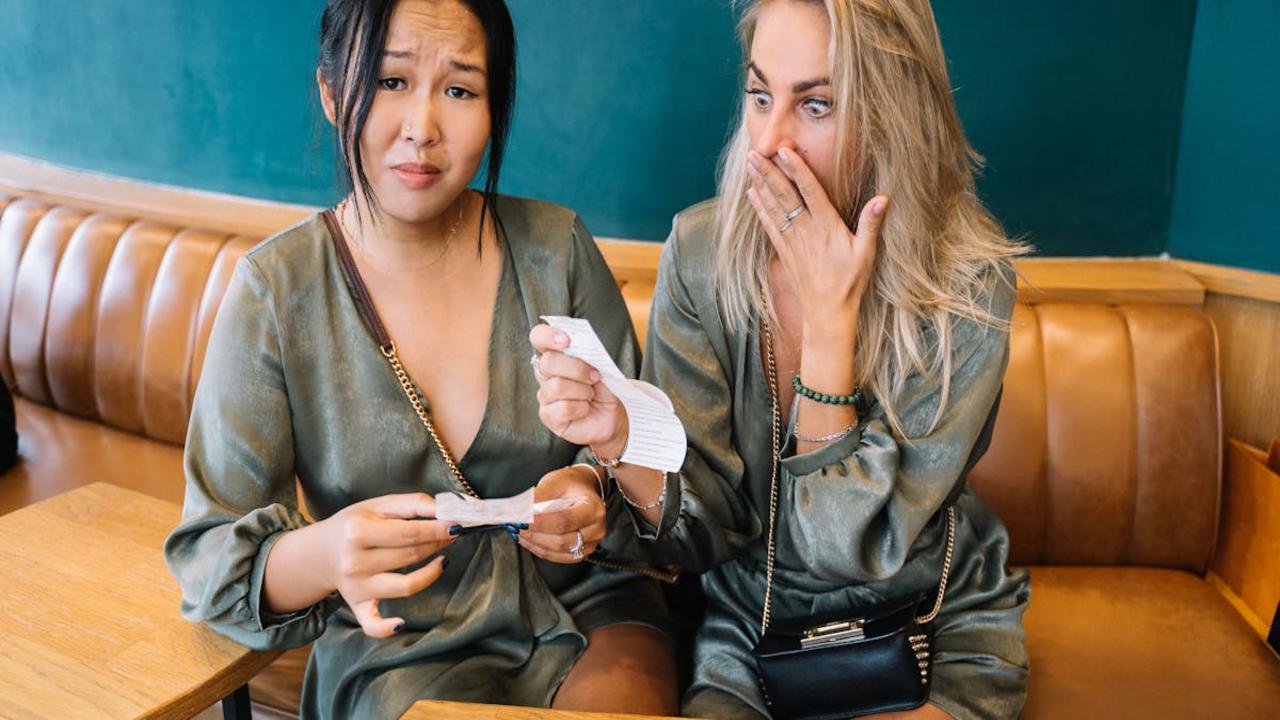
Without even pausing to think, the friend who had indulged lavishly announced, “Let’s just split it evenly.” The woman was stunned. She had planned her spending carefully and simply explained to her friend that she only had enough money to cover her own order and a tip. What she got back was an eye-roll and a condescending remark that she was “being cheap over a few bucks” and that the situation was not “that deep.”

But it was far more than just a few dollars. As the woman detailed, dividing the bill equally would have practically doubled what her meal actually cost. She held firm and paid solely for what she had ordered. The aftermath was swift. Her friend has since been giving her the cold shoulder, telling mutual acquaintances that she felt humiliated and was made to “look greedy.” The rich irony, naturally, is that the friend made herself appear greedy by expecting her companions to cheerfully bankroll her pricey dinner.
The Internet Reacts
Once the story surfaced online, the court of public opinion delivered a near-unanimous verdict, and commenters had zero reservations about weighing in on this blatant violation of dining etiquette. The responses broadly sorted themselves into three recognizable categories.
First came the “Absolutely Not” Crowd, who were downright livid on the woman’s behalf. Their remarks overflowed with outrage at the friend’s audacity. One commenter captured it flawlessly: “You didn’t make her look greedy. She made herself look greedy.”
A different user labeled the friend’s behavior “classless,” and a third suspected the whole thing was premeditated, observing, “She saw the opportunity to save some money, with everyone else ordering cheaply.” The overwhelming agreement was unmistakable: this wasn’t some innocent oversight but a deliberate scheme to exploit her friends.
Next arrived a more measured group, best described as the “Devil’s Advocate” Camp. These commenters attempted to make sense of the behavior, though they seldom defended it. One person speculated that individuals who aren’t as financially restricted sometimes just don’t notice and figure things will balance out eventually.
Still, even this group concluded that the friend’s reaction was the tell. As one user sharply noted, a genuinely well-off friend probably would have apologized and covered her share, but “the fact that OP’s friend reacted the way she did makes me think she was just looking to pull one over.”

Lastly, there was the “Proactive Advice” Crowd, who stepped in with concrete strategies for sidestepping this kind of discomfort going forward. The most frequently endorsed tip was to speak up right at the beginning. “Just tell the server right away, before you even order drinks, that this will be separate checks. Problem solved,” one commenter recommended.
Someone else shared a brilliant comeback for anyone who hears “it’s not that deep.” Their suggestion was to respond with, “If it’s not that deep then let it go. I said no.” This neatly flips the pressure right back onto the freeloader.
The Etiquette Verdict
Let’s make this absolutely unambiguous: proposing an even split when you’ve deliberately ordered far more than everyone else at the table is spectacularly bad form. It forces everyone into an awkward predicament, particularly those working with a limited budget.
Dividing a check evenly is meant to be a convenience when everyone’s orders are roughly comparable in price—not a tactic to score a bargain on your lobster by making your friend who ordered a salad foot part of the bill. The fundamental rule of dining out with friends is thoughtfulness. This friend exhibited none whatsoever. She was self-centered, entitled, and honestly, barely a friend at all.
Your Thoughts
So, what’s your take? Was this woman justified in refusing to budge, or should she have simply paid the extra amount to preserve harmony in the friendship?