Hungarian Dumplings (Nokedli)
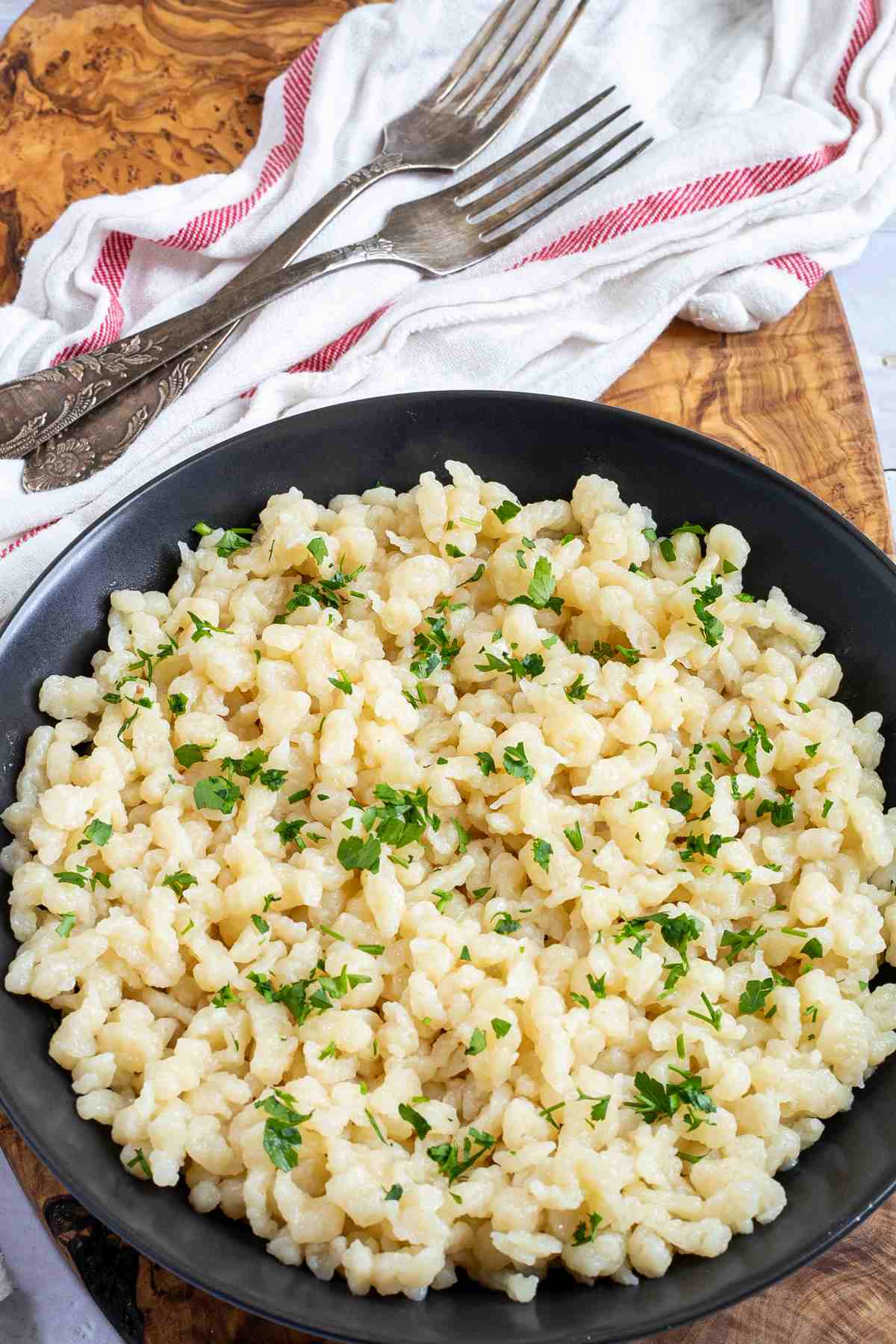
These authentic Hungarian dumplings, also known as Nokedli, require only three ingredients for a classic dish that is similar to German spaetzle. This is a family recipe that I use every time.
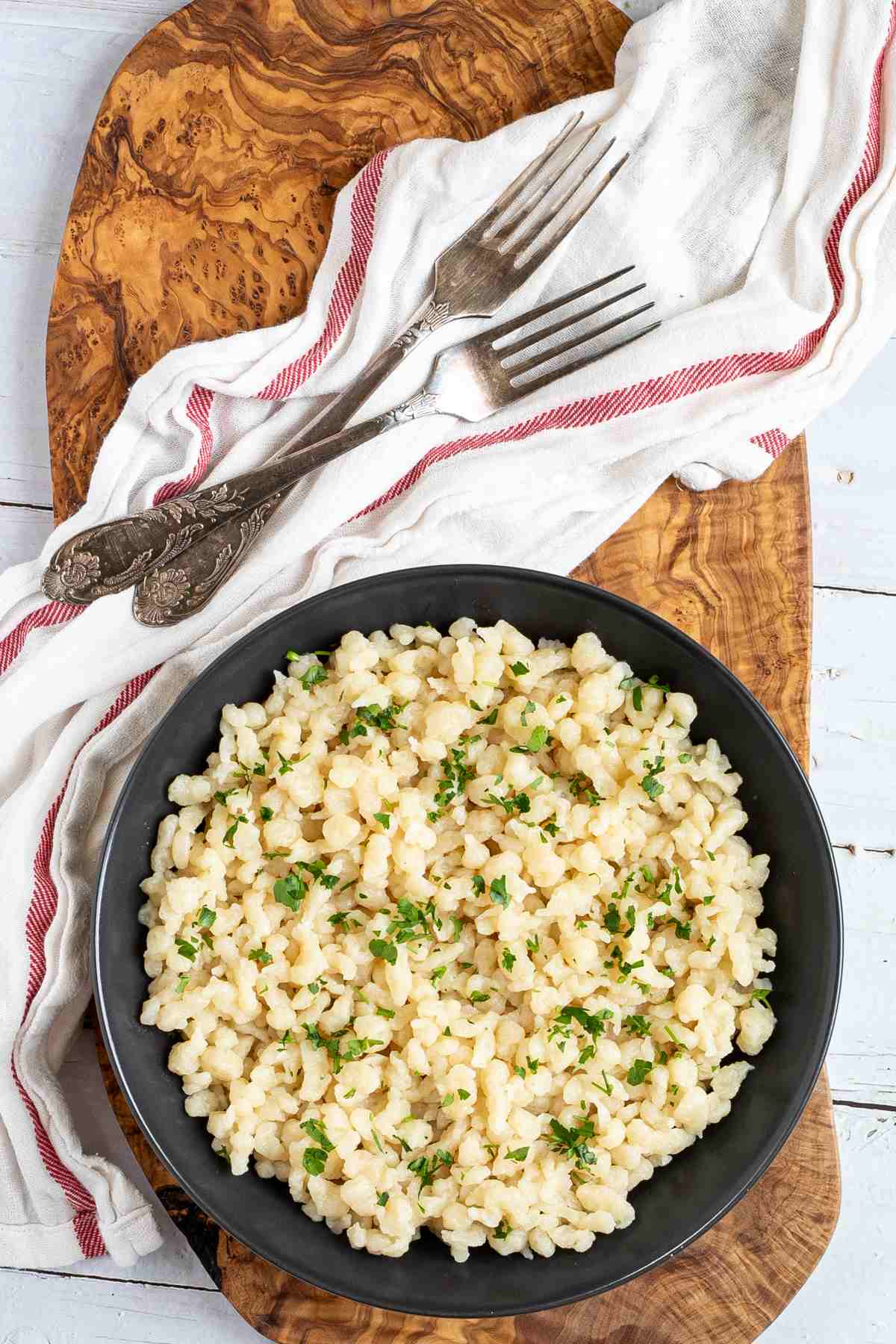
The key to mastering making nokedli is to get the right consistency of the batter. If it is too thick, it will be difficult to push through the holes, and if it is too thin, it will drip through without getting a nice shape. Lucky you, I show you what exactly needs to be done.
If you enjoy this recipe, you should definitely try it with Hungarian goulash, Hungarian mushroom stew, or Hungarian mushroom soup.
❤️ Why you’ll love it
To get the names right first. You may heard of nokedli, csipetke, and galuska.
This is a Hungarian nokedli recipe. Csipetke, means “pinching” in Hungarian, has a thicker dough and you need to pinch small bits with your fingers to create the shapes. Galuska is much larger and you either cut it into shapes or use a spoon to do that. To be honest, nokedli is by far the easiest among them all.
This recipe is an authentic Hungarian one passed down in my family for generations, so you can rest assured that you are in good hands. I will also show you how to make them without using a special spaetzle maker (nokedli szaggató in Hungarian). Since getting the right consistency is the key, I have even included a video to show you if you are more of a visual learner.
If you have ever had chicken paprikash in America with egg noodles, you know what I am talking about. Although eggs are typical in recipes nowadays, they were not used in old times. It is a peasant dish which means they used the bare minimum of ingredients: flour, water, and salt.
? Key ingredients
This Hungarian dumpling recipe requires only three basic pantry staple ingredients for an authentic flavor you would get if you were in Hungary.
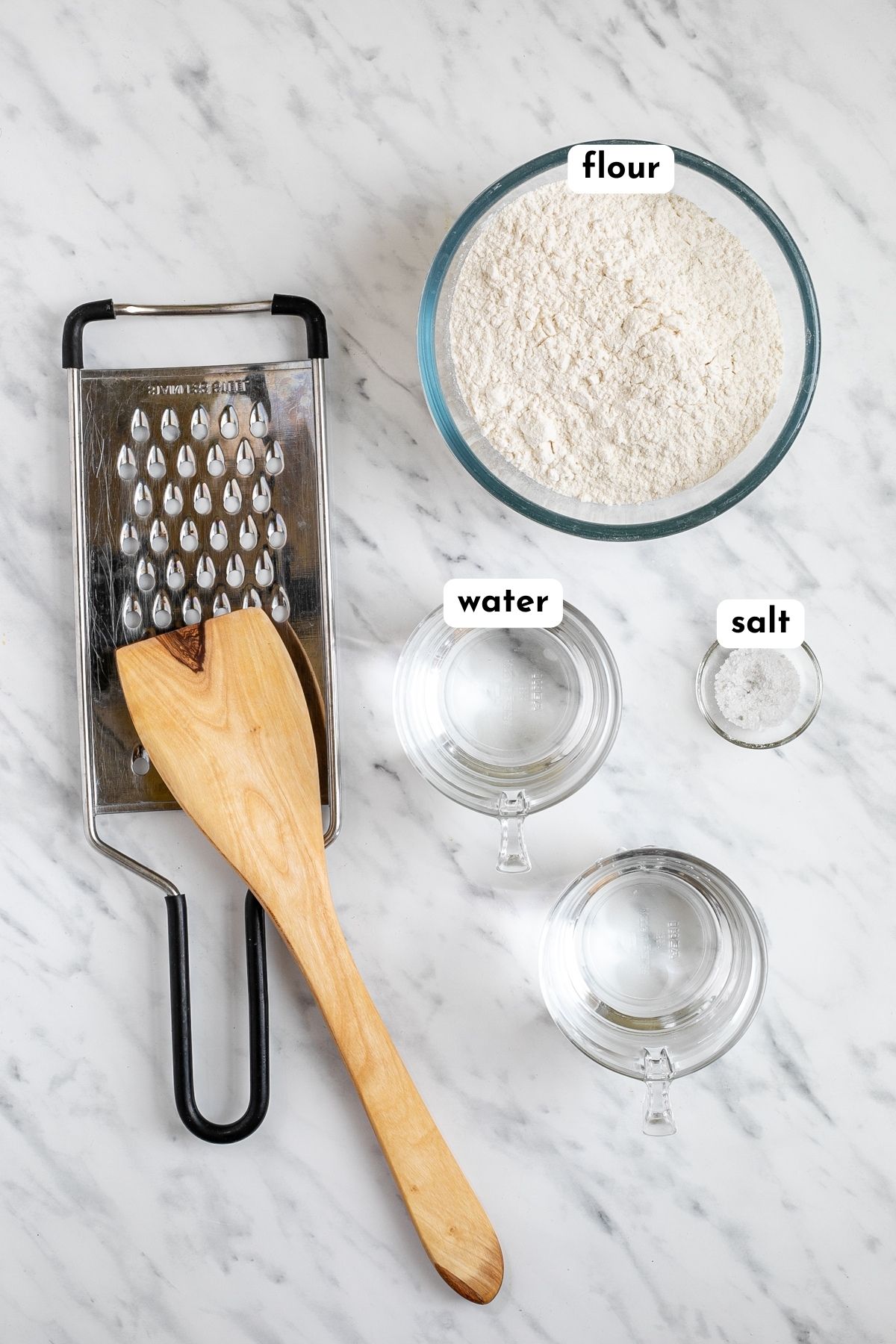
Flour adds the structure to these dumplings and gives them the base you need to get the right consistency in the dough.
Water is the liquid we will use to get a simple, cohesive dough that will easily pass through the holes for a classic shape.
Salt adds the right flavor to the dumplings that allows them to be the perfect base for other Hungarian dishes such as paprikash and goulash.
? You can find detailed measurements for all ingredients in the printable version of the recipe card at the bottom of this post.
? Equipment
To make this Hungarian dumpling recipe, the most important piece of equipment you will need is a spaetzle maker (“nokedli szaggató” in Hungarian) or a flat cheese grater with large holes. By pressing the dough through the holes, you will get the authentic shape.
?? Instructions
Preparing the ingredients
STEP 1
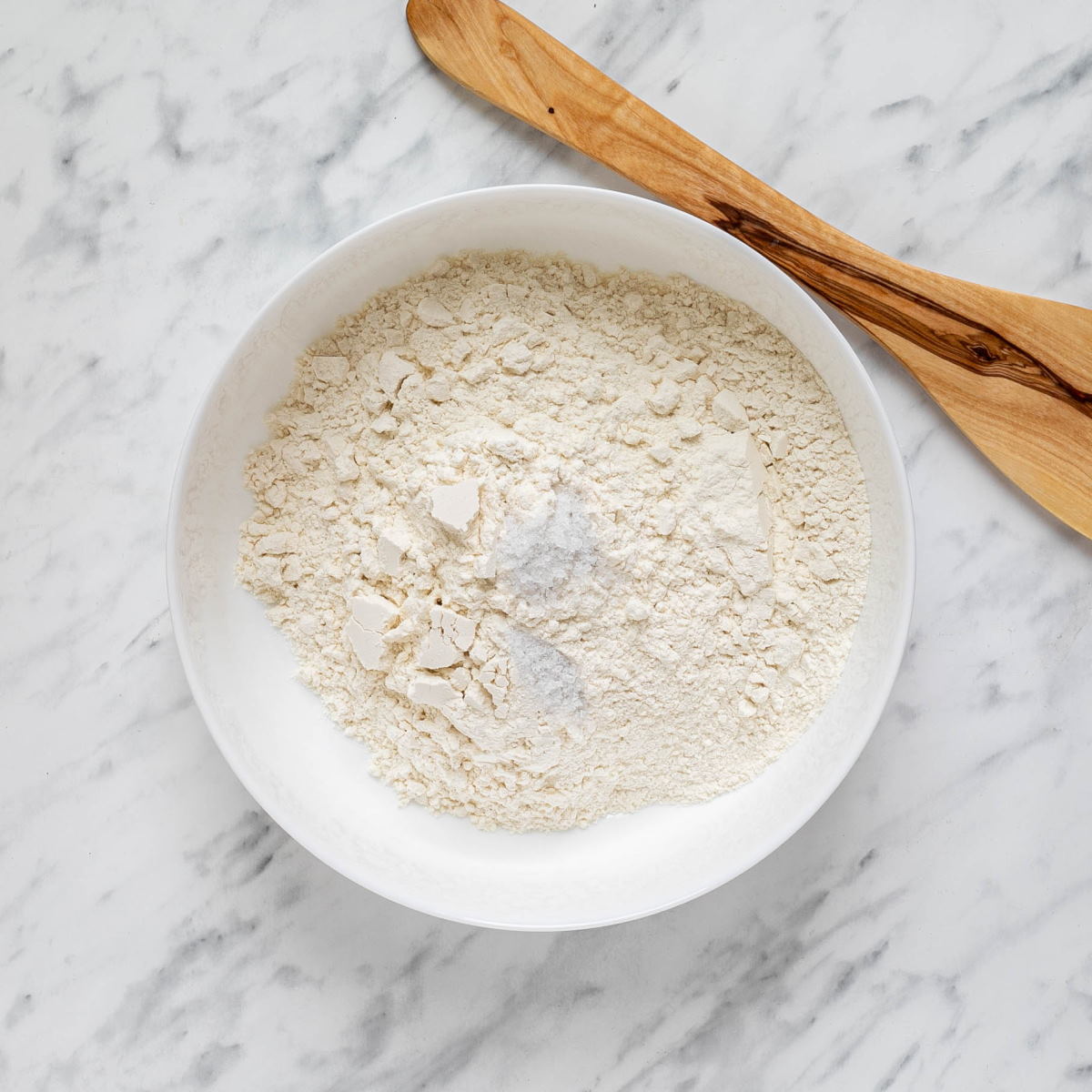
Start by combining the flour and salt in a large bowl.
STEP 2
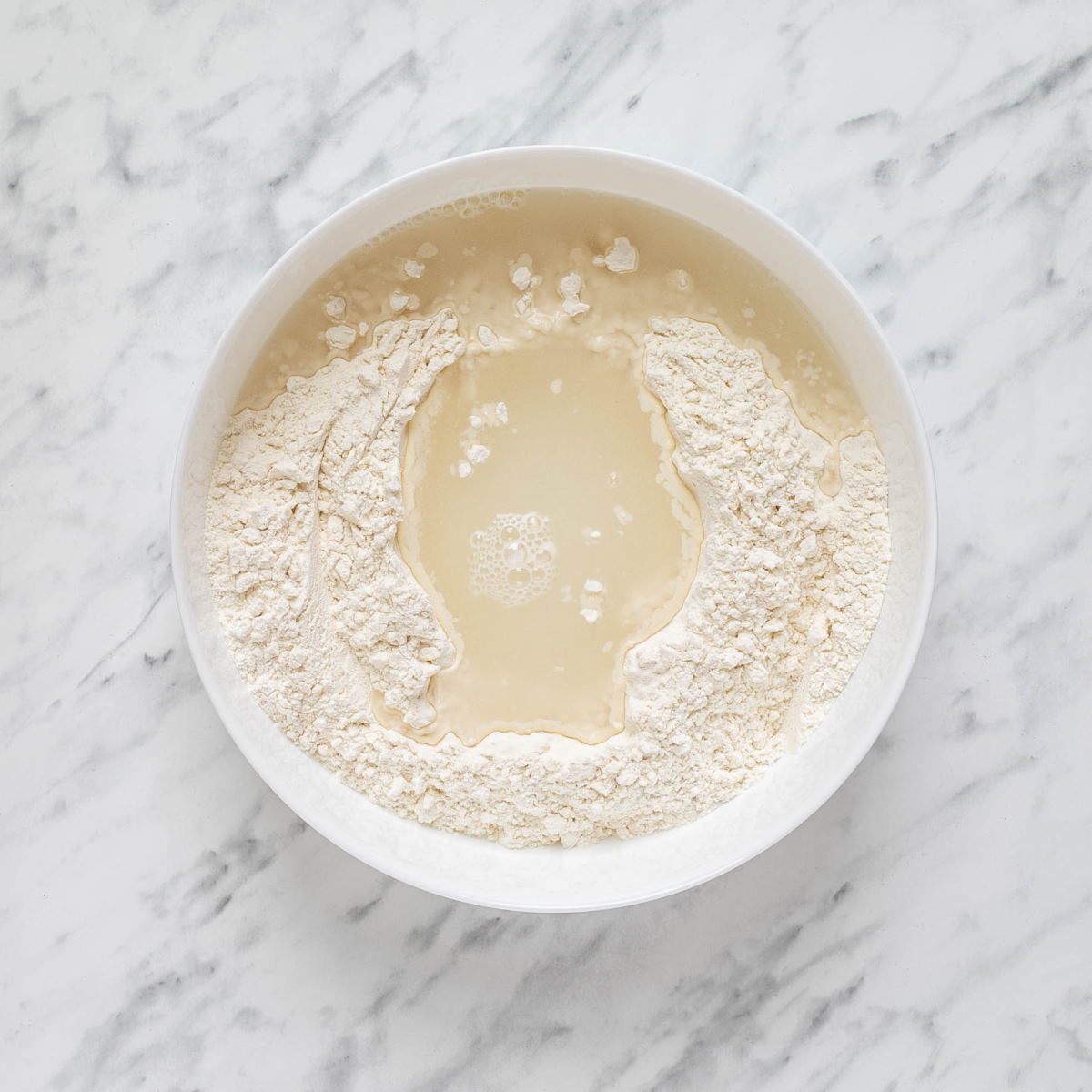
Gradually add water to the bowl, while mixing, until a sticky, cohesive dough forms.
STEP 3
Take care to add the water gradually, as you may need a little more or less to reach the right consistency. The dough should be of a slow-flow toothpaste quality. And the whisk is your best friend to get smooth texture.
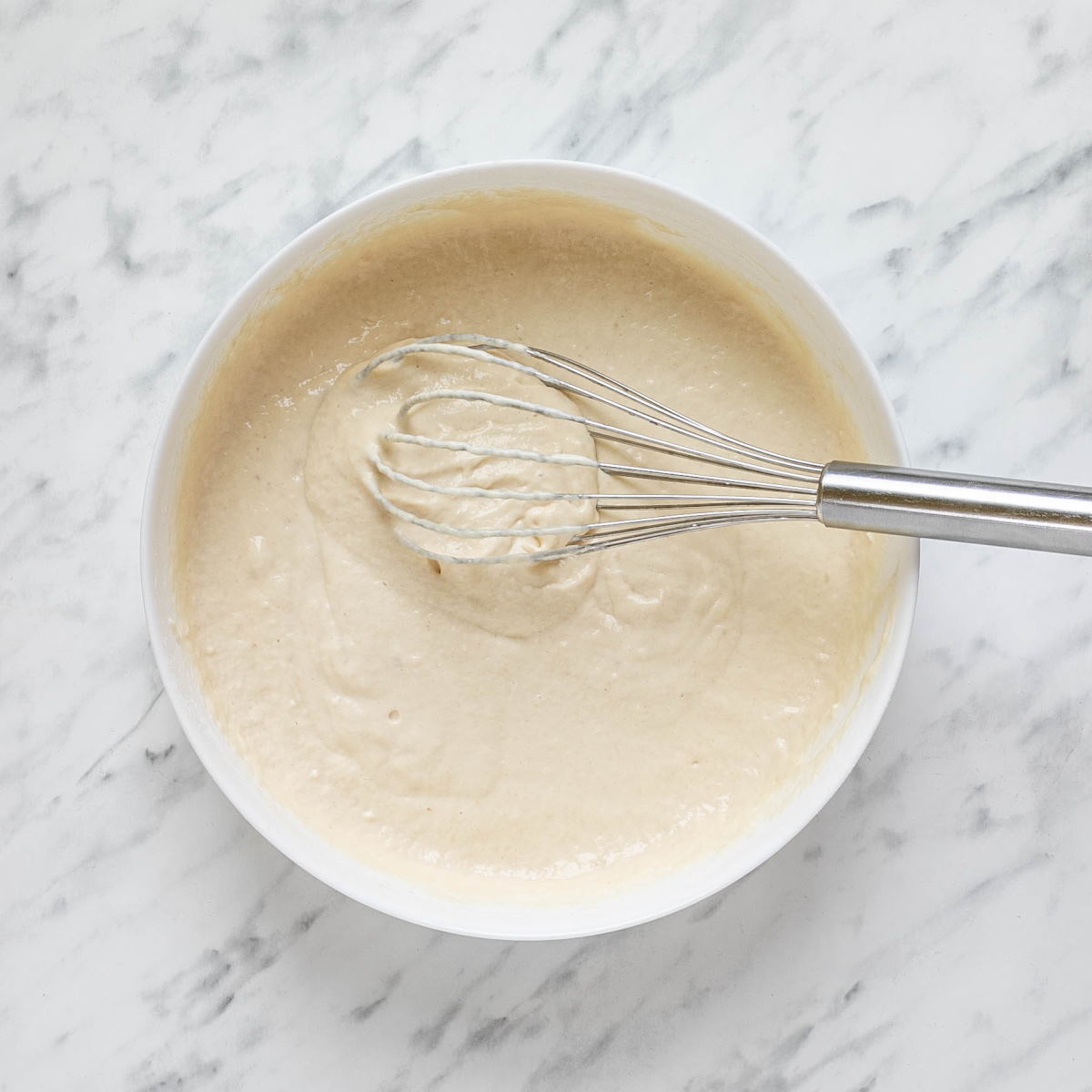
Making the Hungarian dumplings
STEP 1
If you have a “spaetzle maker” (“nokedli szaggató” in Hungarian), use it to form the dumplings. If not, a flat cheese grater with large holes will also do the trick.
STEP 2
Bring a large pot of salt water to a boil. The pot should not be too large, so you can place the cheese grater on top.
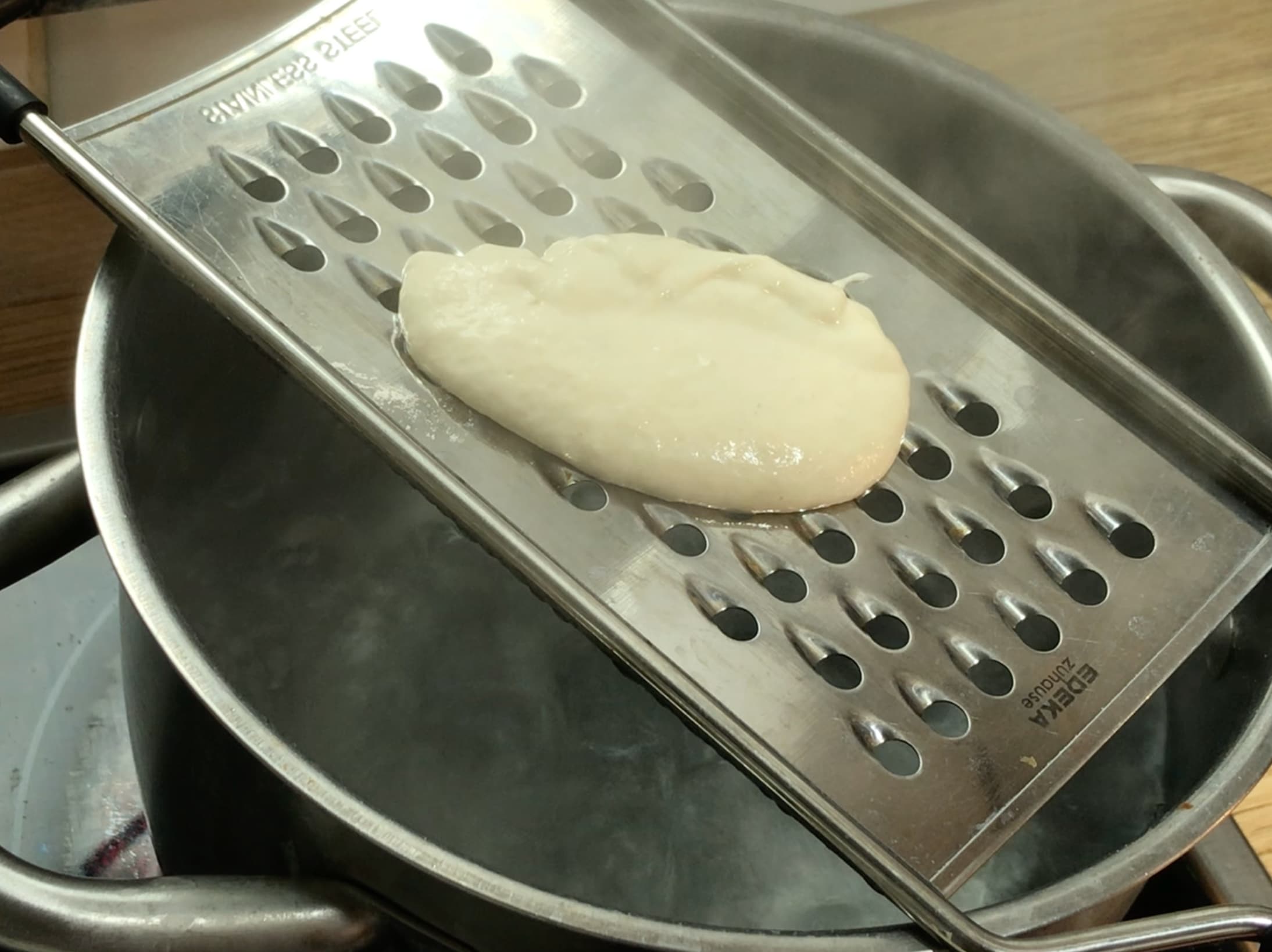
STEP 3
Take 1/4 cup of dough and press it through the holes of the “spaetzle maker” or the cheese grater directly into the boiling water. Use a flat wooden spatula or the back of a spoon to do this. Move the spatula back and forth quickly.
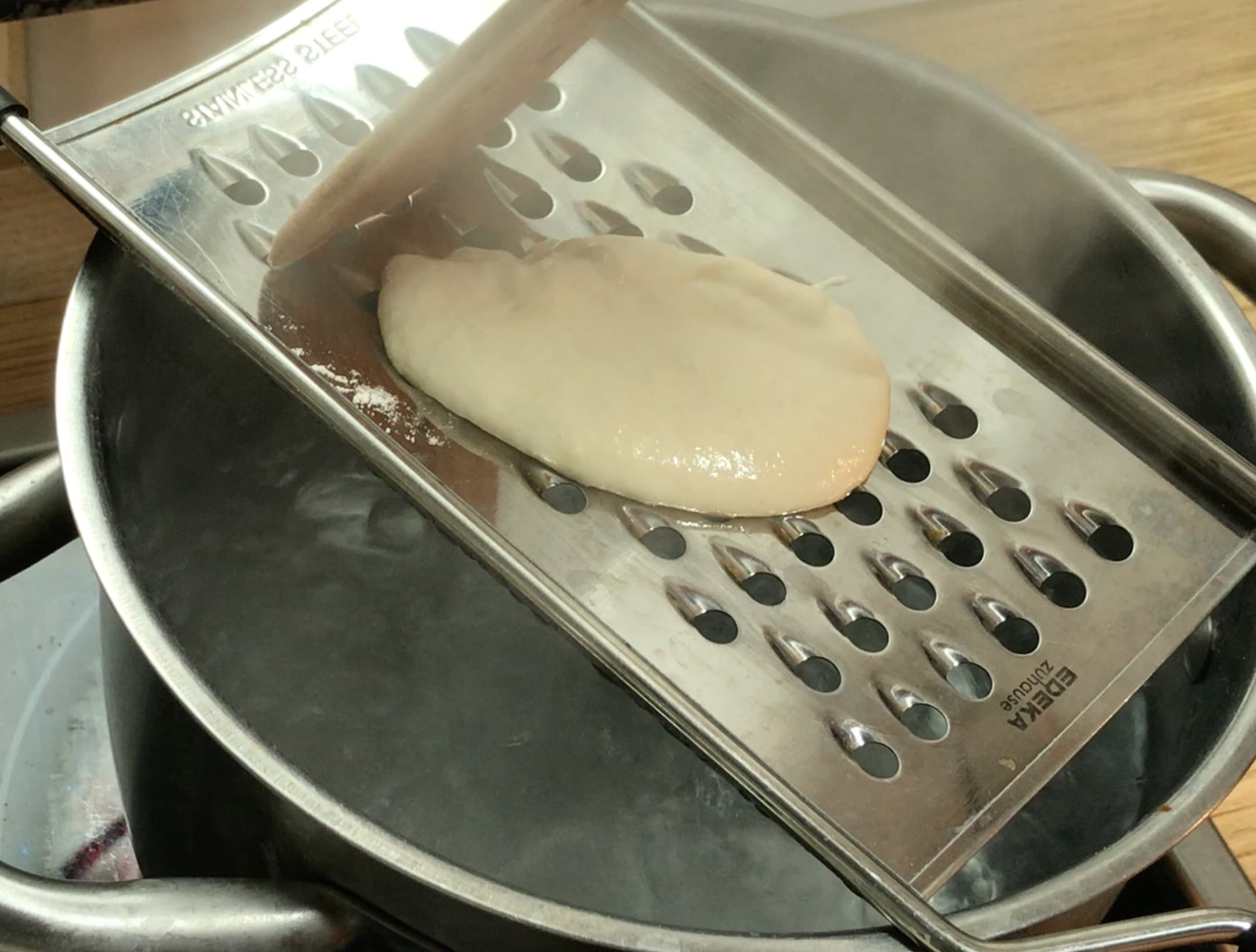
STEP 4
Once the dumplings float to the surface of the water, which usually takes about 1-2 minutes, remove them with a slotted spoon or colander.
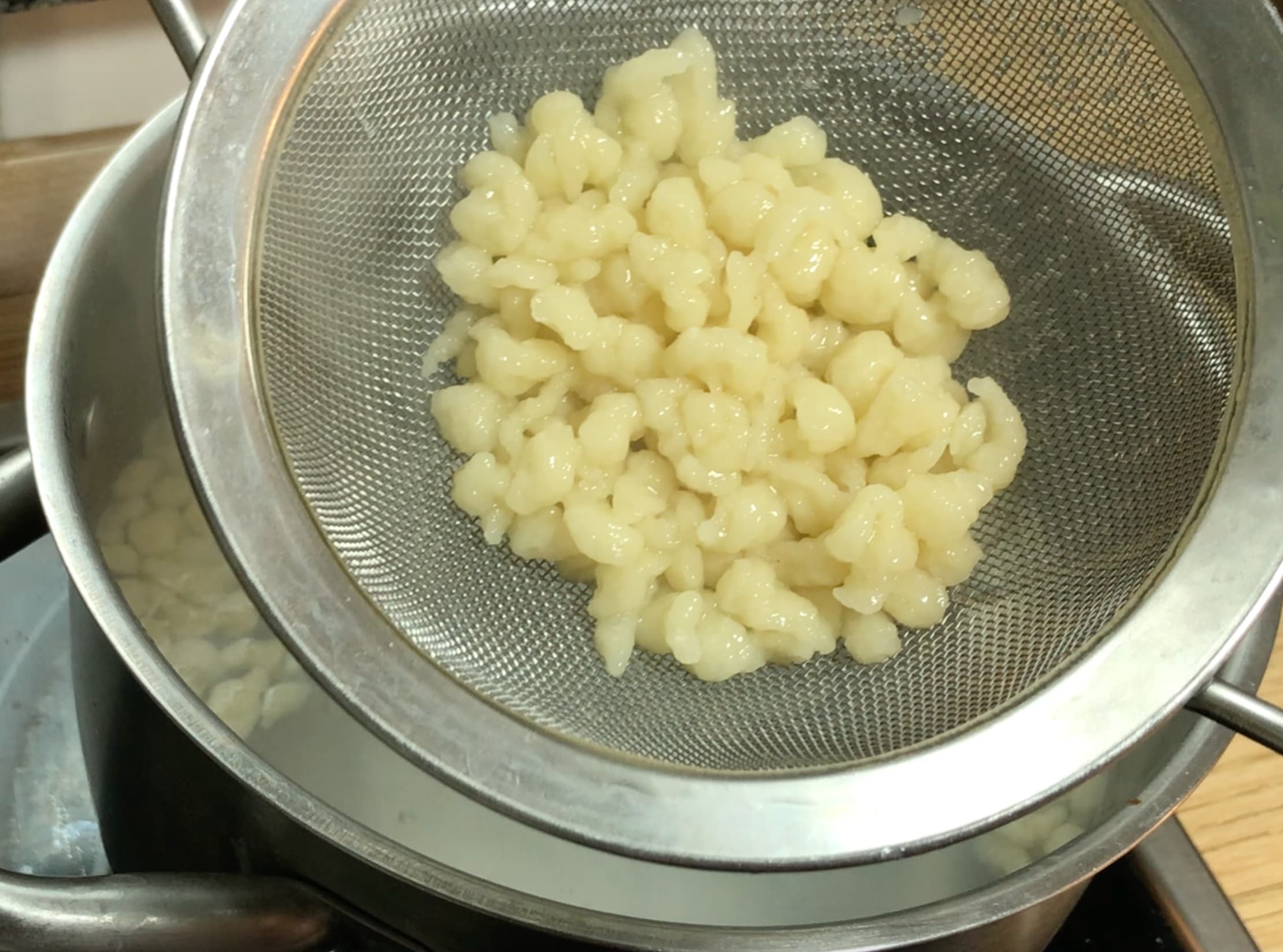
STEP 5
Drain the dumplings well and place them in a glass bowl. Add half a teaspoon of butter to the hot dumplings. Gently mix the melted butter with the dumplings.
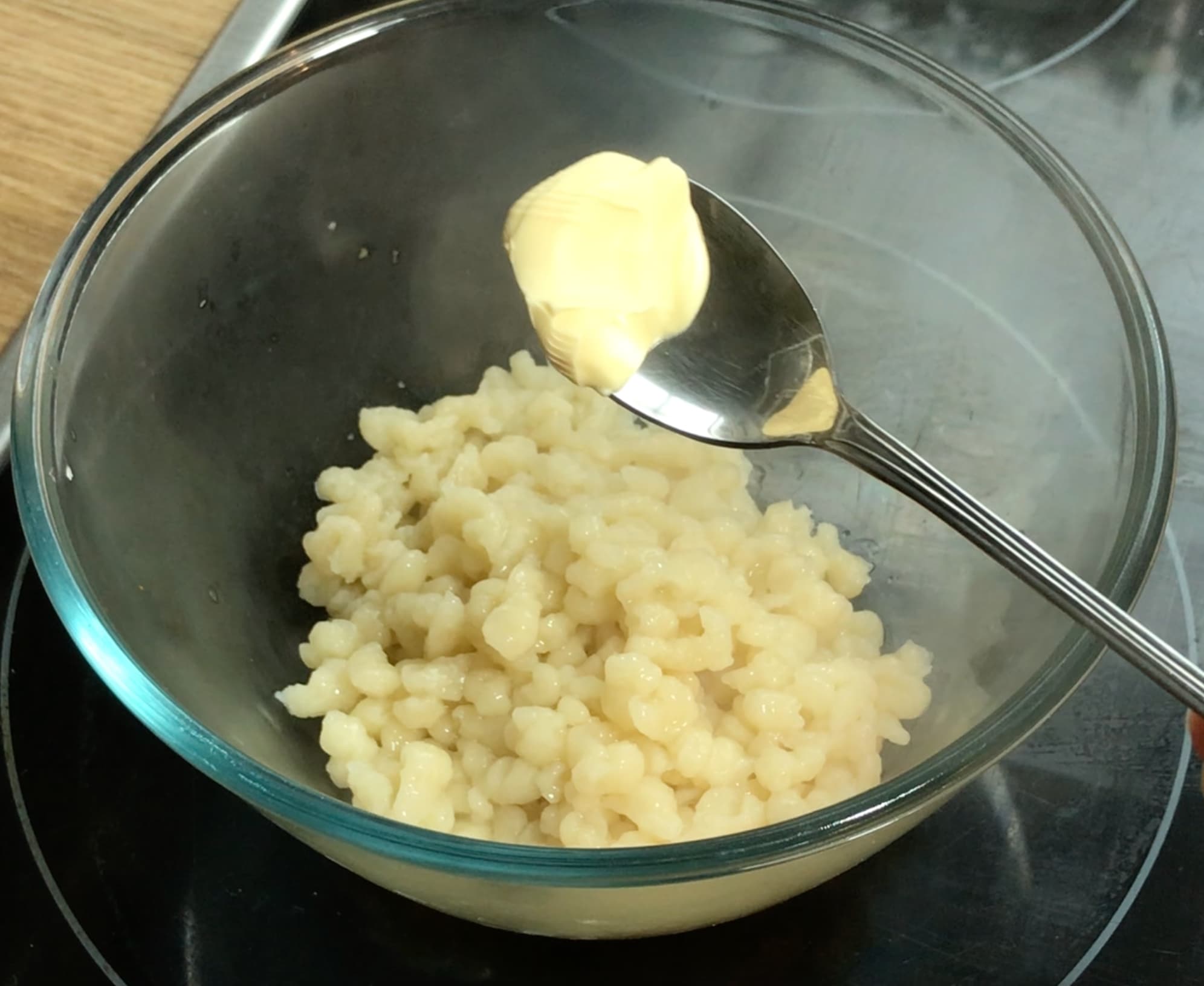
STEP 6
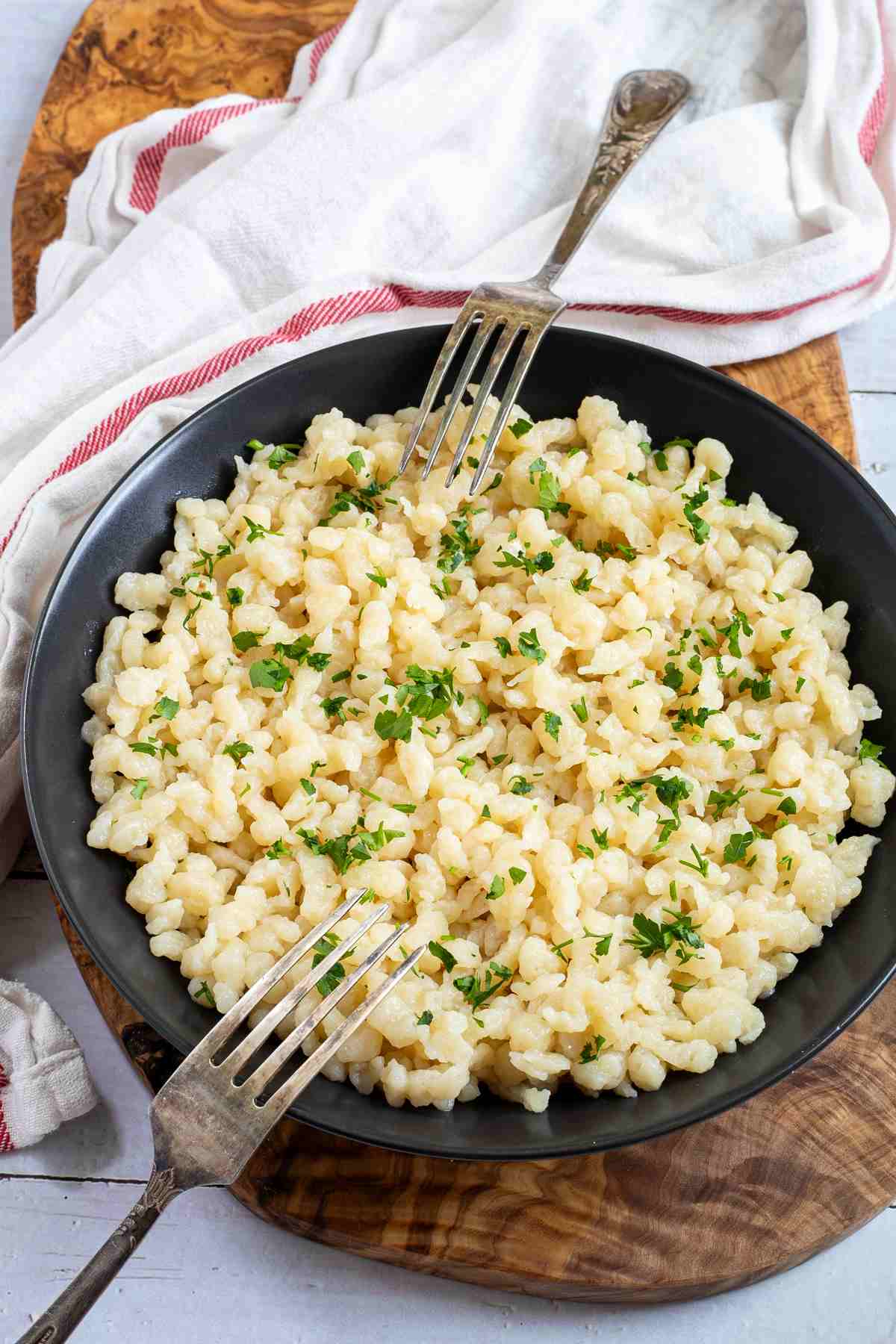
Now your Hungarian dumplings are ready to serve. Enjoy them with Hungarian mushroom stew or use them as a garnish for pasta soup instead of the pasta.
? Expert tip
The most crucial tip for making Hungarian nokedli is to ensure the dough consistency is perfect. It should be slow-flow, neither too thin nor too thick. If it is too thick, it will be difficult to push through the holes, and if it is too thin, it will drip through without giving you a good shape. I made a video to show exactly what you need.
? Variations
You can add eggs to the dough for some richness and flavor. This is a common ingredient in Hungary to make nokedli nowadays, but it was not used in the old days. However, it can be a great addition if you are not vegan.
Start with one whole egg. Depending on the size you may not even need to add water. 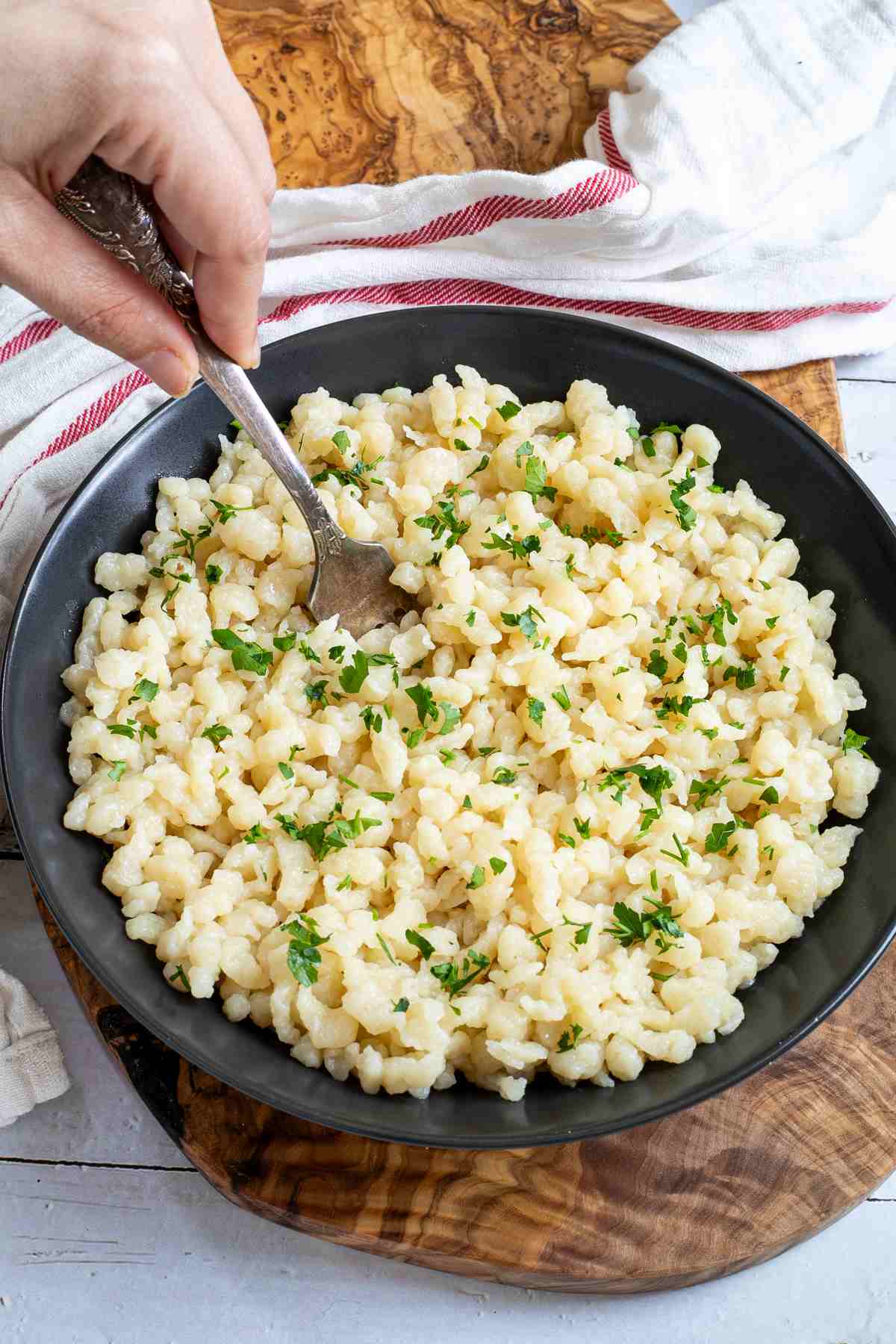
? Serving ideas
Hungarian dumplings are a versatile dish that can be enjoyed in a variety of ways. It is a perfect accompaniment to many traditional Hungarian dishes.
I love to serve it with a hearty Hungarian mushroom stew (pictured below), which is a classic combination in Hungarian cuisine. The dumplings add a lovely texture and make the stew even more satisfying.
In addition, it pairs wonderfully with other traditional Hungarian dishes such as Hungarian goulash, pörkölt, and paprikash. The soft, pillowy texture of the dumplings complements the rich, bold flavors of these dishes, making for a delicious and comforting meal.
If you are looking for a lighter meal option, you can use it as a soup garnish instead of pasta or soup pearls. It adds a nice touch to a bowl of soup and makes for a more filling meal. I particularly enjoy it with this Hungarian mushroom soup.

❄️ Storing tips
These Hungarian dumplings are made with simple ingredients and are best enjoyed fresh, but they can be stored for later enjoyment.
To store the leftovers, allow them to cool completely first. Once cooled, transfer them to an airtight container and place them in the refrigerator. They should stay fresh and delicious for up to 2-3 days.
You can freeze the leftovers. Simply place them in a pot of boiling water for a few minutes until they are heated through.
? FAQs
The ideal consistency for the Hungarian dumpling dough is slow-flowing paste. It should not be too thin, as this will result in long, thin dumplings. Similarly, if the dough is too thick, it will be difficult to push through the holes, resulting in tiny droplets or no dumplings at all.
If you do not have a spaetzle maker, you can use a flat cheese grater with large holes. In Hungary, a special “spaetzle maker” called “nokedli szaggató” is traditionally used, but a cheese grater can be a good alternative.
The dumplings are fully cooked when they float to the surface of the boiling water, which usually takes about 1-2 minutes. Once they float, remove them with a slotted spoon or colander and drain them well.
Recipes often call for eggs nowadays, but traditionally, they weren’t used. In the past, dumplings were made from a mixture of flour and water for ducks, which domestic fowl would devour with incredible gluttony. This method of feeding ducks resulted in fattened duck liver without the need for daily stuffing. This is where the saying “swallows like a duck swallows dumplings” comes from.
More authentic Hungarian recipes
Hungarian Dumplings (Nokedli)
Equipment
- Large hole cheese grater
Ingredients
- 2+½ cup All-purpose flour
- 1+½ cup Water adjust to get the right consistency
- 1 tsp Salt
Instructions
- In a large bowl, combine the flour and salt.
- Gradually add water, mixing until a sticky, cohesive dough forms. You may need a little more or less water, so add it gradually until you reach a slow-flowing paste consistency. Start with 1 + ½ cup and go from there. One Tablespoon at a time after that. You can check the consistency on the attached video.
- In Hungary, we use a special "spaetzle maker" ("nokedli szaggató" in Hungarian), but you can also use a flat cheese grater with large holes.
- Bring a large pot of salted water to a boil. Make sure that the pot size is not too large, so you can place the cheese grater on top.
- Take two Tablespoons from the dough and press it through the holes directly into the boiling water using a flat wooden spatula or the back of a spoon.
- Once the dumplings float to the surface (usually in about 1-2 minutes), they're done. Remove them with a slotted spoon or colander and drain well.
- Place them in a glass bowl and add ½ teaspoon butter after each batch while they are still hot. Mix the melted butter gentle with the nokedli.
- Serve it with this Hungarian mushroom stew or use it as a soup garnish instead of pasta or soup pearls.