After 10 Years of Free Holiday Dinners, I Demanded Our Friend Pay. Now My Wife Is Refusing to Let Her.
It is one of the bedrock principles of friendship: generosity should be a gift, not a transaction. We open our homes and share our tables because we enjoy the company of our friends, not because we are keeping a running tally of who owes whom.
However, one man recently took to the internet to share a story that proves not everyone sees it that way, and his attempt to balance the social scales went over about as well as you might expect.
The Incident
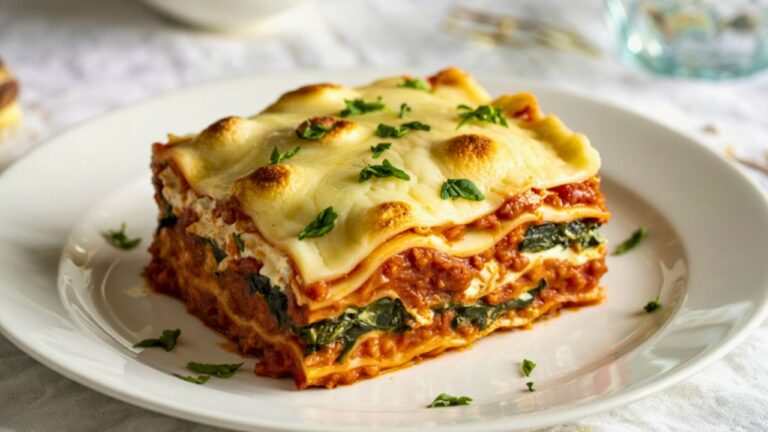
A husband shared his growing frustration with his wife’s friend of 10 years, a woman named Kay. He explained that over the decade, he and his wife have had Kay over for dinner “100 different times,” including for holidays and her own birthday celebrations, for which his wife cooks a meal of Kay’s choosing. In all that time, Kay, a single mother, has only hosted them once for pizza at her child’s birthday party.
While his wife, who loves to cook and host, didn’t mind the imbalance, the husband certainly did. He felt Kay was taking advantage of their hospitality, and he decided to do something about it. “I forced the issue with both my wife and with Kay,” he admitted, “expressing my desire for Kay to finally be the hostess.”
The plan was for the three of them to go out to a nice restaurant. However, the husband’s wife was the one who picked the restaurant and made the reservation. When she later told him that she did not want Kay to pay for the meal, he was beside himself.

“I was shocked and flabbergasted by my wife’s comments,” he wrote. “I thought the entire point of hosting someone for dinner was that you were supposed to pay for it.” He couldn’t understand why his wife wouldn’t back him up in demanding their friend finally “reciprocate.”
The Internet Reacts
The online community had plenty to say, and the vast majority of people were not on the husband’s side. Their reactions fell into a few distinct camps.
First was the “Absolutely Not” crowd, who were baffled by the husband’s logic. They pointed out the fundamental flaw in his plan: Kay wasn’t actually hosting anything. “How exactly is she even ‘hosting’ a dinner at a restaurant? Especially if your wife made all the arrangements?” one person asked.
Another put it more bluntly: “Seriously? You picked the place, you made the reservations. You and your wife are hosting it.” Many felt deeply for the wife, with one commenter saying, “How utterly embarrassing for your wife. You sound insufferable.”
Then there was the “Devil’s Advocate” group, which took a deeper look at the nature of friendship and reciprocity. One insightful person explained the concept of “loose reciprocity,” where favors are returned over time without keeping score. “The thing with loose reciprocity is that you can’t force it,” they wrote. “Giving gifts strengthens social relationships. Transactional exchanges do not.”
Others pointed out that he likely had no idea what Kay’s life was truly like as a single mother. One person noted he shouldn’t assume he knows her financial situation, especially since she has a “walking unexpected financial crisis attraction in her house”—her child.
Finally, there was the “Practical Advice” crowd, who focused on what the husband should have done instead of creating such an awkward situation. Their advice was simple and direct. “If you are seriously so mad that Kay has never given you dinner, then stop hosting her,” one person suggested.
Another agreed that forcing the issue was the wrong move entirely: “it’s not reciprocating when being forced under duress. I appreciate your frustrations but you have allowed this to become an issue over 10 years and have handled it like a bully.” The consensus was that if the one-sided hosting truly bothered him, the solution was to host less, not to strong-arm a friend into paying for a dinner he arranged.
The Etiquette Verdict
Let’s be perfectly clear: friendships are not business deals. You cannot demand reciprocity. True hospitality is offered freely, without the expectation of a perfectly balanced return. This husband completely missed the point. By “forcing the issue,” he turned a decade-long friendship into a tacky transaction and put both his wife and her friend in an incredibly uncomfortable position.
The moment his wife picked the restaurant and made the reservation, she became the host. Expecting Kay to then pick up the check is simply bad manners. Generosity cannot be coerced; it must be given from the heart.
Your Thoughts
Was the husband right to feel his wife’s generosity was being taken for granted, or did he cross a major line by trying to force a friend to “pay them back”?