My Fiancé Said “People Won’t Care” About Paying for Their Own Wedding Reception Meal and I Can’t Believe It
There’s arguably no more basic principle of being a good host than this: if you throw a celebration in your own honor and invite people to attend, you are responsible for taking care of them. That means, above all else, feeding and providing drinks for the people who showed up for you. It’s a fundamental gesture of appreciation.
Yet one woman recently turned to the internet to recount a situation involving her fiancé, who apparently believed this age-old convention of good manners was entirely negotiable — and it put her in an incredibly uncomfortable spot.
The Incident
A bride-to-be, aged 30, explained that after half a decade as a couple, she and her fiancé were hitting a wall when it came to wedding planning. Their ideas couldn’t have been more different. She envisioned a joyful gathering surrounded by her dearest friends, the people she regards as her real family, while he leaned toward a low-key courthouse ceremony, uneasy with all eyes on him.
Each attempt at building a guest list ended the same way: he’d rattle off a series of “obligatory invites,” the list would balloon, and frustration would set in until they abandoned the effort entirely. It felt like a deadlock with no resolution in sight. Then one evening, they stumbled upon what seemed like the perfect compromise: an elegant ceremony in Las Vegas, roughly seven hours by car from where they lived. But there was one significant catch attached to this plan.
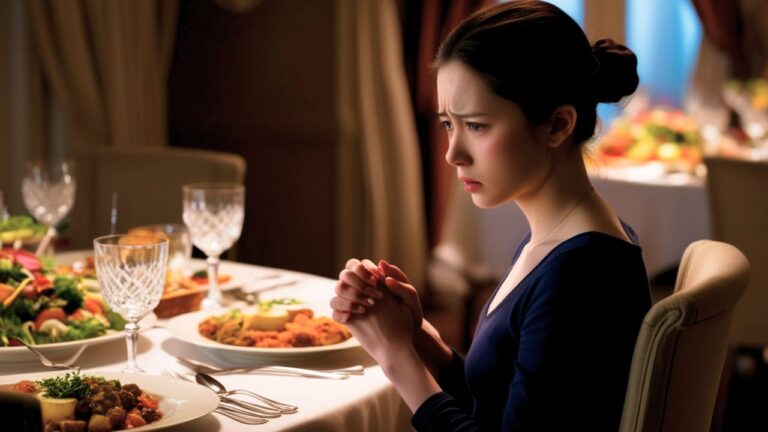
In order to make this vision work, her fiancé suggested that following the ceremony, everyone would meet at a restaurant — where every guest would be responsible for covering their own food and beverages. The bride was instantly overwhelmed with guilt. She already felt it was an enormous imposition to expect people to make the trip and shell out for hotel rooms.

Her fiancé, on the other hand, wasn’t the least bit concerned. He maintained that “people won’t care, the ones who want to be there will make the accommodations.” But his fiancée simply couldn’t dismiss the nagging sense that this was deeply inappropriate. In her own words, the idea of failing to offer a meal or an open bar had her “absolutely floored that he could even consider it.”
The Internet Reacts
Torn over the situation, the woman sought impartial opinions online, and the responses came flooding in. The overwhelming majority sided with her, viewing her fiancé’s proposal as a glaring violation of social norms. The feedback naturally fell into a handful of clear categories.
To start, there was the “Absolutely Not” Crowd, who were genuinely horrified on the bride’s behalf. Their argument was straightforward: a reception exists to express gratitude to those who came, not to present them with a check. One of the highest-rated comments didn’t mince words: “You don’t host a party & hand the bill to the guests. If you can’t afford a wedding, just elope or go to the courthouse.”
Someone else chimed in that the scheme was “titanically rude,” particularly given that attendees were already footing the bill for travel and accommodation. One commenter issued a stark warning: “you don’t want to be remembered as the bride who was too cheap to feed her guests.”
Then there was the “Practical Advice” Crowd. Rather than simply condemning the idea, these commenters stepped up with realistic solutions. A recurring theme was that the couple should simply host a wedding that fit within their means. “If cost is an issue you could always do something cheaper like a bbq or buffet type thing,” one individual recommended.
Another person offered this thoughtful perspective: “The flip side is that nobody should feel ashamed to have what they can afford. If what you can afford is a cake-and-punch reception for twenty guests, that’s OK.” The prevailing wisdom was unmistakable: tailor your celebration to your finances, rather than shifting costs onto the people you’ve invited.

Lastly, a very small contingent took the “Devil’s Advocate,” position, attempting to identify circumstances where the arrangement might be passable. A handful noted that if the couple firmly committed to declining all gifts, it could potentially ease the sting. One person recounted a story about a friend who had done something comparable following an unplanned pregnancy. “They asked for no gifts just for us to pay for own meals so they could use that $ towards paying for the baby,” they explained. Still, these dissenting voices were extremely rare, functioning more as unusual exceptions that ultimately reinforced the broader consensus.
The Etiquette Verdict
Let’s state this without any ambiguity: extending a wedding reception invitation to your guests and then requiring them to foot the bill for their own dinner is a major etiquette violation. At its essence, a wedding reception is a celebration meant to express gratitude to the people you love for witnessing and honoring your commitment. Expecting them to travel, use vacation days, and pay for accommodations is already asking quite a lot.
Adding to that burden by requesting they also pay for their own supper is simply not how a thoughtful host behaves. The cardinal rule of hospitality is to offer what you can realistically afford. If a formal seated dinner stretches the budget too thin, a modest cake and punch gathering or an informal cookout are both perfectly charming and entirely dignified options.

Your Thoughts
Fortunately, this bride heeded the advice and committed to providing a real meal for her guests. Still, it raises an interesting question about her fiancé’s mindset. Was he simply being pragmatic and searching for a workable solution, or was his suggestion just downright stingy?