Our Korean BBQ Waiter Was Annoyed by Our Small Order and Secretly Changed His Tip Amount
There is an unspoken trust when we dine out, a quiet agreement that when we hand over our credit card, the transaction will be handled with honesty and integrity. We calculate the tip, sign the slip, and go on our way, assuming the matter is settled.
But what happens when that trust is broken over just a few dollars? A man recently shared a story online that has many of us checking our bank statements, after a waiter took it upon himself to give himself a raise at his expense.
The Incident
The man and his wife were regulars at a bustling Korean BBQ restaurant, a place they enjoyed for its good, affordable food. On this particular evening, however, things were a bit different. He was recovering from surgery, moving slowly, and had a small appetite. Following doctor’s orders, he couldn’t drink alcohol, either.
They ordered a modest meal, one entree each, which resulted in a bill of just $33 after tax. Their waiter, he noted, was “clearly annoyed” that they didn’t order more, and seemed eager to rush them out the door to turn the table.
Despite the less-than-gracious service, the man still calculated a standard 20% tip on the pre-tax amount, which came to $6, for a total of $39. He signed the merchant copy and, in a move he now regrets, left his customer copy blank on the table.

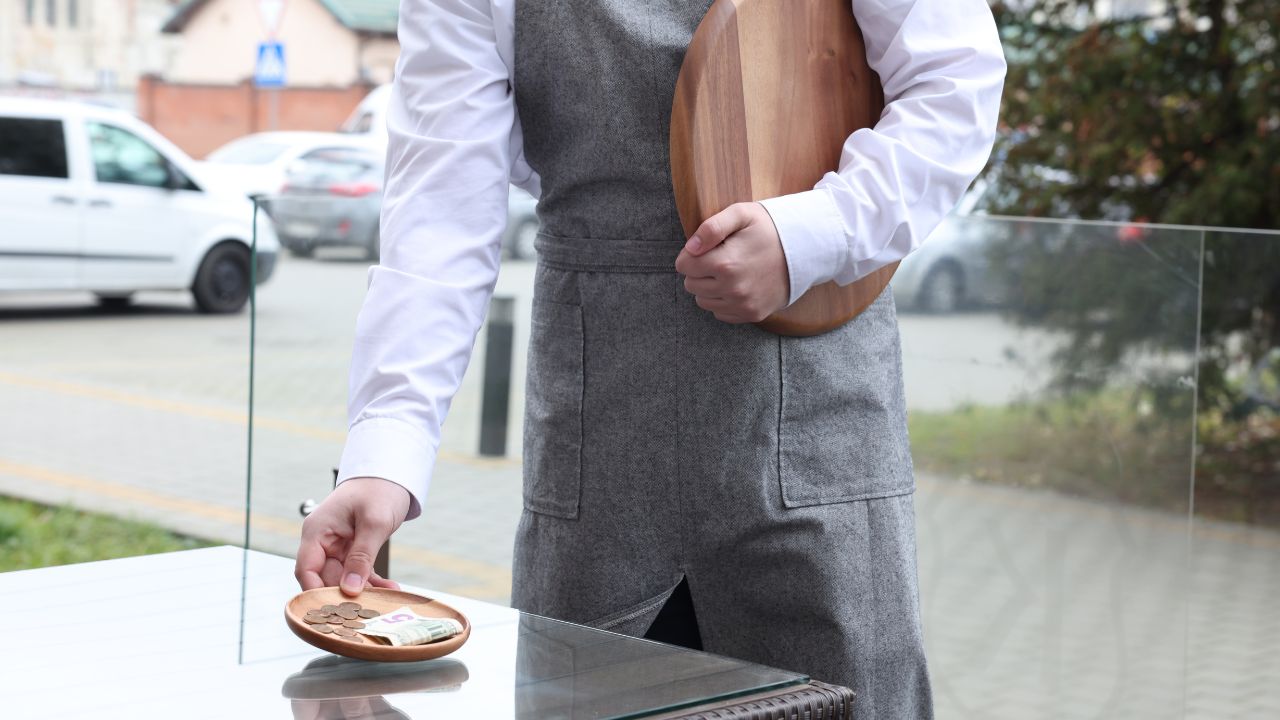
The real shock came later. His bank, which has a feature that flags tips over a certain percentage, reached out to him. They showed him the final charge: a $33 meal, plus a $10 tip, for a total of $43. Someone had changed his generous $6 tip into a nearly 30% gratuity of $10. While the amount was small, the principle was enormous. As he put it, “I don’t really need $4 and don’t care about the $, but it annoys me they changed the tip amount without my consent.”
The Internet Reacts
After he shared his dilemma, the internet community was abuzz with opinions, which fell into a few distinct camps.
The first, and largest, camp was the “Absolutely Not” crowd. These commenters were furious on his behalf, viewing the waiter’s action as outright theft. One person declared, “A waiter changing the tip after you leave is illegal and should be reported to the restaurant and the bank should mark the charge as fraud.”
Another agreed, saying the restaurant should be grateful to learn “they have a thief on the payroll.” One commenter even dramatically labeled the act with two simple words: “WIRE FRAUD.”
Then there was the “Devil’s Advocate” camp, a much smaller group who urged a bit of caution before jumping to conclusions. One user, who identified as a long-time server, suggested it could have been an honest mistake.
“Before you get someone fired over what could be a simple $4 dollar mistake call the restaurant,” they wrote. “Maybe he misread it. Maybe your penmanship was rushed and not clear.” It’s a fair point; a sloppily written “6” can sometimes look like a “10.”

Finally, there was the “Take Decisive Action” crowd. These folks believed a simple phone call wasn’t enough. They had suggestions for how to handle the situation with more force. One commenter advised, “Tell the bank that this was fraudulent and you want the entire tip returned (not just the extra), then contact the restaurant and demand that the employee be fired.”
Another took it a step further, suggesting he “go to the restaurant and police.” Many also offered a practical tip for the future: always take a quick photo of the signed receipt.
The Etiquette Verdict
Let’s be perfectly clear: altering a customer’s tip is not a simple breach of etiquette; it is theft. Whether it’s for $4 or $40, the act of changing a number a customer has written and signed is a fundamental violation of trust. A restaurant’s reputation is built on good food and honest service, and this kind of behavior jeopardizes both.
The amount of money is beside the point. The principle of the matter is everything, and this diner is well within his rights to demand a correction and an explanation.
Your Thoughts
What do you think? Is it petty to call a restaurant to dispute a $4 charge, or is it a necessary action to hold a business accountable for its employee’s dishonesty?