MIL Only Cooked on My Days Off to Ruin My Meal Plans. Why Forced ‘Favors’ Are Just Disguised Bullying.
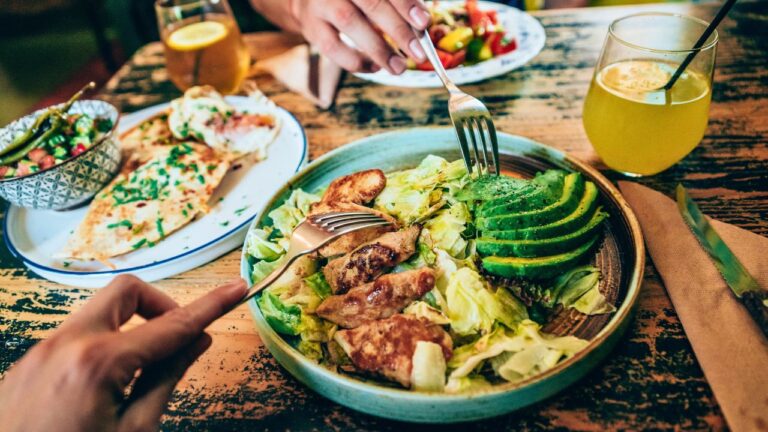
We all know the lovely tradition of bringing a hot meal to friends or family who have just moved into a new home. It’s a warm, thoughtful gesture that says, “Welcome, and don’t worry about cooking tonight.” It’s a classic sign of good manners and community spirit.
However, one woman recently took to the internet to share a story that turns this kind tradition on its head. Her tale proves that even a home-cooked meal can be used as a tool for control, leaving her feeling utterly suffocated in her brand new home.
The Incident
A young woman, exhausted from unpacking and working full-time while her husband puts in over 80 hours a week at his job, found herself in a baffling situation. Just two weeks into life in their new house, her mother-in-law began a strange new routine: cooking dinner for them nearly every day.
On the surface, it sounds helpful. But the details tell a different story. The mother-in-law only made these meals on the days the woman was off from work—days when she actually had time and enjoyed cooking herself. The offer wasn’t an offer at all; it was a command. She would text, “I’ve made food. Come pick it up.”
This “help” created more problems than it solved. The woman explained, “Her doing this kind of throws off everything I have prepared. And… wastes money on our end if things go bad.” Making the 20-minute round trip to her in-laws’ house during rush hour was the last thing she wanted to do after a long day of unpacking.
If she didn’t comply? “If we don’t get it, they just show up,” she wrote, describing how they would arrive at her door unannounced. This wasn’t an isolated issue. The in-laws had a history of being intrusive, judgmental, and starting drama that caused fights between the couple. After years of feeling disrespected, she confessed, “We have not been out for 2 weeks and I am feeling suffocated again.”
The Internet Reacts
When she asked if she was overreacting, the internet responded with a resounding “no.” People quickly sorted themselves into a few distinct camps, all siding with the overwhelmed wife.
The “Absolutely Not” Crowd
Most commenters immediately saw the mother-in-law’s actions for what they were: a blatant power play. They were furious on the woman’s behalf, seeing the food as a Trojan horse for meddling.
One person stated it plainly: “It’s not about help. Not even a bit. It’s about CONTROL. And dominance.” Another commenter pointed out the sinister nature of such behavior, sharing, “My grandmother did this to my mom her entire life, and the chaos it caused in our household was the explicit goal.” They advised the woman that her husband needed to be the one to tell his parents, “no more food. Period.”
The “Devil’s Advocate” Who Saw the Light
In a fascinating turn, one commenter, a mother-in-law herself, worried that she might be guilty of the same behavior. “I was taught to drop off a meal when someone moves into new place,” she wrote, explaining that she brings food when her daughter-in-law is sick but always calls first and leaves it on the porch.
However, after the original poster clarified that her mother-in-law demands they pick up the food and gets upset if they decline, the well-meaning mother-in-law had a revelation. “I re read that with what you said now I get it,” she admitted. “She is controlling you through leftovers.” It was a moment of clarity that proved even someone with the best intentions could see the difference between helping and meddling.
The “Petty Revenge” Crowd
Of course, some readers had more mischievous advice. Fed up with the in-laws’ lack of respect, they suggested fighting fire with fire. One person proposed a rather dramatic solution: “Send them a picture at 10 pm & say that their food was wasted because you were out tonight & it’s been sitting outside the entire time/raccoons got into it.”
Another commenter took it a step further, advising, “I would leave it all to rot on the porch for days on end.” And for those who felt the situation was beyond repair, one person had some simple, if drastic, advice: “Don’t unpack- move further away from them.”
The Etiquette Verdict
Let’s be perfectly clear: there is a vast difference between a kind offer and a burdensome demand. Genuine help is always offered without strings attached and with the recipient’s best interests at heart. It starts with a question: “I’m making a lasagna, could I bring a pan by for you two tonight?”
What this mother-in-law is doing is not kindness; it is a violation of boundaries. Forcing someone to disrupt their plans, waste their own resources, and drive to your home on your schedule is disrespectful. In polite society, you do not show up at someone’s home unannounced, and you certainly don’t impose your “help” on them.
Your Thoughts
This is a classic case of family friction where kindness and control get tangled up. What do you think? Is the daughter-in-law being too sensitive, or are the in-laws completely out of line?