I Was Juggling a Goose and Five Side Dishes. Mother-in-Law Stood in the Way, So I Kicked Her Out of the Cooking Area.
There are certain unwritten rules of being a good guest, especially during the holidays. You bring a small gift for the host, you offer to help clear the table, and you generally try to stay out of the way when the cook is in the middle of a culinary whirlwind. It’s a simple matter of respect and common sense. After all, no one needs an extra person underfoot when they’re juggling a hot roasting pan and five side dishes.
However, one man recently shared a story online that proves not everyone adheres to this simple code of conduct. His tale of a difficult mother-in-law and a moment of brutal honesty has sparked a lively debate about family dynamics and just how much patience one should have for manipulative behavior.
The Incident
The story begins with a picture of domestic bliss: a husband and wife hosting their very first Christmas in their new home. The husband, who was in charge of cooking the grand holiday feast for 12 guests, knew he needed to be patient. It was his mother-in-law’s first time being a guest instead of the host, and he understood that ceding control would be difficult for her.
His kitchen, which he generously described as “efficient,” was not built for an audience. Yet, as he tried to manage the goose and all the trimmings, his mother-in-law “found every excuse to park herself in my way.” After repeatedly asking her to move just so he could find space to chop vegetables, he finally tried a gentle, polite approach.
“Hey mom,” he said, “you can just go hang in the living room with everyone else. I got this!”
This is where things took a turn. His mother-in-law, who he says has a habit of playing the victim to get attention, deployed her favorite tactic. In a “fake drama tone,” she sighed, “Oh I get it, I’m not welcome here!”
It was a line designed to make him feel guilty and rush to reassure her. But after a stressful day of cooking and dodging her in his small kitchen, he had run out of patience for the games. He decided to meet her drama with straightforward honesty.
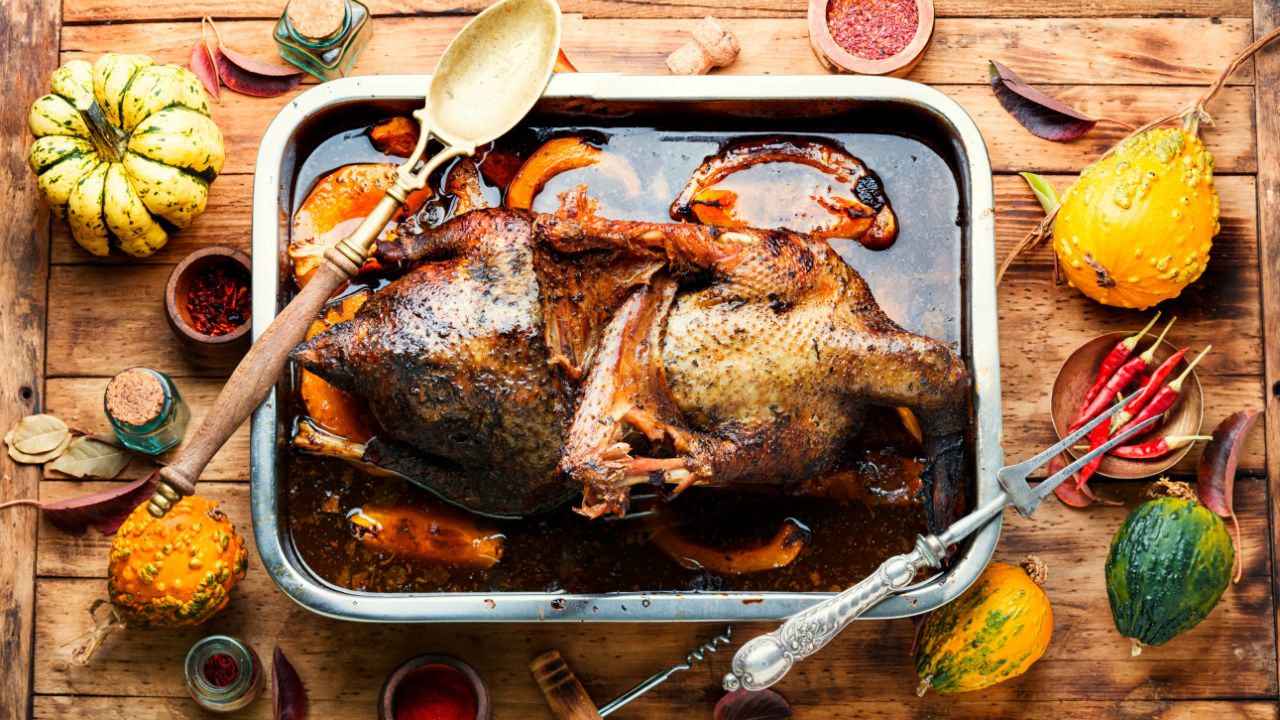
“Well, yeah,” he replied, “but I figured it would be rude to say it like that.”
The mother-in-law’s facade dropped instantly. She simply said “fine” and left the kitchen. While the husband thought the matter was settled, he later found out from his wife that she was still fuming about the exchange weeks later.
The Internet Reacts
When the husband asked the internet for their opinion, the response was overwhelming, with thousands of people weighing in on the family drama. Most readers fell into a few distinct camps, but nearly all of them sided with the weary cook.
The first and largest group was the “Absolutely Not” Crowd. These commenters were furious on the husband’s behalf, seeing the mother-in-law’s behavior as textbook manipulation. One of the most popular comments perfectly captured this sentiment: “She’s not mad that you said that. She’s mad ’cause you took her super power away.”
Another agreed, stating, “Her manipulation didn’t work on you, and she’s big mad about it.” For this group, the mother-in-law wasn’t a victim; she was a game-player who was simply upset that she’d finally lost.
Then there was the “Been There, Dealt With That” Crowd. These readers shared their own stories of dealing with difficult, attention-seeking relatives who hold onto grudges forever. One person recounted how their grandmother held a grudge against them for the rest of her life—all because, as a six-year-old child, they had innocently questioned her claim of being perpetually 29.
These stories served as a warning that the mother-in-law “probably won’t get over it,” but also as a form of validation. They understood that sometimes, you simply cannot win with people who are determined to be offended.
Finally, there was the “Good for You” Crowd, who applauded the husband’s directness. They argued that difficult people often stay that way because no one ever challenges their behavior. As one person put it, “Some difficult people stay difficult because no one calls them out.”
Another user shared a hilarious story of their father taking extreme measures: “One year my dad wrapped all kitchen entrances in police tape. Grandma was highly insulted but it never happened again!” This camp saw the husband’s honest retort not as rude, but as a necessary and long-overdue boundary.
The Etiquette Verdict
Let’s be perfectly clear: the kitchen is the cook’s domain. When someone is graciously preparing a meal for a dozen people, the last thing they need is a human obstacle. While the mother-in-law may have felt displaced and wanted to feel helpful, her method was entirely wrong. A polite guest would ask, “Is there anything I can do to help?” not plant themselves in the way and then feign injury when asked to move.
Using emotional games to fish for compliments or reassurance is tiresome and unfair. The husband’s response may have been blunt, but it was also honest—and provoked by her passive-aggressive comment. The golden rule of being a guest is to be gracious and considerate. Demanding emotional labor while someone is trying to roast a goose is, quite frankly, bad manners.

Your Take
This holiday showdown has certainly touched a nerve with many. So, what do you think? Was the son-in-law’s honesty a refreshing dose of reality, or was his comment a step too far?
Ready for the next level of insight? Discover more in my latest article here.