I Actually Developed the Exact Food Allergy I Lied About Having for Decades
There are fundamental principles most of us respect in civilized interaction. Among the most important is that honesty, particularly with those closest to us, forms the foundation of any strong relationship. Sure, most of us have uttered a white lie here and there to protect someone’s emotions, but we also recognize that boundaries exist. Deceiving someone about something as significant as a health condition crosses a clear boundary, generating unnecessary anxiety and chipping away at trust.
That said, one man recently posted a story online that perfectly illustrates how complicated things get once deception enters the picture. His account of a made-up food allergy has become a strange yet instructive example of both cosmic payback and basic good judgment.
The Incident
Settle in with a warm drink, because this story is truly something else. A man revealed that when he first started dating his wife back in 2007, he claimed to have a serious nut allergy. The reality? He simply wasn’t a fan of nuts. As he put it, “rather than explaining to people that I don’t like nuts and have them ask why, I just thought it was easier to say I have an allergy.”
That convenient little deception blew up in spectacular fashion just a few months later. His girlfriend at the time—now his wife—handed him a muffin. After he bit into it, she realized in sheer terror that it had nuts in it. Overcome with panic, she “smacked [it] out my hands in fear that she was about to start an allergic reaction.” That was the moment he was forced to come clean. Understandably, she was livid—not just because he had lied, but because he had let her spend months genuinely fearing for his well-being.
For the next seventeen years, the whole episode faded into the background. Then, out of nowhere, the story gained an unexpected new chapter. The husband decided to give a peanut butter and jelly sandwich a try and, much to his delight, found it quite tasty. The catch? He “started to get a rash on his face.” As it turns out, after nearly two decades, he had actually developed a real allergy to nuts.
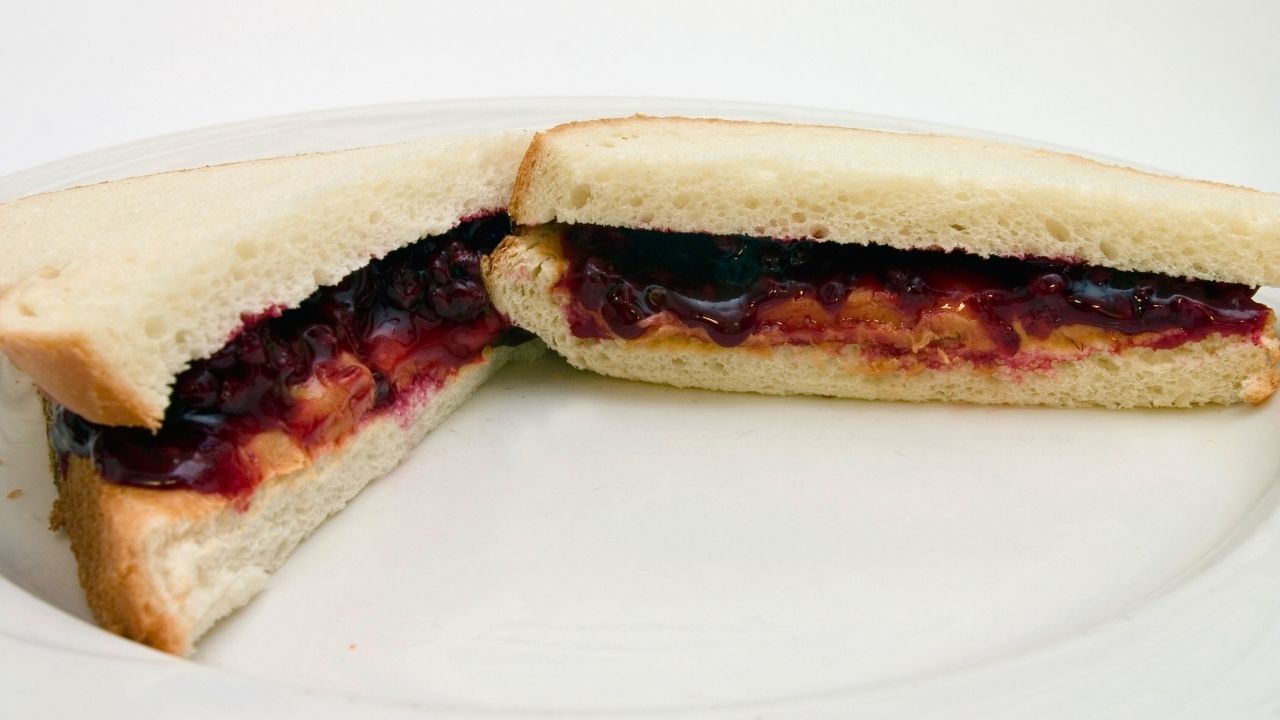
When he broke the news to his wife, she didn’t respond with concern—she responded with doubt. Having been fooled before, she was “pissed at this discovery and wanted to confirm with further testing, refusing to believe I am actually allergic.” The trust he had shattered years earlier came back to bite him in the most poetically ironic fashion imaginable.
The Internet Reacts
Once the man put the question to the online masses, people were eager to weigh in. The digital community was sharply split—not over whether he was in the wrong (nearly everyone agreed on that), but over how exactly to interpret this remarkable twist of events.
The ‘Absolutely Not’ Crowd
An overwhelming number of respondents were outraged by the original deception. Their argument was clear: pretending to have an allergy isn’t some innocent white lie. It represents a serious violation of trust that places an unfair burden on the people around you and undermines those dealing with genuine, potentially fatal conditions. One commenter, who has a child with a severe allergy, expressed it perfectly: “By lying about your allergy you have contributed to the problem where people don’t take allergies seriously.”
Someone else reinforced this point by highlighting the emotional weight his wife had carried. “Protecting someone with allergies is a lot of work. You need to be paranoid to protect the people who have them… you imposed a cost on other people.” In the eyes of this group, the deception was a deep display of disregard for both his partner and the broader community of allergy sufferers.
The ‘Unconscious Warning’ Observers
A smaller, more reflective contingent speculated that something more nuanced might be going on. They weren’t letting him off the hook, but they did raise questions about his original aversion to nuts. Was his body perhaps trying to alert him to something all along? As one person suggested, “Him not liking them may be in part his body’s way of protecting him from that allergy.”
Those in this camp proposed that perhaps a subtle, undetected sensitivity during childhood had produced a distaste he could never quite articulate. While that theory certainly doesn’t justify the dishonesty, it introduces a captivating dimension to the narrative—hinting that his gut instincts may have been far wiser than his choices.
The ‘Poetic Justice’ Crowd

And then there were those who simply marveled at the breathtaking irony of it all. To them, it was a textbook case of “the boy who cried wolf.” The falsehood he had spun out of laziness had boomeranged right back, becoming his unavoidable reality. As one commenter confessed, “I’m more focused on you lying about being allergic to nuts but then it actually being true. I don’t know why but I thought this post was incredibly funny.”
One other user put it in no uncertain terms: “I hate to say that karma came knocking, but maybe it did.” For this faction, the man was now living with the consequences of his own making, and his wife’s refusal to take him at his word was the entirely predictable result of his long-past dishonesty.
The Etiquette Verdict
Let’s make one thing absolutely clear: fabricating a medical condition is never okay. It constitutes a core betrayal of trust, especially with the people who love and look after you. A straightforward, “No thank you, I don’t care for nuts,” is a completely polite and truthful answer that demands no elaboration whatsoever. By opting for dishonesty, this man subjected his wife to needless terror and, perhaps more critically, undermined the very trust that holds a marriage together.
The situation he now finds himself in is entirely a product of his own decisions. When you fabricate something this serious, you give up the privilege of being taken at face value down the road. Honesty remains, as it has always been, the single most essential rule of etiquette within any relationship.

What do you think?
Was the husband’s original deception merely a small fib that spiraled beyond his control, or was it a significant betrayal right from the very start?